
Lieferung heute & morgen

Qualitätsgarantie

Willkommens-Angebote freischalten: KOSTENLOSE Lieferung | Bis zu 80 % RABATT | Kostenlose 30-Tage-JoyPlus-Testphase
App herunterladen
A children’s night light should provide orientation without making the room unnecessarily bright. For parents, it’s not just about colour and design. Sensor technology, power supply, cleaning and positioning in the nursery all affect whether the product remains practical in everyday use.
Many poor purchases come down to three typical pitfalls:
For sleeping areas, a warm white night light of around 2700 to 3000 Kelvin is often chosen. This light feels less dominant compared to cooler colour temperatures. What’s also crucial is whether there are multiple dimming levels or stepless adjustment.
A dimmable night light suits different situations: a low setting for orientation, a medium setting for night-time nappy changes, and a higher setting for short tasks. With plug-in models, you should also check whether the light blocks neighbouring sockets.
A night light with a dusk sensor switches on when the ambient light level drops. With the Aigostar model, the stated switching threshold is below 20 lux. A night light with a motion sensor, such as the Grifema model with a PIR sensor, reacts to movement within a stated detection range of up to 3 metres and switches off after 60 seconds of no movement.
For a nursery, a sensor makes sense if you don’t want the light to stay on permanently. For breastfeeding, feeding or nappy changes, a manually operated battery-powered light can be more practical. A timer reduces the risk that a mobile baby night light stays active for many hours.
A plug-in night light doesn’t need a battery and is ready to use immediately. However, the placement is determined by the available socket. For a portable model, the charging port, battery capacity and charging time are important details. The VAVA VA-CL009, for example, has a 2000 mAh battery, touch control and a 1-hour timer. The stated run time of up to 100 hours applies, according to the product description, to the lowest brightness setting.
Silicone surfaces can feel pleasant for little hands. Even so, electrical lights should not be left unattended in the hands of small children. Even with a design described as child-friendly, you should regularly check the cable, charging port and casing for damage. For bathrooms or damp areas, pay attention to the relevant usage instructions and the IP rating. A model with IP20 is intended exclusively for dry indoor spaces.
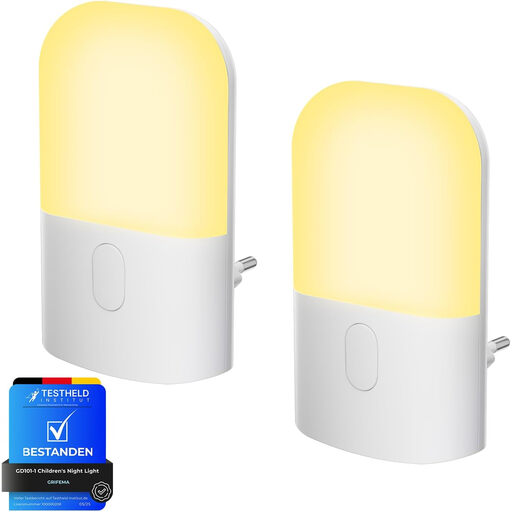
Why this product fits the profile: This two-piece plug-in set is ideal for families who want to equip a nursery, hallway or stairs at the same time. The automatic dusk sensor handles switching on and off.
Three brightness levels help you avoid a permanently overpowering light. The stated colour temperature of 2700K is warm white.
Two lights in a set, three dimming levels and a stated energy consumption of 0.5 W per light.
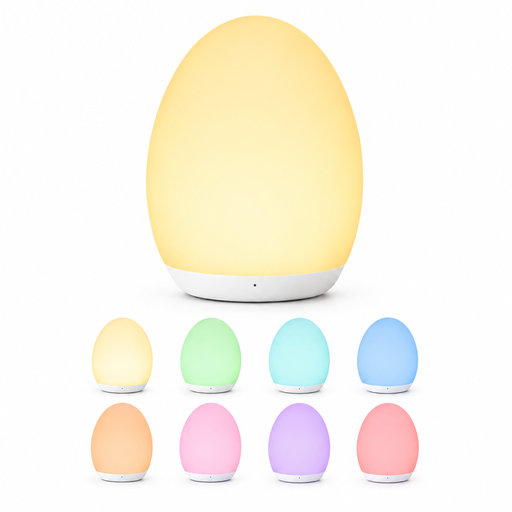
Why this product fits the profile: This portable light is designed for night-time feeding, nappy changes and travel. Touch control, warm light, eight colour modes and a memory function offer several usage settings.
The run time is broken down by brightness level: up to 7 hours at maximum brightness and up to 100 hours at the lowest setting. This makes the claim easier to assess realistically.
2000 mAh battery, 1-hour timer, touch control and no need for Wi-Fi or an app account.
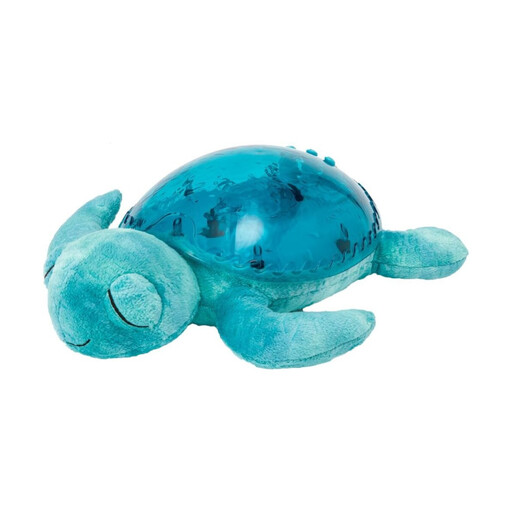
Why this product fits the profile: For families who want to use projections and sounds alongside light, this model combines an underwater projection with two melodies and two ocean-sound options.
The automatic switch-off after 23 minutes limits the operating time. The timer can be restarted if needed; however, the light should not be covered or used in a damp environment.
USB-C charging, adjustable brightness, projection and an adjustable sound sensor according to the product details.
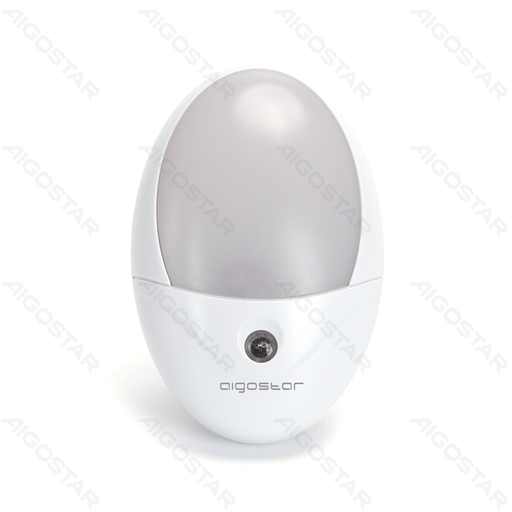
Why this product fits the profile: The PIR motion sensor is designed for hallways, bathrooms, kitchens and stairs. The light plugs directly into a socket and, according to the description, requires no batteries.
The stated detection range of up to 7 metres and 120° defines the intended use. The IP20 rating indicates dry indoor spaces only.
3000K warm white light, 20 lumens, 1 W power consumption and automatic activation when movement is detected in the dark.
We’ve put together a full, regularly updated list of products that fully meet these strict selection criteria and the safety regulations in force in the EU.
A warm white night light of around 2700 to 3000 Kelvin is often chosen for bedrooms and nurseries. The right brightness depends on the room and the purpose. For orientation, a lower setting is usually enough, while nappy changes may require a higher setting.
The consumption depends on the power, operating time and sensor control. Product details show values such as 0.3 W, 0.5 W or 1 W, for example. A night light with a dusk sensor or motion sensor can limit the active operating time. For an accurate assessment, you should consider the wattage and the daily usage duration.
For constant orientation in the dark, a dusk sensor is suitable. A motion sensor makes sense if you only need the light when entering a hallway, bathroom or stair area. In a nursery, a portable, dimmable light with a timer can be the more flexible solution.