
Lieferung heute & morgen

Qualitätsgarantie

Willkommens-Angebote freischalten: KOSTENLOSE Lieferung | Bis zu 80 % RABATT | Kostenlose 30-Tage-JoyPlus-Testphase
App herunterladen
A children’s night light should provide orientation at night without lighting up the room unnecessarily brightly. For parents, it is not just about choosing a child-friendly design. Ease of use, power supply, light colour, heat generation and the right position are all important. A children’s night light in a baby’s room has different requirements from a lamp for the hallway or a decorative children’s lamp on a shelf.
Silicone figures, ceramic lamps and colourful LED lamps may look at home in a child’s bedroom. Even so, parents should check whether the product is expressly suitable for its intended use. A night light is not automatically a toy. Warnings such as ‘do not immerse in water’, ‘keep away from naked flames’ or ‘keep out of reach of young children’ should be taken seriously.
For battery-powered models, check the battery compartment and its closure. With rechargeable products, the charging cable, charging pad and battery specifications are relevant. Damaged cables or a deformed casing are reasons to stop using the product.
Light colour is measured in Kelvin (K). A warm white night light of around 2700 to 3000 K usually feels less cool than white light at 6500 K. Brightness is described, among other things, using lumens (lm). A lower light output is often enough for finding your way along the hallway than for changing a baby at night.
A colour-changing night light can be decorative, but it is not automatically suitable for every sleeping situation. Check whether the colours can be switched off and whether a consistently low brightness level can be selected.
A rechargeable night light can be used flexibly in the baby’s room, hallway or while travelling. However, its practical usability depends on the battery, brightness setting and charging time. Claims such as ‘up to 15 hours’ usually refer to specific operating conditions. A permanently installed plug-in night light does not need charging, but its position is limited by the location of the socket.
A dimmable night light can be used in many ways: a low setting can provide orientation, while a higher setting is useful for taking a quick look or changing a nappy. With a lamp featuring touch control, the control surface should be easy to reach but not activated accidentally by every touch.
A night light with a timer switches off automatically after a set period. This can reduce continuous operation. Check that the timer is actually mentioned in the product description and see what time period is available.
A night light with a motion sensor can be useful in hallways, on stairs or in the bathroom. The detection angle, range and switch-off time are all relevant. The Grifema model is specified as offering a range of up to 3 metres, a 120-degree detection angle and switching off after 60 seconds without movement.
A plug-in model with a dusk sensor, on the other hand, responds to the surrounding light level. According to the product details, the Aigostar LED Sensor Night Light activates below 20 lux. It operates at 1 W, produces 40 lm and is intended for indoor use with IP20 protection. The specified light colour is 6500 K, so it is not warm white.
For a night lamp for babies, the casing should be sturdy, easy to clean and free from sharp edges. ABS, PC and silicone are listed as materials for several of the following models. This does not mean, however, that the lamp is suitable for unsupervised play.
You should also check:
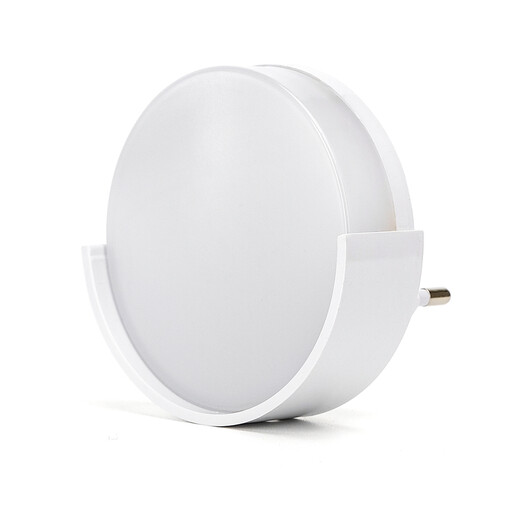
Why this product suits this profile: According to the product details, this plug-in night light needs neither batteries nor charging, and switches on and off depending on the surrounding light level.
There is no need to buy batteries regularly, and no battery charge that could unexpectedly run out during the night. Keep the sensor clear and do not cover the device.
1 W power consumption, 40 lm luminous flux, PC casing and a specified lifespan of 25,000 hours.

Why this product suits this profile: This model combines dusk and motion sensors with five brightness levels and warm white light at 2700 K.
The brightness is not limited to a single setting. Automatic switch-off after 60 seconds helps prevent unnecessary continuous operation.
Five levels from 20 to 100 per cent, 0.5 W power consumption, plus a specified detection range of up to 3 metres and 120 degrees.
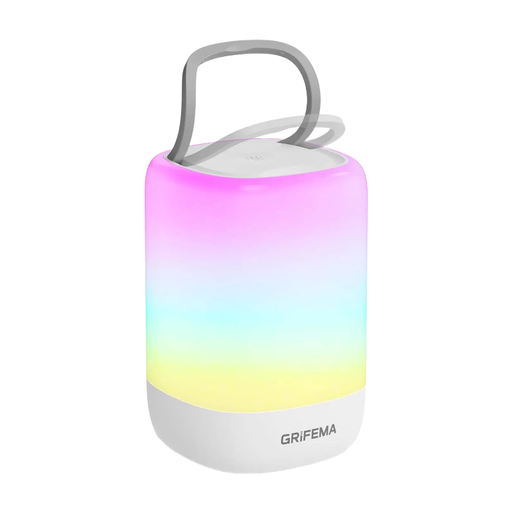
Why this product suits this profile: This portable model offers USB-C charging, touch control, warm white light and seven RGB colours for different rooms and situations.
Long-touch control lets you reduce the brightness from 100 to 5 per cent. The 30-minute timer helps prevent unintended continuous operation.
3.7 V lithium-ion battery with 1500 mAh capacity, USB-C charging and a specified runtime of up to 15 hours.

Why this product suits this profile: This egg-shaped model is intended for children’s bedrooms, bedside tables and portable use. It combines touch control, a rechargeable battery, eight colour modes and a one-hour timer.
The timer and dimming function reduce the risk of the lamp being used unnecessarily long or too brightly. Follow the manufacturer’s instructions before using it around young children.
Eight colour-changing modes, continuously adjustable brightness, rechargeable design and touch control.
We have put together a complete, regularly updated list of products that fully meet these strict selection criteria and the safety regulations applicable in the EU.
For many families, a warm white night light with low brightness may be suitable because it feels less cool than a 6500 K lamp. This does not mean it is automatically suitable for every baby. Low, adjustable brightness, a safe position and compliance with the manufacturer’s instructions are all important.
This depends on its power consumption and how long it operates each day. A model using 0.5 W has a lower calculated consumption than a 1 W lamp if both are switched on for the same length of time. A motion sensor or timer can further limit the actual runtime.
A sensor can be practical in a hallway, on the stairs or along routes used at night, as the light only switches on in darkness when movement is detected. In a child’s bedroom, check whether the range, switch-off time and brightness setting suit the intended routine. For continuous orientation lighting, a dusk sensor is often the simpler solution.