
Lieferung heute & morgen

Qualitätsgarantie

Willkommens-Angebote freischalten: KOSTENLOSE Lieferung | Bis zu 80 % RABATT | Kostenlose 30-Tage-JoyPlus-Testphase
App herunterladen
A children's night light should provide orientation at night without unnecessarily lighting up the whole room. For parents, it is not just the colour and design that matter, but also the sensors, controls, energy consumption and the most suitable place to position it. A plug-in model is suited to different uses than a portable, rechargeable night light for night feeds, camping or trips to the bathroom.
High brightness is not automatically useful in a child's bedroom. Too much light can disturb the sleep environment and feel uncomfortable when getting up at night. A dimmable night light is more practical, as you can adjust the brightness to suit the situation: a low setting in the bedroom and a higher setting in the hallway or bathroom.
A night light with a sensor can switch on automatically in the dark. However, it is important to distinguish between the following:
If the sensor is obstructed by furniture, curtains or other objects, detection may be restricted. The stated range and detection angle should also be suitable for the intended location.
A rechargeable night light does not permanently occupy a socket and can be moved around flexibly. However, you need to keep an eye on the charge level. A plug-in night light does not need recharging, but its position is limited to a suitable socket. For travel, camping or use in different rooms, a battery-powered model usually offers greater flexibility.
A warm white night light of around 2700 to 3000 Kelvin produces lighting that feels less cool than light with a higher colour temperature. This setting can be suitable for a child's bedroom or night-time care. In hallways, on stairs and in the bathroom, however, a higher brightness setting may make it easier to see where you are going.
Look out for specific details such as:
A colour-changing night light can be used as decorative lighting. For night-time nappy changes or feeding, a low warm white setting is often more practical than changing coloured light.
A night light with a dusk sensor switches on as the light level falls and off in daylight. For a model with a motion detector, check the switch-off time. Automatic shut-off after, for example, 60 seconds can save energy in the hallway, while a night light with a timer is suitable for settling down to sleep or for limiting the period of use.
Touch controls are convenient, but can be triggered accidentally. If children are using the lamp, position it so that the cable, charging port and controls do not become a trip hazard or a toy.
Plug-in models with low energy consumption are designed to provide continuous ambient lighting. Product specifications may include figures such as 0.3 W, 0.5 W or 1 W. Actual consumption depends on the operating time and brightness setting.
For portable lamps, battery capacity, charging method and runtime are important. A USB-C or USB charging port can make it easier to use existing power adapters, laptops or power banks. Regardless of the model, electric night lights should not be used in damp areas unless the manufacturer specifically states that they are suitable. Follow the instructions on cleaning, the charger and usage. Babies and toddlers should use these products under adult supervision.

Why this product suits the profile: This two-pack is suitable for children's bedrooms, hallways, stairs or bathrooms, and provides warm white light at 2700 K.
The automatic dusk sensor prevents unnecessary continuous operation in daylight. Three brightness levels replace an unspecified one-size-fits-all brightness setting.
Two lamps, 0.5 W power consumption, three dimming levels and a slim design for plug-in use.

Why this product suits the profile: Designed for getting around the home at night, this plug-in night light combines motion and dusk sensors with five brightness levels.
The product specifications state a detection range of up to 3 m and 120°, along with shut-off after 60 seconds without movement.
Warm white LED light, five levels from 20 to 100 per cent, and no batteries required.
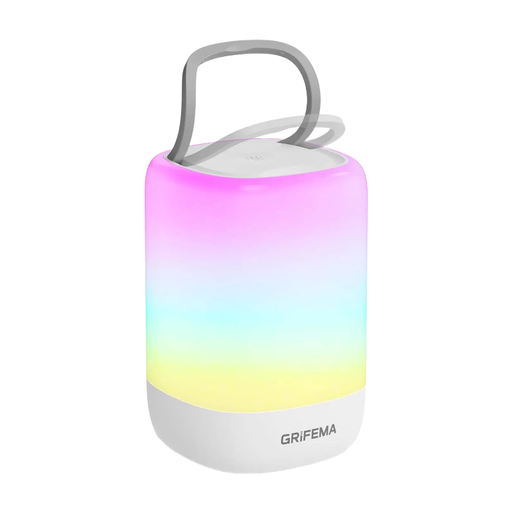
Why this product suits the profile: This portable model is designed for bedrooms, children's bedrooms, night feeds and camping, and can be charged via USB-C.
Brightness can be adjusted from 100 to 5 per cent using the touch controls. A 30-minute timer limits the operating time.
3.7 V lithium-ion battery with 1500 mAh capacity, USB-C charging, warm white light and seven RGB colours.

Why this product suits the profile: Its compact shape, touch controls and portable design make it suitable for children's bedrooms, bedrooms and changing locations.
The product description lists a dimming function, eight colour-changing modes and a one-hour timer instead of simple continuous lighting.
Rechargeable operation, touch controls, adjustable brightness and eight colour modes.
We have put together a complete, regularly updated list of products that fully meet these strict selection criteria and the safety regulations applicable in the EU.
Consumption depends on the power rating, brightness and operating time. Models rated at 0.3 or 0.5 W are designed for relatively low consumption during continuous use. A night light with a motion detector or timer can further limit the time it is switched on. For running costs, the wattage stated on the product is key; consider it together with the amount of time the light is used each day.
That depends on how it will be used. Automatic activation can be practical for getting around the hallway at night, on the stairs or to the bathroom. In a child's bedroom, a dusk sensor is sufficient if you want a constant ambient light. The sensor should be unobstructed, and its stated range should be suitable for the room.
It is not possible to give a general lifespan without specific information from the manufacturer. Check the stated runtime per charge, charging time and battery capacity. With regular use, the night light should be positioned where it can be charged easily. A plug-in model is a sensible choice if you need continuous light without having to plan when to recharge it.