
Lieferung heute & morgen

Qualitätsgarantie

Willkommens-Angebote freischalten: KOSTENLOSE Lieferung | Bis zu 80 % RABATT | Kostenlose 30-Tage-JoyPlus-Testphase
App herunterladen
A children’s night light should provide reassurance without unnecessarily disturbing sleep. However, models vary considerably. Some plug directly into a socket, while others are rechargeable and portable. There are also features such as colour changing, dimming, timers and touch control. For parents, it is therefore not just the design that matters, but above all the right combination of light, controls, power supply and safety.
A night light with colour-changing functions sounds versatile. However, if the brightness cannot be reduced sufficiently or there is no timer, the additional feature may offer little practical benefit. For night-time breastfeeding, changing nappies or finding your way around briefly, low, even lighting is often more useful than a constantly changing colour pattern.
You should therefore look for specific details about the dimming function, controls and automatic switch-off. Terms such as “soft” or “sleep-friendly” are not technical specifications on their own.
With a children’s rechargeable night light, the stated operating time should match how you intend to use it. Check whether the runtime applies to a single night, several nights or only a particular brightness setting. The charging connection, charging time and whether the light can be used while charging are also important.
A permanently installed LED children’s night light with a dusk sensor, on the other hand, requires neither batteries nor regular charging. For hallways, sockets or stair areas, this design may be more practical than a portable night light.
Rounded shapes and soft silicone surfaces can make a product easier to handle. However, they do not replace everyday safety checks. Electrical devices must not be placed in water or covered, and should be charged out of children’s reach unless the manufacturer specifies otherwise.
For products intended for babies and toddlers, you should also check the stated minimum age. A night light is not a toy, even if it is designed to look like an animal, egg or character.
Colour temperature is measured in Kelvin. Warm white light is typically found in the lower Kelvin range and is often chosen for bedrooms or night-time care. A higher colour temperature appears whiter and may be suitable for finding your way around a hallway.
Brightness is described, among other things, by the luminous flux in lumens. A high value is not automatically suitable for a child’s bedroom. What matters is whether the light causes glare, is positioned directly at eye level and can be dimmed. With a dimmable night light, the lowest setting should be clearly stated.
Distinguish between:
A night light with a timer can limit operating time. Check whether it switches off after 30 minutes, one hour or another period, and how the timer is activated.
For indoor areas, for example, an IP20 rating may be sufficient. However, this does not mean the product is protected against water. An IP20 product should therefore not be used in the bathroom or immediately next to a washbasin.
Look for information about input voltage, power, materials and markings. The Aigostar model lists, among other specifications, 220–240 V, 1 W, 40 lm, a PC housing, as well as CE and RoHS markings. According to the product details, it is intended for indoor use only. Specific parameters such as these are more informative than general advertising claims.
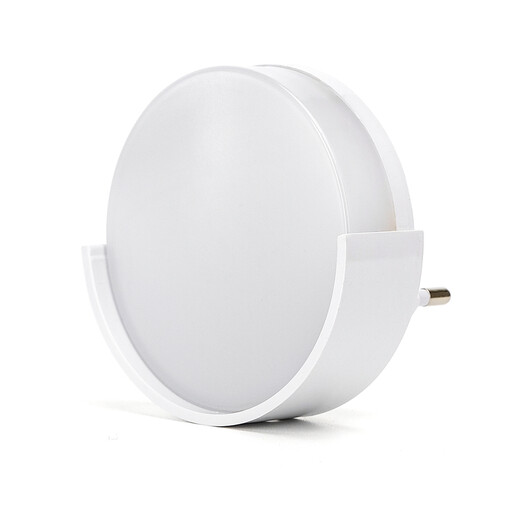
Why this product suits this profile: This plug-in model is designed for straightforward use and, according to the product details, requires neither batteries nor a rechargeable battery. The sensor switches the light on when the brightness falls below 20 lux.
There is no unclear battery runtime and no need to replace batteries regularly. Automatic activation also reduces the number of manual operations.
1 W power, 40 lm luminous flux, 120° beam angle and a stated service life of 25,000 hours.
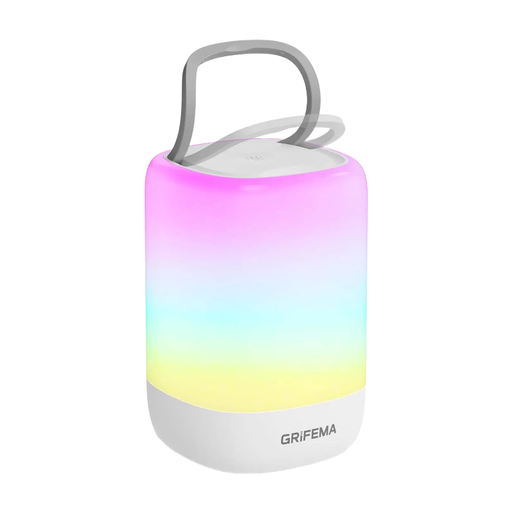
Why this product suits this profile: The lamp combines warm white light, seven RGB colours, stepless dimming, USB-C charging and a stated battery runtime of up to 15 hours.
The brightness can be reduced from 100% to 5% by holding down the button. The 30-minute timer limits the operating time.
Touch control, RGB colour selection, USB-C connection and silicone cover made from flame-retardant material according to the product description.
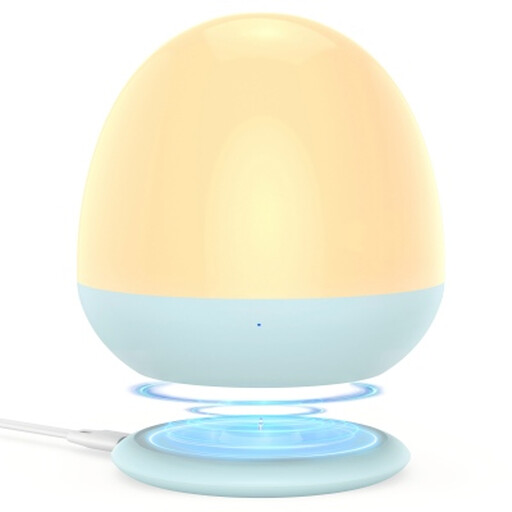
Why this product suits this profile: This model offers touch control, a timer, and both wired and wireless charging via a stable charging station. It can be used in a child’s bedroom, during night-time care or when travelling.
The charging station provides a dedicated place to store the lamp. The timer prevents the light from staying on throughout the entire night.
ABS and PC housing, touch control, timer and two charging options. According to the safety notice, the product is not intended for children under 3 years of age.

Why this product suits this profile: This portable night light offers eight colour-changing modes, dimming, touch control and a 1-hour timer for different situations.
The brightness is not limited to a single fixed setting. The timer and rechargeable battery support planned use without disposable batteries.
Eight colour modes, dimming, touch control and a 1-hour timer in a portable housing.
We have put together a complete, regularly updated list of products that fully meet these strict selection criteria and the safety regulations applicable in the EU.
Place a bedroom night light so that the beam does not shine directly onto the child’s face. Plug-in models should not be covered with blankets, clothing or other objects. With rechargeable lamps, it is advisable to choose a dedicated charging place away from the bed.
For night-time breastfeeding or changing nappies, a low dimming setting can be useful. A baby night light should be positioned so that cables and charging accessories are out of the child’s reach. When travelling, a portable night light can be particularly useful, provided you check the charge level before setting off.
Consumption depends on the power rating and operating time. A model rated at 1 W uses 0.01 kWh over ten hours of operation in theoretical terms. Rechargeable lamps do not consume electricity directly from the socket while in use; however, the battery must be charged regularly. The local electricity price and actual usage are decisive for an accurate cost calculation.
Not automatically. Check whether a fixed warm white setting can be selected and whether the brightness can be reduced. A colour-changing night light is particularly suitable for families who want to use different lighting moods. For simple orientation, a basic model with a sensor or fixed light colour may be sufficient.
Service life depends on the LED, electronics, operating time and surroundings. The Aigostar model is stated to have an LED service life of 25,000 hours. This manufacturer’s figure is a technical guideline, not a guarantee of the actual service life of the complete product. With rechargeable lamps, you should also take battery ageing into account.