
Lieferung heute & morgen

Qualitätsgarantie

Willkommens-Angebote freischalten: KOSTENLOSE Lieferung | Bis zu 80 % RABATT | Kostenlose 30-Tage-JoyPlus-Testphase
App herunterladen
A night light for children should help them find their way around without making the room unnecessarily bright. So when choosing one, it’s not just the colour and shape that matter. You should also consider how it works, how much heat it gives off, its power supply, where it will be placed and the information provided by the manufacturer.
A decorative children's lamp may look right in a child's bedroom, but important details are sometimes missing. Does it come with a bulb? Does the night light get hot? Does it need batteries or a mains connection? For example, the pink ceramic wall light from Premier Housewares uses an E14 bulb up to 25 W, which, according to the product details, is not included. It is also explicitly not a toy. Bear these details in mind before buying and when installing the light.
The term “soft” doesn’t have a standard definition. Details such as colour temperature, brightness settings and luminous flux are more useful. Warm white light at around 2700 K is often perceived as less cool than cool white light. The Aigostar plug-in night light, by contrast, has a 6500 K colour temperature, making it more suitable for finding your way in a hallway, on the stairs or in a utility room than for every sleeping situation.
A sensor night light can be convenient, but it needs to be placed in a suitable spot. If furniture, curtains or other objects block the sensor, the light may not switch on automatically. A motion sensor also works differently from a dusk sensor: one detects movement, while the other responds to the ambient light level. For a baby night light, manual operation or a timer may be more useful if you need steady, low-level lighting while caring for your baby.
When choosing a night light for a child's bedroom, these details are particularly useful:
An RGB colour function is primarily a design feature. It doesn’t automatically replace well-adjusted white lighting.
A LED night light for children with a continuous power rating of 0.5 W uses around 2.19 kWh a year if used for 12 hours a day. The actual cost depends on your electricity tariff. Plug-in models don’t need batteries or charging. Rechargeable versions, on the other hand, can be used flexibly on a bedside table or when travelling.
For battery-powered models, check the battery compartment and keep loose batteries out of reach of young children. With a rechargeable night light, use only suitable USB adapters or the charging components supplied for the product.
Before you buy, check the following:
A CE mark is a manufacturer’s declaration required for many product groups, but it is not an independent quality mark. Read the warnings and instructions as well.

Why this product suits this profile: This two-pack is ideal if you want to light both a child's bedroom and a hallway or staircase. It gives off warm white light at 2700 K and plugs directly into a socket.
The three brightness settings offer more detail than a vague marketing claim. The dusk sensor switches the light on automatically when it gets dark.
Two lights, a power consumption of 0.5 W according to the product details, and three adjustable brightness settings.
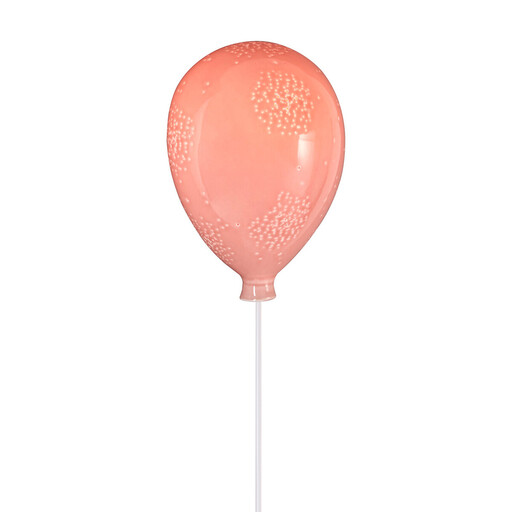
Why this product suits this profile: This balloon-shaped ceramic light is a good choice for households looking for fixed, decorative wall lighting rather than sensor or battery features.
The product details specify the material, dimensions and the required E14 bulb. As the bulb isn’t included, you can choose the right colour temperature for your needs.
Made from 100% porcelain according to the product details, measuring 18 × 12 × 25 cm, with a fixed wall-mounted design in glossy pink.

Why this product suits this profile: This cordless model is designed for use on a bedside table, while travelling, during night-time care or wherever you need it. Touch controls and a timer mean fewer separate controls to manage.
The product details clearly list a rechargeable battery, dimming function, eight colour-changing modes and a one-hour timer. You don’t have to guess from the product images whether these features are included.
Rechargeable design, gradual dimming and a timer. According to the warning, the product is not suitable for children under three.

Why this product suits this profile: For night-time trips through the hallway, on the stairs or to the bathroom, this plug-in night light combines motion and dusk sensors.
The detection specifications are clearly stated: a range of up to 3 m and a 120° detection angle. The light switches off after 60 seconds without movement.
Five brightness settings from 20 to 100%, warm white light at 2700 K and a power consumption of 0.5 W according to the product details.
We’ve put together a complete, regularly updated list of products that meet these strict selection criteria and fully comply with the safety regulations in force in the EU.
Position the light so it doesn’t shine directly at eye level and can’t be covered by a duvet, pillow or clothing. Plug-in models should be connected to an intact, dry wall socket. Keep cables from rechargeable lamps out of reach of young children.
The lifespan depends on the LED, electronics, battery and how the light is used. The Aigostar model is specified as having an LED lifespan of 25,000 hours. This manufacturer’s figure refers to the light source and doesn’t necessarily indicate how long the whole device will last. For battery-powered models, the maximum run time per charge may vary depending on brightness and operating mode.
A model rated at 0.5 W and used for twelve hours a day uses around 2.19 kWh a year. A 1 W model uses about 4.38 kWh under the same conditions. To estimate the cost, multiply the consumption in kilowatt-hours by your personal electricity rate.