
Lieferung heute & morgen

Qualitätsgarantie

Willkommens-Angebote freischalten: KOSTENLOSE Lieferung | Bis zu 80 % RABATT | Kostenlose 30-Tage-JoyPlus-Testphase
App herunterladen
A children’s bedroom night light should provide orientation at night without lighting up the room unnecessarily. For parents of babies and toddlers, design and colour are therefore not the only considerations. Sensors, brightness, power supply, materials and the intended location all determine whether a children’s night light remains practical in everyday use.
Many models advertise a wide range of colours and effects. However, intense, cool white light can be disruptive when getting up at night or taking a quick look into the children’s bedroom. A warm white night light of around 2700 to 3000 Kelvin is often more suitable for discreet orientation than strong, cool-looking illumination. Colour changes can be decorative, but they are not necessary for every use.
A night light with a motion sensor only responds effectively when its detection area suits the room. Furniture, doors or an awkwardly positioned socket can restrict its functionality. A night light with a dusk sensor, on the other hand, switches on depending on the ambient brightness. If you want to use a light permanently in the hallway or children’s bedroom, check whether you want it to switch on automatically when it gets dark or only when movement is detected.
A rechargeable night light is flexible, but it needs to be charged regularly. Statements such as ‘long battery life’ are of limited value without specific capacity and usage conditions. Important details include battery capacity, charging connection, charging time and the stated operating time at maximum brightness. A plug-in night light does not need charging, but its location remains tied to a socket.
Look for specific details about colour temperature and brightness levels. A dimmable night light offers more flexibility than a model with just one fixed brightness setting. Three to five levels can be useful in a children’s bedroom, while a lower setting is often sufficient in the hallway.
Controls should remain simple on coloured LED night lights. Touch controls, a remote control or a timer are practical, but they must not result in the light being adjusted unintentionally. For babies and toddlers, the light should be positioned outside the bed and out of reach unless the manufacturer specifies another use.
For a motion sensor, detection angle, range and auto-off time are the key details. The GRIFEMA model with motion and dusk sensors, for example, specifies a range of up to 3 metres, an angle of 120 degrees and switch-off after 60 seconds without movement. These figures help you assess whether the light is suitable for a short route in the hallway or by the stairs.
A dusk sensor works differently: it measures the ambient brightness. Some models specify a threshold in lux, such as 20 lux. The sensor should not be obstructed by furniture, curtains or other objects.
A plug-in night light using 0,3 to 1 watt may be designed for continuous operation. Actual electricity costs depend on power consumption, usage time and the applicable electricity tariff. At 0,5 watt, the calculated consumption is 0,5 kilowatt-hours per 1.000 hours of operation.
Also check the intended environment. Several models are expressly designed only for indoor use and dry rooms with IP20 protection. This does not mean that they are suitable for direct contact with water. A night light for the bathroom should not be used near splashing water or a washbasin unless the manufacturer specifies a suitable protection rating.
Materials such as ABS, PC or silicone are frequently listed in product descriptions. With soft silicone lamps, it is also important to check whether the product must be protected from fire, high temperatures and immersion in water.
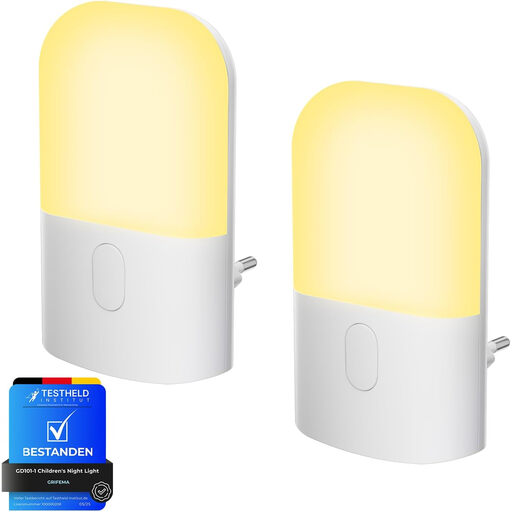
Why this product suits this profile: Two plug-in night lights with three brightness levels can be used in different locations at the same time, such as the children’s bedroom and hallway.
The dusk sensor switches the light on and off automatically. The three levels prevent you from being limited to a single setting that may be too bright.
2700 Kelvin warm white light, three brightness levels and a stated power consumption of 0,5 watt.
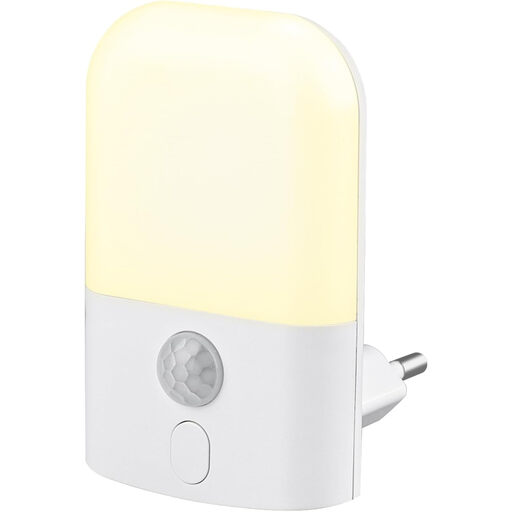
Why this product suits this profile: For households comparing sensor features and precise brightness adjustment for the children’s bedroom, hallway or stairs.
Motion and dusk sensors are combined. This means movement is only detected in the dark; the switch-off time is 60 seconds according to the product details.
Five levels from 20 to 100 per cent, 2700 Kelvin, a range of up to 3 metres and a 120-degree detection angle.
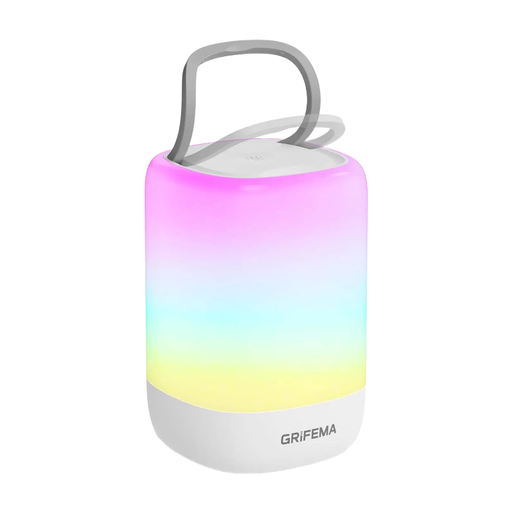
Why this product suits this profile: Its portable design is suitable for children’s bedrooms, bedrooms, camping or situations where there is no socket at the desired location.
The stated battery life is up to 15 hours. Nevertheless, you should plan a permanent charging location before buying.
USB-C charging, touch controls, stepless dimming from 5 to 100 per cent and a 30-minute timer.
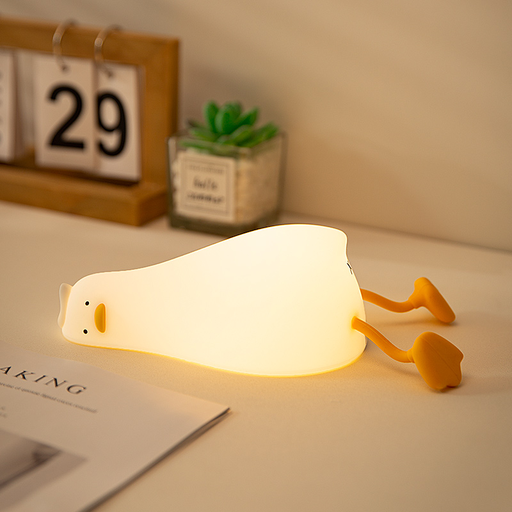
Why this product suits this profile: A soft, portable silicone lamp shaped like a duck can be used as a night light for children, a decorative feature or a gift.
The 1200 mAh battery means the lamp does not depend on a socket. For young children, however, follow the manufacturer’s guidance on supervision, heat and water.
Soft silicone housing, rechargeable battery and USB charging without permanent installation.
We have put together a complete, regularly updated list of products that fully meet these strict selection criteria and the safety regulations applicable in the EU.
That depends on how it will be used. A low brightness level is usually sufficient for orientation. A dimmable night light with several levels allows you to adjust the brightness to suit the room size and location. More light may be needed temporarily for changing a nappy or tidying up.
A motion sensor activates the LED night light only when movement and darkness are detected. This can reduce operating time. With a dusk sensor that remains permanently switched on, the stated power consumption is the deciding factor. A 0,5-watt model uses a calculated 0,5 kilowatt-hours per 1.000 hours of operation.
LEDs generally do not require regular bulb replacement. However, the actual service life depends on the electronics, operating time, heat generation and battery wear. With rechargeable models, battery capacity is an additional wear factor. Plug-in models with an integrated LED avoid the need to change batteries, but should not be used further if damaged or unusually hot.