
Lieferung heute & morgen

Qualitätsgarantie

Willkommens-Angebote freischalten: KOSTENLOSE Lieferung | Bis zu 80 % RABATT | Kostenlose 30-Tage-JoyPlus-Testphase
App herunterladen
Children’s outdoor ride-on vehicles range from simple kids’ scooters to electric ride-ons with remote control. The selection looks straightforward at first glance, but technical specs, age limits and intended use vary considerably. Parents, grandparents and relatives shouldn’t focus solely on design, motor power or accessories.
The following criteria will help you avoid bad buys and choose a vehicle that suits your child’s age, size and the way you plan to use it.
An age recommendation on its own isn’t enough. Just as important are the seat height, handlebar height, vehicle weight and maximum load. An electric children’s motorbike may be intended for a certain age group, but still not fit the child because of its seat height.
With kids’ scooters, also check the adjustable handlebar positions and the carrying capacity. A model with LED wheels is only practical if your child can stand securely on the deck and easily reach the rear brake.
Manufacturer figures for range, ride time and top speed depend on rider weight, surface, incline, tyre pressure, temperature, riding mode and battery condition. The stated range therefore isn’t a guaranteed everyday figure.
With an electric children’s motorbike, multiple speed levels and a controlled familiarisation period are more important than the highest possible top speed. For younger children, a kids’ car with gentle acceleration and remote control may be more suitable than a more powerful model.
Wide tyres, suspension or all-wheel drive can help on grass, dirt or uneven ground. Even so, water resistance, ground clearance and tyre tread must match the surroundings. An RC off-road truck is a remote-controlled toy and not comparable to a powered vehicle designed to carry a person.
For vehicles with a lithium battery, the supplied charger, where you charge it, and how you store it also matter. Batteries that are damaged or unusually warm should not be used or charged further.
Check before you buy:
With a ride-on vehicle with remote control, the handset should be straightforward to operate. An emergency stop or controlled speed selection can be useful day to day, but they do not replace adult supervision.
For electric models, rated voltage, motor output, riding modes and braking system are more meaningful than generic marketing claims. An electric children’s motorbike with multiple modes can be adapted to the rider’s experience. Hydraulic disc brakes, or disc brakes on both front and rear wheels, are technical features that should be clearly listed in the product description.
An electric dirt bike for children is only suitable for the intended age and height group. Models capable of 30 km/h or more are not automatically aimed at younger children. The YOZMA IN-10, for example, specifies a minimum age of 16 years; according to the product information, it is intended solely for private property or designated off-road tracks and is not approved for public roads.
Look for:
Even with a kids’ tractor or children’s car with a 12-volt battery, charging can take several hours. Factor that into how you plan to use it. Vehicles with lithium batteries must not be charged with unsuitable chargers.

Why this product fits the profile: This foldable children’s scooter is intended for kids from around 3 years old and can be adjusted via three handlebar heights. It’s suitable for short trips and easy to store at home.
The specs list handlebar adjustment, load limit and a rear foot brake. That makes it easier to assess fit and handling before you buy.
Foldable design, height-adjustable handlebar and LED lighting on the wheels as well as on the deck.

Why this product fits the profile: This 1:16 scale model is, according to the product information, intended for children aged 4 and up and offers mechanical play functions without a battery or charger.
Use doesn’t depend on battery life or charging cycles. Small parts are included; therefore the model is not suitable for children under 3 years.
Tilting driver’s cab, extendable and swivelling crane, towing accessories and an off-road vehicle included.
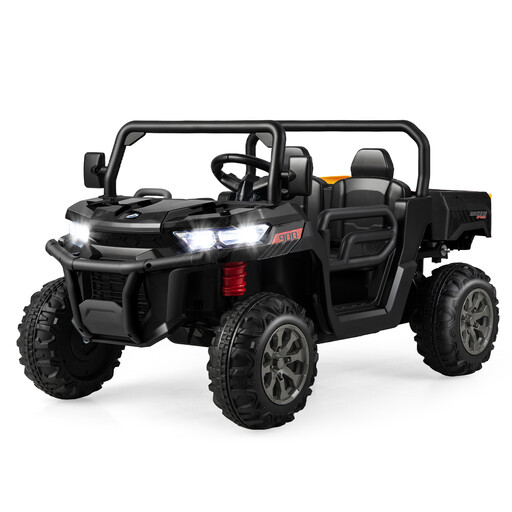
Why this product fits the profile: According to the product description, this vehicle is designed for children aged 3 to 8, offers two seats and can also be controlled via a 2.4 GHz remote.
The stated speed is 3 to 8 km/h. A seat belt, soft-start function and remote control are listed as concrete features.
Two seats, 50 kg load capacity, tipping bed, suspension, music functions and two control options.
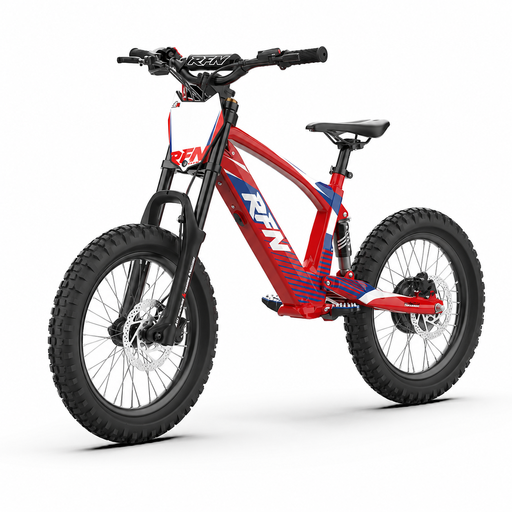
Why this product fits the profile: This model is intended for experienced young riders looking for an off-road capable electric vehicle with multiple speed levels.
The product data lists three riding levels with up to 30 km/h, a maximum load of 70 kg and a range of 15 km. These figures should be compared with real-world use before purchase.
18-inch wheels, hydraulic brakes, front fork suspension and a 36-volt motor with 500 watts rated output.
We’ve compiled a complete, continuously updated list of products that fully meet these stringent selection criteria and the safety regulations in force in the EU.
Depending on their height, options for three-year-olds include a simple kids’ scooter, a 4-in-1 children’s bike or a slow-moving kids’ car with remote control. The crucial factors are a suitable seat or handlebar height, low speed, and use on a defined, flat area. For models with small parts, heed the safety warnings.
That depends on battery capacity, riding mode, surface, weight and temperature. Treat the manufacturer’s figure as a guide. After every ride, charge the battery as per the instructions and store it in a dry place. Only use the specified charger for lithium batteries.
Not every electric dirt bike is approved for public roads. For each model, check approval status, minimum age, any licence requirement and local regulations. For the YOZMA IN-10, the product information specifies use solely on private property or designated off-road tracks. A helmet and appropriate protective clothing should always be part of the plan.