
Lieferung heute & morgen

Qualitätsgarantie

Willkommens-Angebote freischalten: KOSTENLOSE Lieferung | Bis zu 80 % RABATT | Kostenlose 30-Tage-JoyPlus-Testphase
App herunterladen
Play and sports equipment for children should encourage movement, be suitable for their age and offer reliable everyday use. In practice, however, unclear age recommendations, inadequate space planning and exaggerated advertising claims often lead to unsuitable purchases. Before choosing, it is therefore worth taking a close look at load capacity, materials, safety clearances and the intended location.
A product may be described as suitable from 24 months, while the safety notice states that it should only be used from 36 months. The stricter recommendation is the one that matters when making your decision. This is particularly relevant to climbing triangles and indoor climbing frames: motor skills, height and the possibility of direct supervision are more important than a general age figure.
The maximum load is not a licence for several children or dynamic movements. Jumping, swinging and climbing create additional forces. Equipment with a stated load capacity of 25 kg is therefore intended for one smaller child – not for several children playing together.
A children's trampoline with a diameter of 91.6 cm may look compact, but it also needs clearance from furniture, walls and low ceilings. A children's bouncy castle can be folded away for space-saving storage, but when inflated it requires several square metres and a continuous power supply for the blower. Before buying, measure the entire usable area.
For indoor spaces, compact products with a manageable footprint are suitable, such as an indoor climbing triangle, a Pikler triangle or a foldable mini trampoline for children. A carpet or suitable play mat can protect the floor and reduce the risk of slipping.
Outdoors, buyers must also consider the surface, weather conditions and anchoring. A bouncy castle should be placed on a level surface and secured with the supplied pegs. Water features also require careful emptying and drying.
Look for clear, verifiable information about:
Material details such as steel, polypropylene, solid wood or Oxford fabric can be objectively checked. Claims such as “indestructible”, “completely safe” or “suitable for every child”, on the other hand, should be treated with caution.
The stated load capacity, recommended age and number of children permitted to use the equipment at the same time are among the most important product details. For trampolines, the rule is: only one child at a time, no somersaults and always direct adult supervision. With climbing frames, screws, ropes and moving parts should be checked before every use.
For nurseries and day-care centres, group size, cleaning options, storage and daily visual inspections are also relevant. An agility ladder or coordination ladder requires less storage space, but does need a clear training area and instructions.
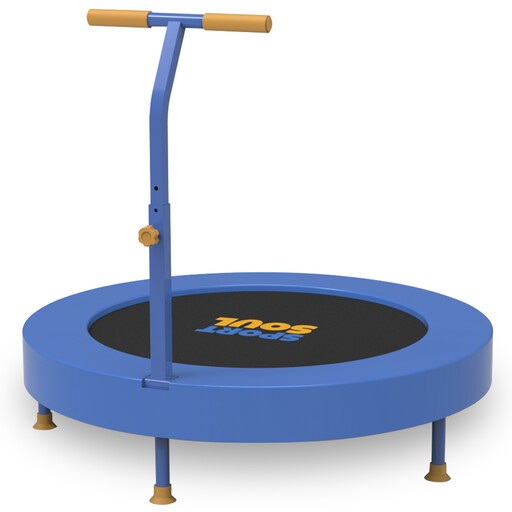
Why this product suits this profile: Measuring 91.6 × 91.6 cm, the foldable mini trampoline takes up relatively little floor space and can be stored away when not in use. It is designed for one smaller user weighing up to 25 kg.
The 24 elastic bands replace steel springs and are combined with a foam cover. The 25 kg load limit and one-child use requirement nevertheless remain binding.
Steel frame, adjustable T-handle, 24 elastic bands and foldable design. The frame, mat, bands and padding must be checked before every use.
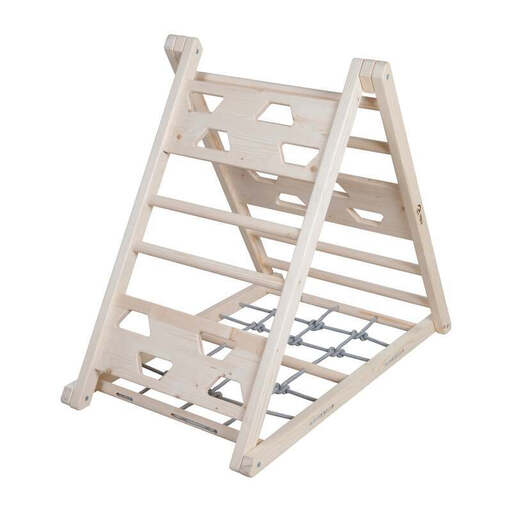
Why this product suits this profile: Made from untreated solid wood, this three-sided model offers rungs, a climbing rope and easy-to-grip surfaces. It is suitable for children's rooms where different movement experiences are needed in a limited space.
The construction and dimensions of 85 × 63.5 × 97.5 cm are clearly stated. Pay close attention to the different safety guidance: use only under direct supervision and not for children under 36 months.
Solid wood, three usable sides and a stated maximum load capacity of 50 kg. A non-slip, level surface and regular screw checks are required.
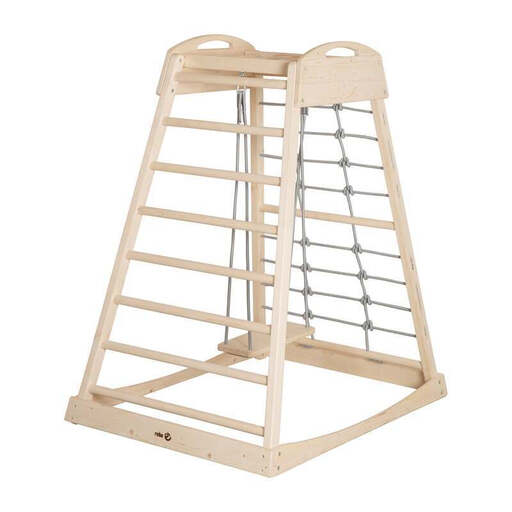
Why this product suits this profile: This indoor climbing frame combines climbing ropes, gymnastic rings and a removable solid-wood swing. Measuring 127.5 × 83 × 110.5 cm, it is an appealing choice for families wanting to combine several types of movement in one piece of equipment.
The 70 kg usage limit and one-child use requirement are expressly stated. Because of the risk of tipping, a soft mat is recommended; wall anchoring is advised for indoor installation.
Several integrated elements, natural wood with rounded edges and a replaceable swing. Allow time for adult assembly and regular checks of the ropes, rings and screws.
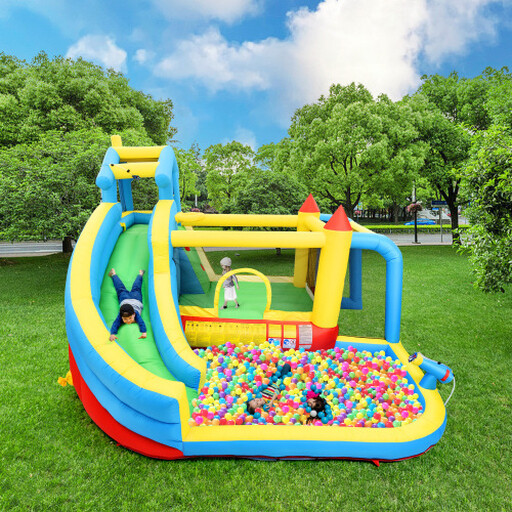
Why this product suits this profile: The inflated play centre measures 364 × 315 × 239 cm and offers several play areas. It is specified for children aged 3 to 10, for up to three children and a maximum total load of 135 kg.
The actual space required, the blower output of 550–750 W and the need for a continuous air supply must all be taken into account. After using the water feature, the pool must be completely emptied and dried.
Five integrated play zones, safety netting, supplied blower and dry or wet use. The play centre is not intended for children under 3 and must be secured with pegs.
We have put together a complete, regularly updated list of products that fully meet these strict selection criteria and the safety regulations applicable in the EU.
Before using the equipment for the first time, parents and carers should:
For younger children, age-appropriate motor skills toys from 3 years can also be a sensible choice. A coordination ladder is more suitable for guided movement exercises in an open area, rather than as unsupervised climbing equipment.
In addition to the trampoline's diameter, you must allow for a safety zone around the equipment. You should also ensure that the ceiling is high enough. Furniture, walls and other hard objects should not be positioned immediately next to it.
It is not possible to give a reliable general lifespan. This depends on how often the equipment is used, the load, assembly, room conditions and care. Wood, screws, ropes, rings and connections should be checked regularly. If any damage is found, the equipment must not be used.
In addition to the purchase price, there are electricity costs for the blower. The exact amount depends on the wattage and how long it is used. For a blower rated at 550 to 750 W, consumption can be calculated using the formula “watts divided by 1,000 multiplied by operating hours”. Water features may also incur additional costs for water and cleaning.