
Lieferung heute & morgen

Qualitätsgarantie

Willkommens-Angebote freischalten: KOSTENLOSE Lieferung | Bis zu 80 % RABATT | Kostenlose 30-Tage-JoyPlus-Testphase
App herunterladen
A children’s play mat should make the floor more comfortable, define a play zone, and be straightforward to clean in everyday use. However, product advertising often throws around terms like “extra soft”, “safe” or “suitable for babies” without making the crucial details immediately clear. For parents and carers, it’s therefore worth taking a close look at the material, dimensions, age recommendation and care instructions.
A baby play mat isn’t automatically suitable for every age and developmental stage. What really matters are the manufacturer’s specific age recommendation, any warning labels, and that the mat is used under supervision. The Sombo City Farm Play Mat, for example, states it’s suitable from 2 years; at the same time, the product information notes it isn’t suitable for children under 10 months. You should always check these details before buying and before first use.
A very soft foam mat for children can feel pleasant, but it may shift under pressure or come apart at the connecting points. On smooth floors, it’s therefore important that the mat lies flat and the individual pieces lock together securely. A non-slip play mat should also be used on a clean, dry surface. Don’t rely solely on marketing images to judge how slip-resistant a mat really is.
Six square EVA tiles measuring 12 inches each side only create a limited area. That might be enough for a small play corner, but for crawling, building or for several children, a larger set could be more practical. Measure the available floor space before ordering. You also need to keep access to doors, furniture and radiators clear.
With a puzzle mat made from EVA foam, the material specification, edge design and connection system are particularly important. EVA foam is commonly used as a lightweight, wipe-clean material. However, a “non-toxic” claim should always be considered alongside the safety and care instructions on the packaging. For products with plastic or fabric surfaces, also pay attention to smell, visible workmanship and a surface that’s as smooth and easy to clean as possible.
A fabric crawling mat or a children’s play rug can work well for larger play areas, but the cleaning method will vary depending on the material. For spills, a wipe-clean surface is usually easier to manage in daily life than a thick fabric.
Measure the intended space before you buy:
A mat for the children’s bedroom should also be easy to store away when not in use. Roll-up models and take-apart puzzle mats meet different needs.
An easy-care play mat should be cleanable with a damp cloth. Only use cleaning products if the care instructions allow it. After cleaning, the surface must be completely dry before children play on it again.
Check regularly for:
A play mat doesn’t automatically prevent injuries. Children should always be supervised appropriately, especially during active play, climbing or when using small figures.
The following models differ mainly in area, material, construction and intended use. The details are based on the respective product information.
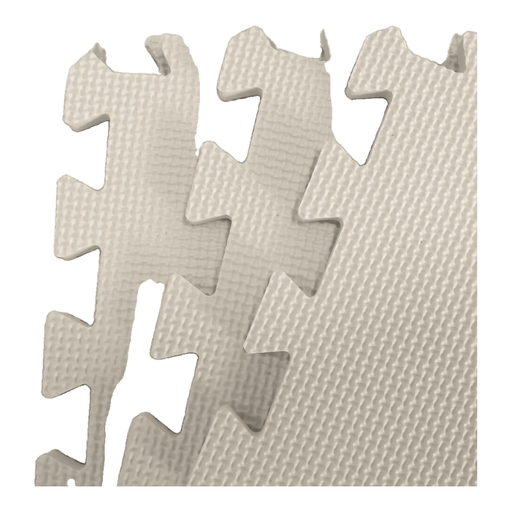
Why this product fits the profile: The six EVA foam tiles create a clearly defined, compact play corner and can be clicked together without any tools.
The number of tiles and the 12 × 12 inch format are clearly stated. This makes it easier to estimate the actual area before buying.
EVA foam, interlocking system, ten edge pieces and a wipe-clean surface according to the product information.

Why this product fits the profile: The 100 × 190 cm reversible polyester mat offers two clearly distinct design sides for children aged 2 and over.
The exact size and material are clearly stated. Buyers don’t have to judge the play area from product images alone.
Reversible design with road and animal motifs, polyester surface, rollable and cleanable with a damp cloth according to the product information.
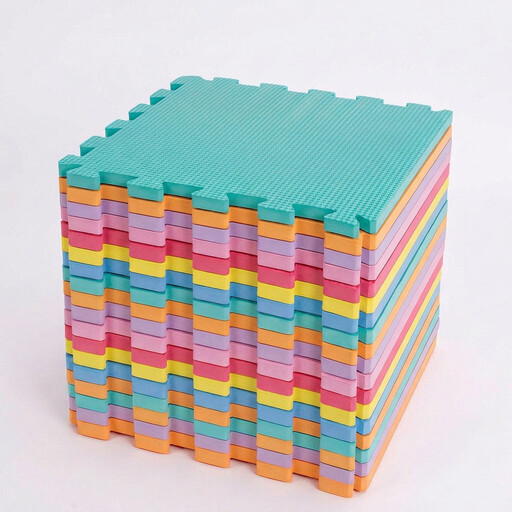
Why this product fits the profile: The 18 tiles with 27 edge pieces are ideal for larger or flexibly reconfigurable areas, such as a children’s bedroom, classroom or activity space.
The larger number of tiles reduces the risk of ordering an area that’s too small. The interlocking system can be taken apart again if needed.
18 EVA tiles in 12 × 12 inch format, 27 edge pieces and suitable for play, yoga and fitness areas according to the product information.
For a small seating area or a changing play space, individual EVA puzzle mats are practical. A large fabric play mat is better suited when road and animal motifs are the main focus and the mat needs to be rolled up regularly. For active play, yoga or light exercise, a foam mat can be more versatile. Just make sure the mat you choose is suitable for the intended use and floor surface.
In rented flats, nursery settings or places that change frequently, low weight, easy cleaning and straightforward storage are especially important. The colour should also suit the location: lighter surfaces show dirt more quickly, but they’re easier to keep an eye on.
We’ve put together a full, regularly updated list of products that meet these strict selection criteria and the safety regulations in force across the EU.
That depends on how you plan to use it. For a single play corner, six puzzle tiles may be enough. For crawling, building or playing with several children, a larger area makes more sense. Measure the space and allow for room to move around the edges.
EVA tiles and many fabric mats can be cleaned with a damp cloth, provided the product care instructions allow it. Wipe up spills as soon as possible and let the mat dry completely. Harsh cleaners, high heat and prolonged moisture can damage the material and the connections.
The lifespan depends on the material, how much it’s used, how it’s stored and how well it’s cared for. Regular checks for tears, loose connections and trip hazards are more important than a general durability claim. If you notice visible damage, the mat should be replaced.