
Lieferung heute & morgen

Qualitätsgarantie

Willkommens-Angebote freischalten: KOSTENLOSE Lieferung | Bis zu 80 % RABATT | Kostenlose 30-Tage-JoyPlus-Testphase
App herunterladen
A children’s play mat should provide a softer surface, define play areas and be easy to clean in everyday use. In practice, however, models differ considerably in material, size, stability and maintenance requirements. An eye-catching design alone says little about whether a mat is right for your home, your child’s age or the intended use.
A children’s play rug can look generous in product images even when the actual play surface is limited. Always check the external dimensions and measure the available space in the child’s room, living room or playgroup area. For several children, building blocks or toy vehicles, a larger surface is generally more practical than a compact model.
A foam baby play mat can help cushion falls on hard floors, but it is not suitable for every purpose. Thin models may shift on uneven surfaces. Sensory mats, rugs and foam tiles each have different characteristics. The decisive factors are the material, underside, connection system and condition of the floor.
Liquids, crumbs and craft materials regularly end up on a crawling mat. For textile surfaces, check whether cleaning with a damp cloth is sufficient or whether the mat can be fully washed. EVA foam mats can often be wiped down section by section. With play mats containing liquid elements, pay particular attention to damaged surfaces and the manufacturer’s instructions.
Look for a complete description of the materials used. For an EVA foam mat, it should be clear what type of foam it contains and how the individual pieces connect. Claims such as “non-toxic” or “safe” should not be considered in isolation. Also check the product labelling, age recommendation, warnings and information on the packaging.
For facilities such as nurseries, schools and daycare centres, transparent manufacturer and importer details are particularly important. If you have concerns about potentially harmful substances or product compliance, request the complete documentation from the supplier.
A children’s puzzle mat can be expanded flexibly with additional square pieces. This is useful when the play area needs to be rearranged from time to time. Check the following:
A roll-up mat is quick to set up and can be rolled away after playtime. One example is the Sombo City Farm Play Mat, measuring 100 × 190 cm. According to the product description, it is made of polyester and features a reversible design with road and farm-animal motifs.
A non-slip play mat should be placed on a clean, level floor. Dust, moisture or loose rugs underneath can compromise its grip. Before each use, check whether the edges are curling up, tiles are pulling apart or the underside has shifted.
A play mat is not a substitute for supervision. With babies and toddlers in particular, follow the age recommendations, warnings and intended use. Products with small detachable parts or liquid filling should be inspected regularly for signs of damage.
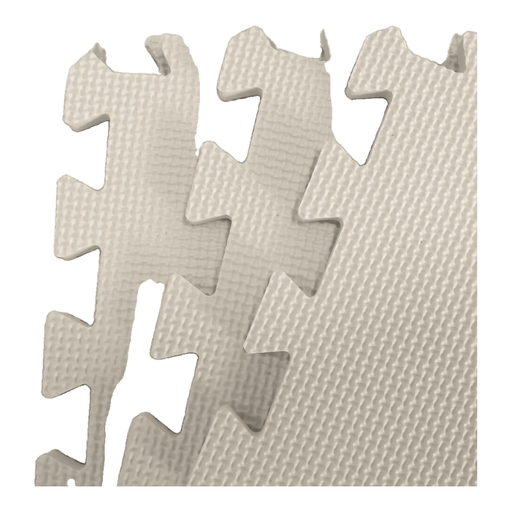
Why it fits: The six square tiles are well suited to small play areas and can be separated again whenever needed.
The specified number of pieces and interlocking system make it easier to assess the actual surface area before buying than an inaccurately scaled product image.
EVA foam, six tiles and ten border pieces according to the product information; the surface is designed for everyday cleaning.

Why it fits: For families looking for one continuous surface for toy vehicles, figurines, reading time or shared play.
The 100 × 190 cm dimensions are clearly specified, making it possible to check before purchase whether the mat will fit comfortably in the child’s room.
Reversible design with road and farm-animal motifs, polyester construction according to the supplier, and the option to roll it up for storage.
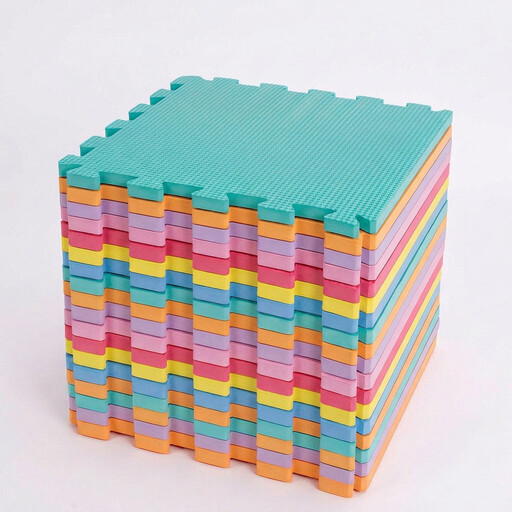
Why it fits: The larger number of tiles is designed for playrooms, activity areas or spaces with a flexible layout.
The modular construction allows the mat to be adapted to the room. Even so, check that the connections are secure before each use.
18 squares measuring 12 × 12 inches each and 27 border pieces according to the product description; EVA foam with a wipe-clean surface.

Why it fits: For indoor spaces where a sensory floor mat with moving coloured liquid elements is intended as a play or design feature.
According to the product description, the reinforced PVC underside is designed to reduce slipping. Nevertheless, liquid-filled elements must be checked regularly for cracks.
Nine tiles for indoor use; according to the supplier, the surface can be laid out without installation and wiped clean.
We have put together a current selection of products that can be compared by material, configuration, size and intended use.
Roll up a textile children’s play mat dry and without sharp creases after use. For foam tiles, a soft, damp cloth with a mild cleaning agent is usually sufficient unless the manufacturer specifies otherwise. Harsh cleaners, high heat and prolonged exposure to moisture can damage the material or printed design.
A fixed service life cannot be stated universally. It depends on exposure to UV light, footwear, furniture, cleaning products and daily use. Replace elements if they develop cracks, sharp edges, loose connections or leaks.
Measure the intended area, including walkways and clearance around furniture. A small set of tiles may be sufficient for individual play activities. A 100 × 190 cm mat, by contrast, provides one continuous surface for several types of play. The decisive factors are not just the size of the room, but also the number of children and the toys being used.
That depends on the specific product, age recommendations and warnings. Check the material information, border pieces and stability of the interlocking connections. The EVA tiles mentioned here are described as a play, learning and fitness surface; this does not establish universal suitability for every baby.
Place it on a clean, dry and level surface. Remove loose rugs underneath and check the edges regularly. With modular mats, all connections should be fully locked into place. A slip-resistant underside can help, but it does not replace checking the mat before use.