
Lieferung heute & morgen

Qualitätsgarantie

Willkommens-Angebote freischalten: KOSTENLOSE Lieferung | Bis zu 80 % RABATT | Kostenlose 30-Tage-JoyPlus-Testphase
App herunterladen
A children’s play table needs to suit the child’s age, the available space and how you plan to use it. A model for musical discovery in the nursery has different requirements to a sand and water table for children in the garden. If you only focus on colours, lots of features or a low price, you can easily overlook important details.
Three common buying pitfalls crop up time and again:
The manufacturer’s age guide is a useful starting point, but it doesn’t replace adult supervision. For babies from around 3 months, a Montessori play gym with hanging elements could be an option. A baby activity table with removable legs is a good choice if your child starts playing on the floor and later stands up to explore different features.
A play table for 18 months and up should be sturdy and not used for pulling up or climbing. For a table with chairs, you’ll also need to consider seat height, back support and whether your child can sit down independently. Models for age 3 and above can often be used for drawing, reading or eating too.
Look for clear information on:
A blanket statement like “completely safe” isn’t enough to go on. What matters are the product details, how it’s assembled and that it’s used according to the manufacturer’s instructions.
For a mud kitchen for children or a sand and water table, removable trays are very handy. You can empty them after play and clean them separately. Water shouldn’t be left in the container for long periods. With wooden tables, check the surface regularly and store them in a dry place during long spells of rain or frost.
For the nursery, built-in compartments, removable tabletops or chairs that slide under the table are useful. A multifunctional children’s table can then become a craft table, play table and learning space without needing several pieces of furniture.
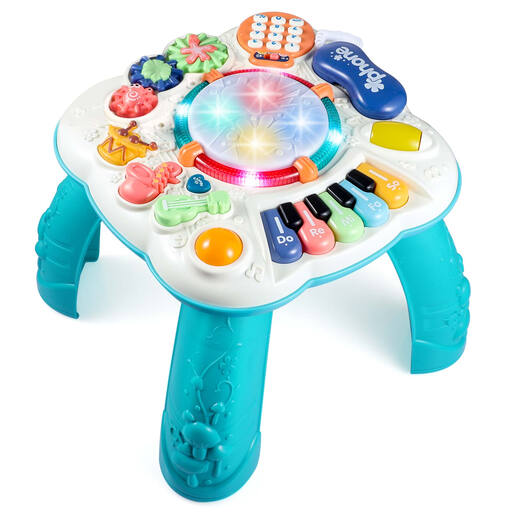
Why this product fits the profile: This compact baby activity table is suitable for children from 6 to 36 months and can be used with or without legs. That makes it ideal for families looking for a versatile learning toy for toddlers.
The age recommendation, removable legs and volume control are clearly described. Batteries are not included and will need to be factored into ongoing use.
Six described play areas, ABS plastic according to the product information and rounded edges. The compact size makes it easy to use indoors.

Why this product fits the profile: This solid wood table is designed for sand, water and mud outdoors. In winter, the removable tray can be used for craft materials indoors.
The tray is removable, the dimensions of 50 × 38.5 × 32 cm are stated and a shelf provides space for accessories. The warnings about use and supervision should be followed.
Solid wood construction according to the product information, removable plastic container and can be used as a craft table. Suitable for the stated age range of 18 months to 8 years.
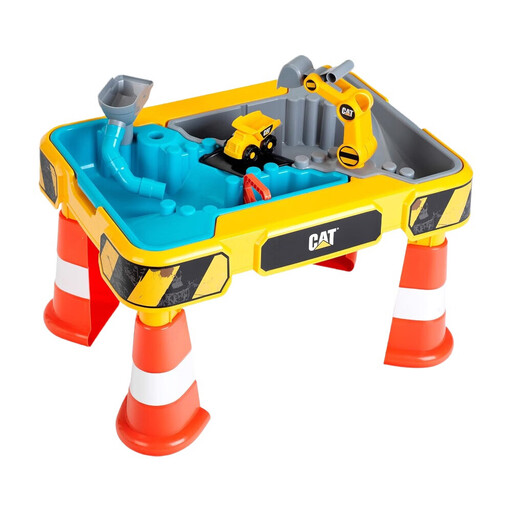
Why this product fits the profile: This model is aimed at families who want a fixed outdoor play table for sand and water games with accessories including a digger arm, tipper truck, pipes and stoppers.
The removable basins make emptying and cleaning easy. At 64 × 48 × 40 cm, check before buying that your balcony, patio or garden has enough space.
Several play components, no batteries required and a stated weight of 3.3 kg. The product is described as suitable for children from 18 months.
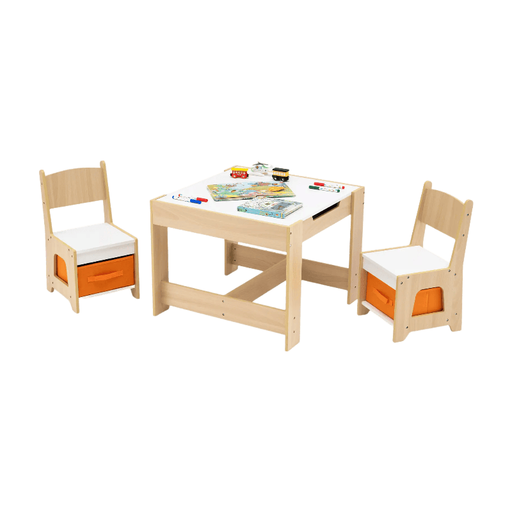
Why this product fits the profile: This play table with chairs offers two seats and is suitable from age 3 for drawing, reading, crafting, playing or eating.
The reversible tabletop with whiteboard and chalkboard sides, plus built-in storage, make the functions clear and practical. Assembly is required.
Two chairs, hidden storage, two fabric drawers and seats that slide under the table. The table measures 61.5 × 61.5 × 48.5 cm.
We’ve put together a full, regularly updated list of products that meet these strict selection criteria and all applicable EU safety regulations.
Models with a suitable manufacturer’s recommendation, a sturdy construction and a manageable number of play features can be appropriate. For sand and water play, removable containers are practical. With an indoor table, also check the table height, edges and the amount of free space around it.
That depends on the age rating, size and design. A dedicated baby activity table is usually designed for the early developmental stages. A height-adjustable table with chairs or a versatile outdoor table can be used across several age groups, as long as the manufacturer states this range and the furniture is checked regularly.
With a musical activity table, you may need to buy batteries. For sand and water tables, the main costs are for sand, cleaning products and possibly covers or storage boxes. You can keep ongoing costs down by collecting accessories, removing water after play and storing the table in a dry place.