
Lieferung heute & morgen

Qualitätsgarantie

Willkommens-Angebote freischalten: KOSTENLOSE Lieferung | Bis zu 80 % RABATT | Kostenlose 30-Tage-JoyPlus-Testphase
App herunterladen
A new playhouse for your child promises sparkling eyes and hours of imaginative adventures. But reality often looks different: the expensive gift turns out to be a flimsy structure, loses its appeal after just a few days, or harbours unnoticed defects. As a Joybuy Product Recommendation Officer, I see daily which pitfalls lead to disappointment in the playroom. Before you make a decision, you should know the three most common mistakes that bring the fun to a premature end.
A well-considered purchase based on objective criteria not only protects against disappointment but also ensures a durable and safe play environment for your child.
To find a suitable and long-lasting playhouse, you shouldn't be guided by marketing promises, but by verifiable product features. Three core parameters are crucial.
The material is the foundation for safety and durability. The choice between wood and plastic depends on your priorities:
A toy must match the child's developmental stage to avoid being overwhelming or underwhelming.
Children's interests are diverse. A thematically appropriate playhouse increases identification and fun. For little vehicle enthusiasts, a toy parking garage is ideal, while a Playmobil house or a LEGO house is often part of an entire system that grows with additional sets, enabling ever-new play scenarios. This expandability ensures the toy's relevance for years to come.
Based on these objective criteria, we have identified several products that are suitable for different age groups and play preferences.
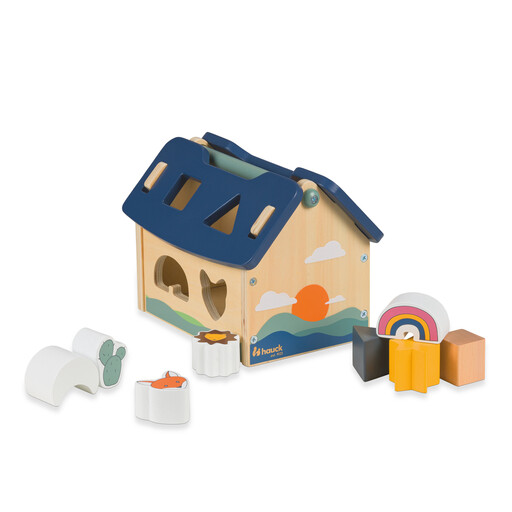
Why This Fits Their Persona: Ideal for parents looking for a first, educationally valuable toy that promotes basic motor skills and an understanding of shapes and colours.
The construction of FSC-certified wood is robust and durable. As a shape sorter, it offers a clear, repeatable learning incentive that doesn't get boring. The large blocks are safe for children aged 12 months and up.
Promotes hand-eye coordination and shape recognition. The house also serves as practical storage for the blocks.

Why This Fits Their Persona: Perfect for animal-loving children who enjoy immersing themselves in role-playing and caring for animals. The set provides a detailed backdrop for countless farm adventures.
The renowned Schleich quality ensures a stable and durable construction. The extensive accessories (seesaw, tunnel, scratching post) and figures offer diverse play opportunities and prevent boredom.
Promotes social learning and empathy through caring for animals. The set is compatible with the entire Schleich Farm World, making it expandable.
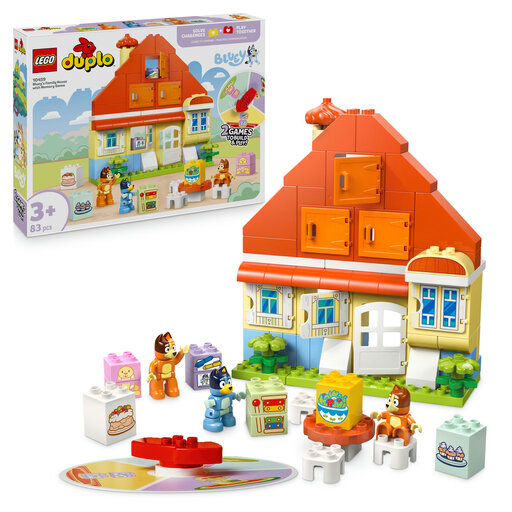
Why This Fits Their Persona: For children who love to build and simultaneously re-enact the world of their favourite TV series. It combines creative building with role-playing and a learning game.
The proven LEGO DUPLO quality guarantees stability. The 2-in-1 concept of building and a memory game ensures long-lasting variety. The large bricks are safe and easy for children aged 3 and up to handle.
Promotes fine motor skills, communication, and memory. The high recognition value of the characters from the "Bluey" series increases motivation.
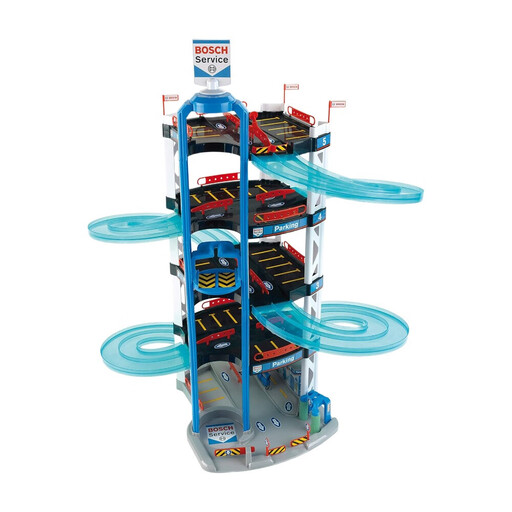
Why This Fits Their Persona: For children fascinated by cars, racing, and workshops. This multi-storey parking garage offers a dynamic play world full of action.
The sturdy construction in the Bosch design is built for active play. Features like the double ramp for races, the lift, and the service station provide varied and long-lasting fun.
Trains creativity and spatial thinking. The set includes two racing cars and accessories, so the fun can start right away.
We have compiled a complete, up-to-date list of products that fully meet these strict selection criteria and German safety regulations.
1. From what age is a playhouse suitable for children? This heavily depends on the model. Simple wooden motor skill and sorting houses are often suitable for children from 12 to 18 months. Detailed playsets from brands like Playmobil or LEGO are generally aimed at children aged 4 and up, as they contain smaller parts and facilitate more complex role-playing. Always check the manufacturer's age recommendation on the packaging.
2. How can I identify a safe toy house? Look for recognised certification marks. The CE mark is mandatory in the EU. The voluntary GS mark ("Geprüfte Sicherheit" or "Tested Safety") is awarded by independent testing bodies like T?V and signifies higher safety standards. For wooden toys, the FSC seal is an indicator of sustainable origin. Additionally, check the toy for rounded edges, a stable construction, and warnings regarding small parts that could be a choking hazard.
3. How do I care for a playhouse to ensure it lasts? Maintenance is straightforward. Plastic playhouses can be easily cleaned with a damp cloth and mild soapy water. For untreated wooden toys, you should only use a dry or slightly damp cloth to prevent the material from swelling. An outdoor mud kitchen, if not made from weather-resistant wood like larch or pressure-treated pine, should be covered or stored under shelter when not in use to extend its lifespan.