
Lieferung heute & morgen

Qualitätsgarantie

Willkommens-Angebote freischalten: KOSTENLOSE Lieferung | Bis zu 80 % RABATT | Kostenlose 30-Tage-JoyPlus-Testphase
App herunterladen
A children's puzzle should suit the child's age, dexterity and interests. Even so, product images and marketing claims do not always lead to a good purchasing decision. A puzzle may look appealing but prove too difficult, too small or impractical for the intended age group in everyday use.
A 24-piece puzzle may be suitable for a child aged three or over, while another design with the same number of pieces may be considerably more challenging. Large areas of colour and clearly recognisable characters make it easier to get started. By contrast, skies, water or plain backgrounds increase the difficulty.
For a puzzle for toddlers, the number of pieces is therefore not the only relevant factor. The design, piece size and visual guides are important too.
The age recommendation on the packaging is a useful guide, but it does not replace an individual assessment. A child who already puzzles regularly may be able to manage a higher number of pieces sooner. Beginners, on the other hand, often benefit from a frame, a picture board or several small puzzles with different levels of difficulty.
Puzzle pieces can easily disappear among other toys or become damaged during tidying up. For sets with several designs, it is therefore worth checking whether a box, frame or another organised storage solution is included. Products containing small parts are generally unsuitable for children under three, provided the manufacturer includes a relevant warning.
The following ranges can serve as an initial guide:
These ranges are not fixed rules. A puzzle with large pieces can also be useful for older beginners, while experienced children may prefer more pieces at an earlier age.
A children's frame puzzle keeps the outer shape stable and often shows the outlines of the individual pieces. This makes it easier to match the pieces and reduces frustration when getting started. An additional picture guide or poster can also be helpful.
With a classic puzzle without a frame, a sufficiently large, flat playing surface is important. Sets with several designs are suitable for nurseries and primary schools, as several children can play with them at the same time or take turns.
Before buying, parents and organisations should pay attention to the following details:
A children's puzzle is not a substitute for supervision. Appropriate supervision is advisable for younger children, particularly when small parts are included.
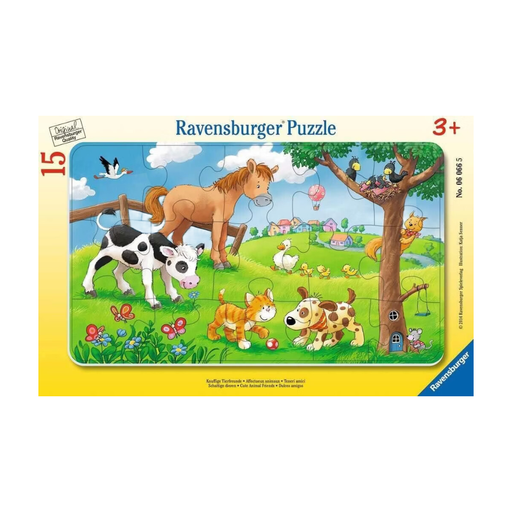
Why this product suits the profile: The 15-piece animal design is aimed at children aged three and over. With a frame and picture board, it offers a manageable introduction to puzzling.
The outlines on the picture board provide guidance, so the purchasing decision is not based on the design alone. The warnings about small parts and minimum age should be followed.
15 sturdy cardboard pieces, an integrated frame and a clearly recognisable animal design for children's first puzzling experiences.
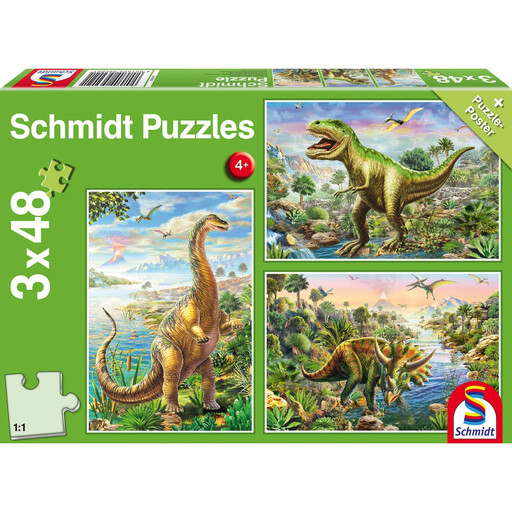
Why this product suits the profile: Three dinosaur designs with 48 pieces each give children aged four and over several rounds of play with the same number of pieces.
The number of pieces, age recommendation and completed size are clearly stated. Posters with cut lines help children get started without making the puzzle harder because of an unclear guide.
Three puzzles with 48 pieces each, precisely cut cardboard pieces and a matt, linen-textured surface according to the product information.
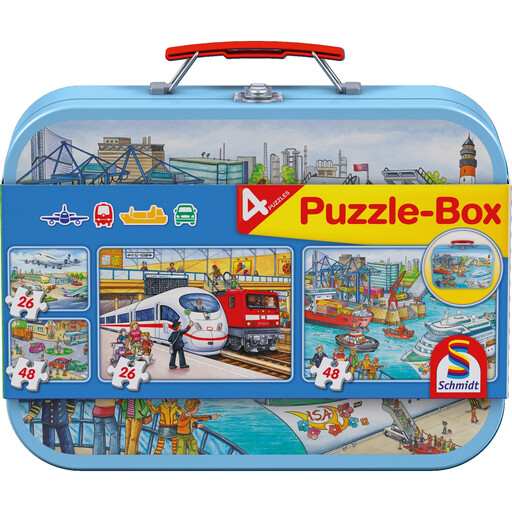
Why this product suits the profile: The metal box stores four vehicle designs, making it suitable for families, nurseries or regular puzzling sessions.
The four clearly separated designs and two piece sizes help prevent buying a set that offers only one short-lived design. The posters make matching the pieces easier.
Four puzzles with 2 × 26 and 2 × 48 pieces, plus a metal storage case for tidy organisation.
Fans of familiar characters may also enjoy a Disney children's puzzle set such as the Ravensburger Anna and Elsa frame puzzle with 40 pieces, suitable from the age of four. If you are looking for a children's puzzle gift, you can compare the design, age recommendation and number of pieces together. For younger children from the age of two, a first puzzle with a few large pieces is more suitable than a visually elaborate multi-piece set.
We have put together a complete, regularly updated list of products that fully meet these strict selection criteria and the safety regulations applicable in the EU.
For beginners aged three and over, 12 to 24 pieces are often suitable. From the age of four, 24 to 48 pieces may be appropriate. The design, piece size, previous experience and whether a frame or poster is included are also important factors.
A frame can make matching the pieces easier and prevents the outer shape from shifting. However, the relevant manufacturer's age recommendation must still be followed. If the product includes a corresponding safety warning, it must not be used by children under three when small parts are present.
After playing, the pieces should be counted and stored in a dry place in the original packaging or a sealable box. Cardboard puzzles should be protected from moisture. For sets with several designs, it is advisable to sort the pieces separately.