
Lieferung heute & morgen

Qualitätsgarantie

Willkommens-Angebote freischalten: KOSTENLOSE Lieferung | Bis zu 80 % RABATT | Kostenlose 30-Tage-JoyPlus-Testphase
App herunterladen
A children’s puzzle should suit the child’s age, fine motor skills and attention span. In practice, however, people often focus only on the picture and price. This can result in a puzzle quickly becoming overwhelming, pieces being lost or the material not being suitable for its intended use.
This buying guide explains which features really matter when choosing a puzzle for children and which models are suitable for different needs.
More pieces do not automatically mean more play value. For a two-year-old, a simple shape puzzle with just a few easy-to-grip pieces may already be suitable. A puzzle with 100 or more pieces, on the other hand, is more appropriate for older children who already have experience with pictures, edge pieces and systematic sorting.
The key factors are therefore the recommended age, piece size and difficulty level – not simply the number printed on the box.
Popular characters such as Disney figures or Paw Patrol can attract a child’s attention. However, if the puzzle lacks a sturdy frame, clear outlines or sufficiently large pieces, putting it together can become unnecessarily difficult. A frame puzzle for children provides beginners in particular with a visible boundary and guidance for positioning the pieces.
For children under three, warnings about small parts that may be swallowed are especially important. A children’s puzzle from age 2 should only be used if the specific age recommendation and the manufacturer’s safety instructions are suitable. With wooden puzzles, it is also important that knobs are firmly attached, edges are smooth and the surface is undamaged.
The manufacturer’s age recommendation provides an initial guide:
The age category is not a guarantee of individual success. Children develop at different rates. A puzzle that is too easy may become boring, while a model that is too difficult can cause frustration.
Large pieces are easier for small hands to pick up and turn. With frame puzzles, pre-printed outlines on the base provide useful guidance. A picture guide or poster can also be helpful, especially when several areas feature similar colours.
Look for:
A wooden puzzle for children should be checked regularly for splinters, cracks and loose knobs. Wood should not be soaked in water or cleaned in the dishwasher. Cardboard pieces retain their shape for longer when stored in a dry place and not bent.
For products with small parts, the rule is: use only as specified by the manufacturer and supervise younger children. A CE mark or information on applicable toy safety requirements can provide additional guidance. Nevertheless, this does not replace checking the puzzle before every use.
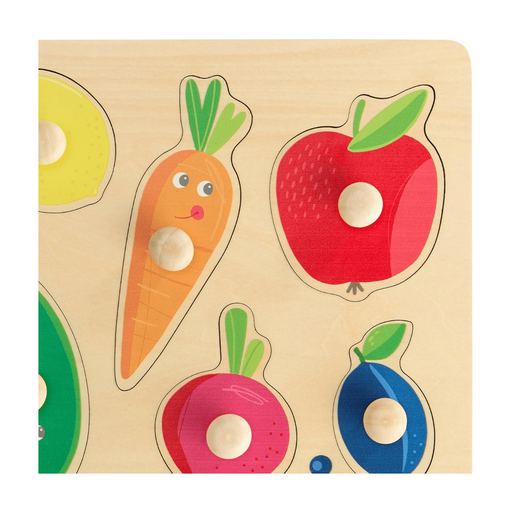
Why this product suits this profile: This wooden puzzle is designed for children from 12 months and features large wooden knobs that small hands can grip easily. Colours, fruit and simple shapes make it easy to get started.
The large knobs and simple insert design prevent the number of pieces and difficulty level from being too challenging for beginners.
Solid wood, a 30 × 21 cm puzzle board and clear matching of shapes and colours.
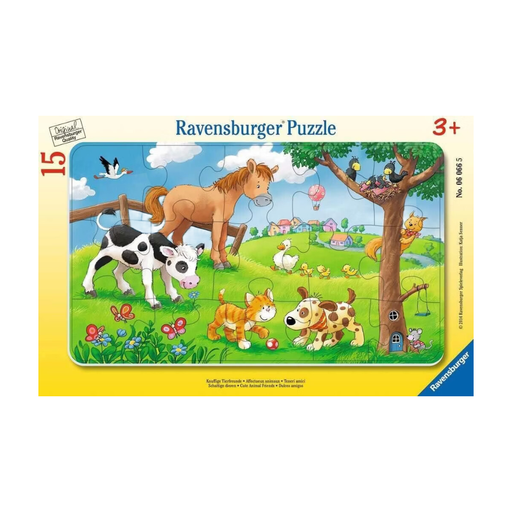
Why this product suits this profile: This 15-piece frame puzzle is designed for children from the age of three. The frame and base are combined, while outline markings help children position the pieces.
The pre-defined outlines reduce the need to search for the right position and make assembling the puzzle easier to understand.
15 sturdy pieces, an animal picture, integrated base and certified, child-safe plastic materials according to the product description.
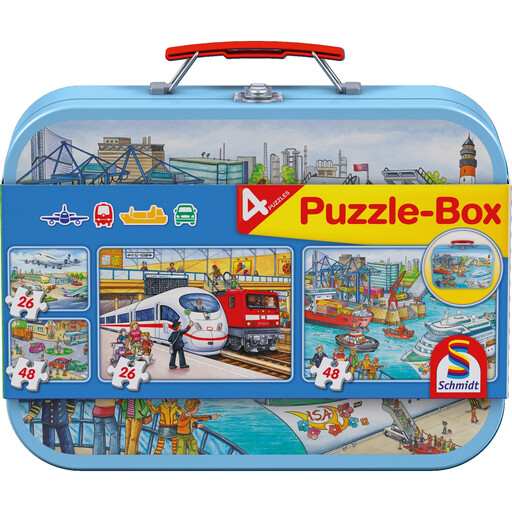
Why this product suits this profile: Four pictures in a metal box offer variety for children from the age of four. The set includes two 26-piece and two 48-piece puzzles.
The different piece counts ensure that every picture does not have the same difficulty level. Posters with cut lines provide additional guidance.
Four puzzles, metal storage, a matt finish and vehicle pictures featuring cars, trains and aeroplanes.
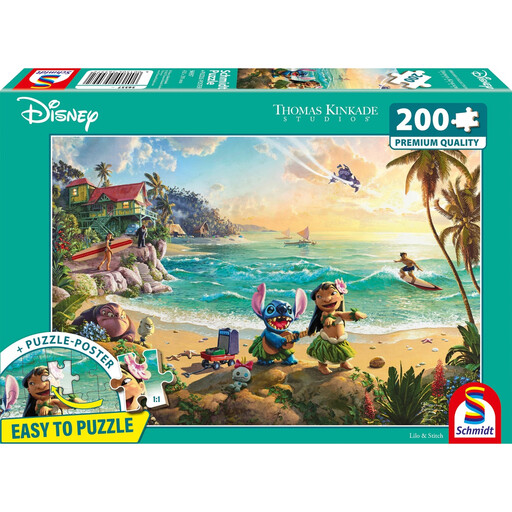
Why this product suits this profile: This 200-piece Disney children’s puzzle is designed for children from the age of eight and features a detailed picture for longer puzzling sessions.
The age recommendation and number of pieces make it clear that this is not a toddler puzzle. The poster helps with finding the right positions.
200 pieces, linen texture and anti-glare surface; metal storage is not included here. A picture guide is included according to the product description.
We have put together a complete, regularly updated list of products that fully meet these strict selection criteria and the safety regulations applicable in the EU.
A puzzle gift for children should suit not only the occasion but also the child’s current level of experience. For a toddler’s birthday, simple wooden or frame puzzles with just a few pieces are ideal. From the age of four, animal, farm and vehicle pictures with 24 to 48 pieces are worth considering. For older children, educational puzzles, space pictures or 3D models can be a suitable next step.
With popular ranges such as Ravensburger children’s puzzles, Schmidt Spiele children’s puzzles or Disney children’s puzzles, the picture should complement the buying decision – not replace checking the age recommendation and materials.
As a general guide, toddlers need just a few large insert pieces, children from around three or four years can use approximately 15 to 24 pieces, and older children from six to eight years can try 100 to 200 pieces. The manufacturer’s recommendation and the child’s previous puzzle experience are the most important factors.
Yes, especially for beginners. The frame defines the area, while pre-printed outlines can show where each piece belongs. This makes it easier to structure the picture than with a puzzle that is laid out without a frame.
Its lifespan depends on the material, storage and how it is handled. Sturdy cardboard pieces stored in a dry place and well-made wooden pieces can be used for a long time with regular play. Before every play session, check the pieces for cracks, sharp edges or loose parts.