
Lieferung heute & morgen

Qualitätsgarantie

Willkommens-Angebote freischalten: KOSTENLOSE Lieferung | Bis zu 80 % RABATT | Kostenlose 30-Tage-JoyPlus-Testphase
App herunterladen
A children’s puzzle should match the child’s developmental stage, patience and motor skills. In practice, however, purchases are often made based on the design or brand name, while piece size, age recommendation and storage are given too little consideration. This can mean the puzzle quickly becomes overwhelming, is difficult to keep track of, or doesn’t suit the intended age because of small parts.
This buying guide shows you which details matter before you purchase and which choices suit different everyday situations.
A puzzle with many pieces isn’t automatically better value. For a child from three years old, a puzzle with few pieces can offer a better starting point than a more challenging set. Previous experience also plays a key role: some children puzzle regularly, while others first need a clearly defined design and a visual guide.
The manufacturer’s age recommendation should always be followed. If a product carries a warning about small parts that could be swallowed, it is not suitable for children under three – even if the child is already skilful with toys.
A detailed design with similar colours can be harder for beginners than a picture with clear outlines. A frame puzzle for children provides a fixed boundary here and can make matching easier. With sets containing multiple designs, you should also check whether the pieces can be clearly separated and stored properly.
Cardboard puzzles are lightweight and available in many designs, but they should be stored in a dry place. A wooden puzzle for babies or toddlers can be easier to grip thanks to larger handles. Nevertheless, edges, knobs and peg pieces should be checked regularly for damage. An unclear or contradictory age recommendation is a reason to check the manufacturer’s information before buying.
The following ranges serve as a practical guide:
This breakdown does not replace the specific manufacturer’s recommendation. A learning puzzle for children can additionally incorporate colours, shapes, animals or everyday objects. However, the educational benefit should be understood as a playful opportunity, not a guaranteed outcome.
A frame with pre-printed outlines makes it easier to get started. When fitting pieces together, the following help:
Among the Ravensburger products in this selection, several models include a base board or frame. The Ravensburger children’s puzzle 06123 “Peppa on the Computer” , for example, contains 15 pieces and is recommended for children from three years old according to the product information. The Ravensburger children’s puzzle 06058 “Construction Site” offers 12 frame pieces and is also recommended from three years old.
For puzzles intended for children under three, large, easy-to-grip elements are especially important. When buying a wooden puzzle for babies, you should look for rounded edges, securely fixed handles and a clear age recommendation. The product should be checked for splinters, loose knobs or damaged pieces before each use.
Cardboard puzzles should be stored in a dry, clean place. Many manufacturers recommend cleaning with a dry cloth. Information such as “non-toxic surface” or material certifications should be verifiable directly in the product details. Adult supervision is generally advisable for younger children.
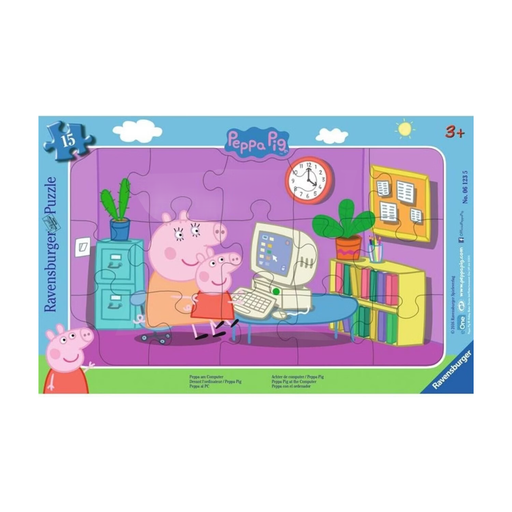
Why this product fits the profile: The low piece count and the frame make it suitable for children from three years old who are gaining their first experience with a classic children’s puzzle.
15 pieces and pre-printed frame outlines limit the task and prevent the start from being too difficult.
15 pieces, frame with outlines, format according to product information 25 × 14.5 cm, recommended age from 3 years.
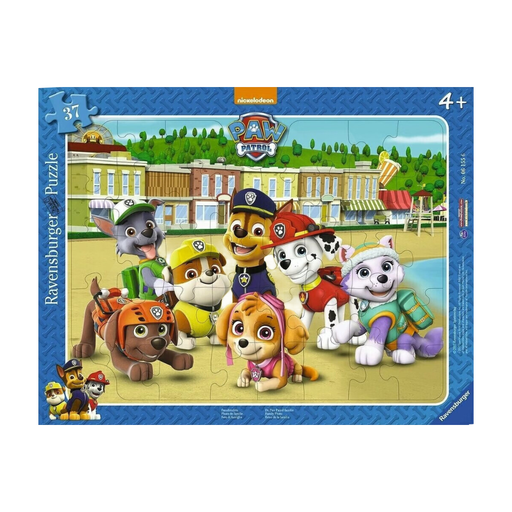
Why this product fits the profile: The format of 24.5 × 32.5 cm and the base board provide a clearly structured play area for children from four years old.
The base board serves as a guide and reduces the risk that a larger design without guidance becomes confusing.
37 pieces, frame base board, cardboard as main material and recommended age from 4 years according to product data.
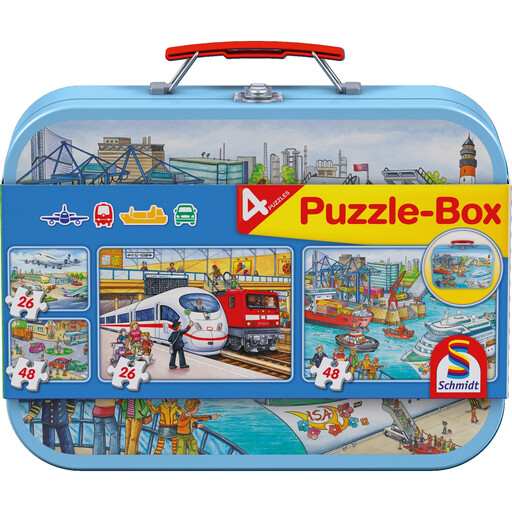
Why this product fits the profile: Four vehicle designs in a metal box are ideal for families, nurseries or children who like to switch between several designs.
The metal box makes storage easier; posters with cut lines can help beginners with matching.
Contains 2 × 26 and 2 × 48 pieces, four vehicle designs, metal storage box and recommended age from 4 years.
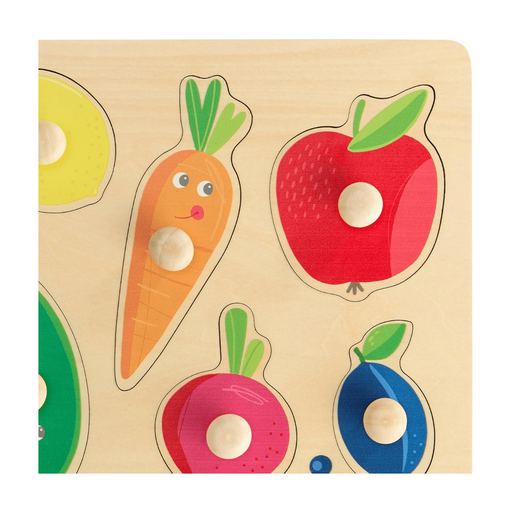
Why this product fits the profile: Large wooden handles and simple shapes are designed for children from 12 months old and provide a first introduction to peg puzzles.
The design with large handles is intended for gripping and placing, rather than using small pieces for a classic assembly puzzle.
Solid wood, large wooden knobs, fruit and colour theme, and recommended age from 12 months according to the product description.
We have put together a complete, regularly updated list of products that fully meet these strict selection criteria and the safety regulations in force in the EU.
A puzzle as a gift works particularly well when you know the child’s age and interests. For three-year-olds, animal, farm or familiar character designs with 12 to 24 pieces are a good choice. For children from four years old, 35 to 48 pieces or several smaller puzzles are suitable. The Schmidt Spiele children’s puzzle “Good Friends”, for example, contains three designs each with 24 pieces and is recommended from three years old according to the product information.
When giving a gift to a nursery or childcare setting, sets with multiple designs, sturdy packaging and a clear piece count are practical. For individual children, the design should not be the only selection criterion: the right level of difficulty determines whether the puzzle will be used regularly.
As a guide, 12 to 24 pieces. A frame, base board and clear designs can make it easier to get started. For experienced children, a set with three 24-piece puzzles may also be suitable.
With a frame puzzle for children, the pieces sit in a fixed base board or a border with outlines. This gives children extra guidance. A normal puzzle is assembled without this boundary and can feel more challenging with the same number of pieces.
Durability depends on the material, storage and handling. Cardboard pieces should be kept dry and stored completely in the packaging after play. Wooden puzzles should not be submerged in water. Loose, damaged or splintered pieces should not be used further.