
Lieferung heute & morgen

Qualitätsgarantie

Willkommens-Angebote freischalten: KOSTENLOSE Lieferung | Bis zu 80 % RABATT | Kostenlose 30-Tage-JoyPlus-Testphase
App herunterladen
A children's puzzle should suit the child's age, motor development and interests. In practice, unsuitable purchases are often caused not by the picture, but by an inappropriate level of difficulty or unclear product information. Parents, grandparents and nurseries should therefore check a few key features before buying.
A 100-piece puzzle may be suitable for a six-year-old, but quickly become frustrating for a three-year-old beginner. Conversely, a 12- or 15-piece puzzle may not offer enough of a challenge for an older child. The manufacturer's age recommendation is therefore a useful starting point, but it does not replace an assessment of the child's individual experience.
An eye-catching picture or the description “XXL children's puzzle” alone says nothing about how easy the puzzle is to handle. The key factors are the dimensions of the individual pieces, the thickness of the cardboard and whether the puzzle can be laid out securely. For younger children, large, easy-to-grip pieces and a frame make getting started easier.
Many products are marketed as learning puzzles for children or educational toys. Puzzles can playfully support concentration and fine motor skills through sorting, comparing and assembling. However, this should not be interpreted as a medical benefit or a guaranteed developmental outcome. Specific details such as the number of pieces, material, age recommendation and game structure are what matter.
For a children's puzzle from age 3, 12 to 24 pieces are often manageable. A frame puzzle with printed outlines can make it easier to match the pieces. From around age 4, 24- to 48-piece puzzles may be suitable, provided the child already has some experience. A 100-piece puzzle or an XXL children's puzzle is often more appropriate for children from around age 6. For children aged 8 and over, 200 or more pieces and additional game elements may be appealing.
These figures are guidelines, not binding classifications. A detailed picture with similar colours can be more challenging than a colourful image with the same number of pieces.
With cardboard puzzles, sturdy, cleanly cut pieces are practical, as they can be assembled repeatedly. A matt surface can reduce reflections. With wooden puzzles, parents should look for rounded edges, a clear age recommendation and care instructions.
Easy-to-manage storage is important for nurseries and families with several children. A frame, box or metal case helps keep all the pieces together after playtime. Moisture, intense heat and direct sunlight can damage the cardboard and printed image.
Small puzzle pieces can be swallowed. Several of the products listed therefore carry a warning that they are not suitable for children under 36 months. The age recommendation, warnings and manufacturer's information should be read before purchase and before use. Appropriate supervision is advisable for younger children.
Ideally, puzzles should be played on a flat, dry surface with enough space. With a frame puzzle, the picture is easier to keep in place; with a traditional puzzle, a sorting tray or large board can be helpful.
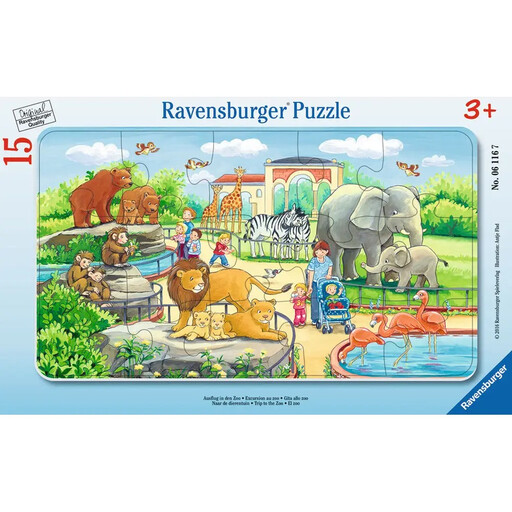
Why this product suits the profile: This frame puzzle is designed for children aged 3 and over and offers an accessible introduction with 15 pieces. The outlines on the base help children match the pieces.
The low piece count and printed outlines help prevent children from feeling overwhelmed during their first puzzle experience.
15 pieces, a frame with base and an animal picture; listed as made from cardboard.
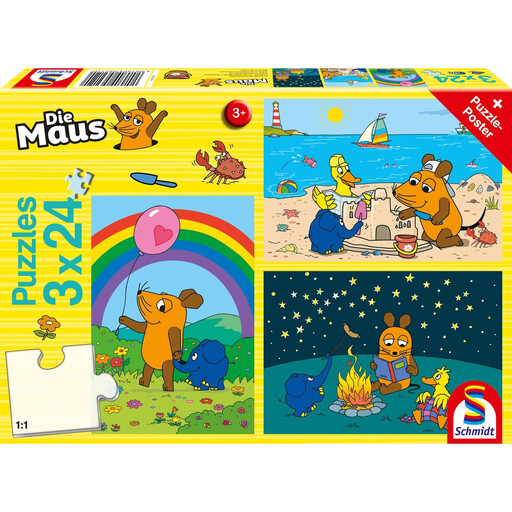
Why this product suits the profile: Three animal pictures with 24 pieces each provide variety without significantly increasing the difficulty. According to the product information, the set is designed for children aged 3 and over.
The clearly stated piece count for each picture prevents the total number of pieces in the set from being mistaken for the difficulty of a single puzzle.
3 × 24 pieces, a matt linen-textured surface according to the product information, and animal pictures.
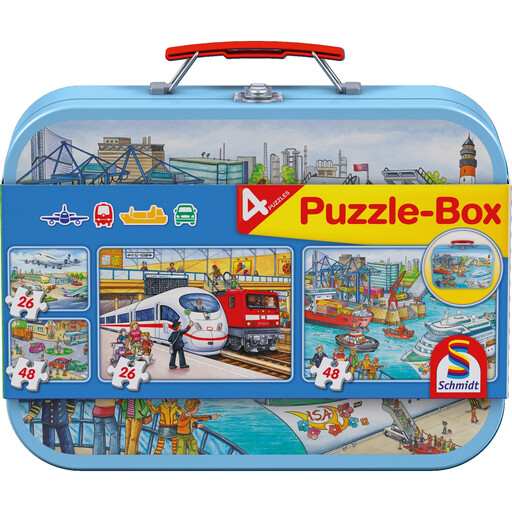
Why this product suits the profile: The metal case contains four vehicle pictures with 2 × 26 and 2 × 48 pieces. This makes the set suitable for families who want to store and regularly switch between different difficulty levels.
Four clearly separate pictures reduce the risk of a single puzzle no longer matching the child's developmental stage after a short time.
Four puzzles, metal storage and a poster with cut lines according to the product description; suitable from age 4.
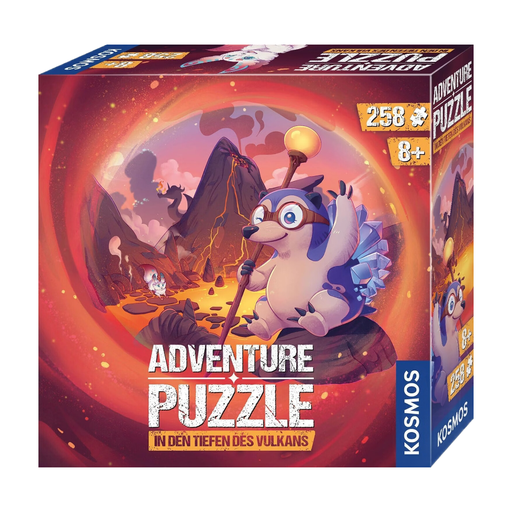
Why this product suits the profile: According to the product information, this interactive 258-piece puzzle is designed for children aged 8 and over, combining the assembly process with an ongoing adventure story.
The age recommendation and significantly higher piece count make it clear that this is not a beginner's puzzle for toddlers.
258 pieces, a story, app support according to the description, and play for 1 to 3 players.
We have put together a complete, regularly updated list of products that fully meet these strict selection criteria and the safety regulations applicable in the EU.
A wooden puzzle for children can also be suitable for younger users if the pieces are easy to grip and contain no detachable small parts. When choosing a puzzle as a gift, familiar pictures, the child's age and storage are more important than choosing the highest possible piece count.
For many children, 12 to 24 pieces is a useful guideline. A frame with outlines can make getting started easier. The child's individual ability and experience with puzzles should also be taken into account.
Its lifespan depends on the thickness of the cardboard, the quality of the cut, storage and handling. Keeping the pieces dry and storing them in the original packaging helps protect them. Missing or damaged pieces can make the puzzle unusable, so sorting the pieces after play is recommended.
A 100-piece puzzle may be suitable from around age 6 if the child already enjoys puzzles and the picture is not too intricate. A poster or XXL format can make it easier to find the right pieces. The manufacturer's specific age recommendation remains the deciding factor.