
Lieferung heute & morgen

Qualitätsgarantie

Willkommens-Angebote freischalten: KOSTENLOSE Lieferung | Bis zu 80 % RABATT | Kostenlose 30-Tage-JoyPlus-Testphase
App herunterladen
A children’s puzzle should suit the child’s age, fine motor skills and attention span. However, eye-catching designs or a high number of pieces do not automatically make a puzzle suitable. Before buying, parents, grandparents and other family members should avoid three common pitfalls in particular: an incorrect age rating, unsuitable materials or a product whose actual scope of play does not match how it is intended to be used.
A 100-piece puzzle may look appealing on the packaging, but it can quickly overwhelm younger children. For a children’s puzzle from age 2, large, easy-to-grip pieces and simple designs are usually more suitable. A children’s puzzle from age 3 or children’s puzzle from age 4 can gradually become more complex. The number of pieces is not the only important factor: the design, colour contrasts and size of the individual pieces also matter.
The term educational puzzle for children is not a standardised, legally protected quality mark. A puzzle may involve shapes, colours or matching pictures, for example. However, this does not mean that every educational claim is automatically substantiated. Look for specific product features instead, such as outline guides, search-and-find pictures, graded difficulty levels or activity booklets.
Small puzzle pieces can pose a choking risk to children under three. Magnetic toys require particular care, as swallowed magnets can cause serious injuries. Always check the recommended age, warnings, manufacturer’s information and CE marking. For toys sold in the EU, the EN 71 series of toy safety standards is also an important point of reference; the specific marking should be verifiable on the product or its packaging.
The following levels can serve as a general guide:
The manufacturer’s age recommendation is an important safety and guidance tool, but it does not replace an assessment of the child’s individual experience.
Traditional puzzles are often made from sturdy card. A matt or linen-textured surface can reduce reflections. Precisely cut pieces make assembly easier, but should not be viewed as the only indication of quality.
Children’s wooden puzzles are particularly appealing when a durable material and easy-to-grip shapes are required. Check the workmanship, any sharp edges, the paintwork and the cleaning instructions. A metal tin or resealable container is practical if the puzzle is transported regularly or needs to be stored neatly after play.
Compact children’s brain teasers or children’s logic games with a manageable playing area are ideal for travel. For afternoons spent together, a traditional puzzle, a search-and-find picture or a family game with several difficulty levels may be more suitable. Before buying, consider whether the child will play alone, with siblings or together with adults.
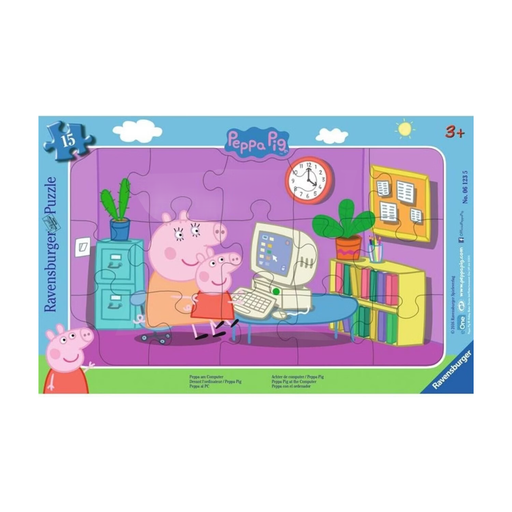
Why this product suits the profile: According to the product information, this tray puzzle is suitable for children from age 3 and offers an accessible introduction with 15 pieces.
The outlines in the tray help with matching and reduce the risk of making the first attempt too difficult with an excessive number of pieces.
15 pieces, extra-strong material according to the product description, and a Peppa Pig design.
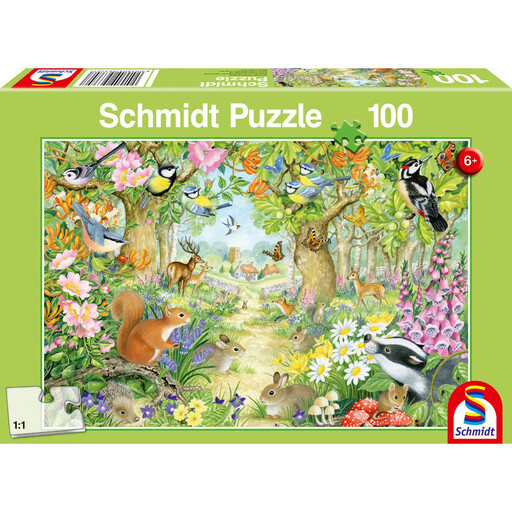
Why this product suits the profile: Suitable for children from age 6, this design combines a higher piece count with a clear nature scene.
The age recommendation from 6 years and an included poster with cut lines make the difficulty level easier to understand.
100 pieces, matt linen-textured surface according to the product information, and a poster for guidance.
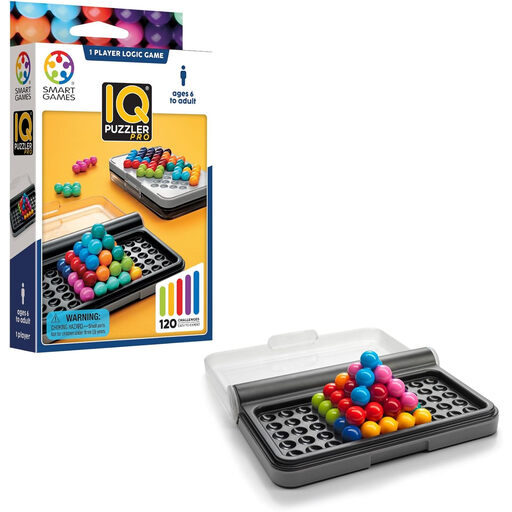
Why this product suits the profile: According to the product description, this compact solo game is suitable for children from age 6 and is ideal for taking on the go.
Rather than offering only a fixed number of pieces, it includes 120 challenges in 2D and 3D formats, along with three game modes.
Compact format, solo play and 120 documented challenges according to the product information.
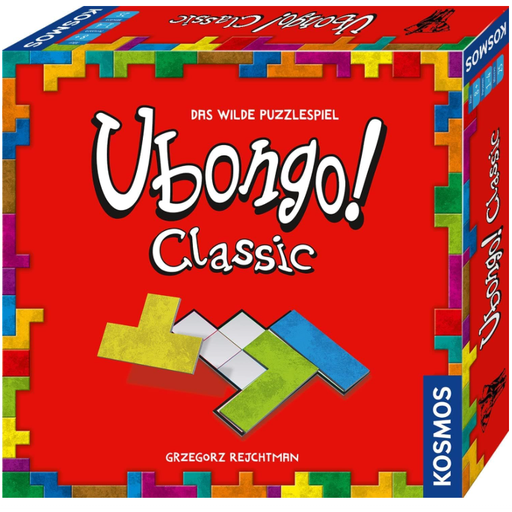
Why this product suits the profile: According to the product information, this family game is designed for 1 to 4 players from age 8 and offers two difficulty levels.
The player count and minimum age are clearly stated, making it easier to distinguish the product from a traditional solo puzzle.
1 to 4 players, two difficulty levels and 648 puzzle challenges according to the product description.
We have put together a complete, regularly updated list of products that fully meet these strict selection criteria and the safety regulations applicable in the EU.
For a children’s puzzle from age 2, large, sturdy pieces and simple designs with clearly defined areas of colour are a sensible choice. Always follow the manufacturer’s specific age recommendation. Small individual pieces should not be given to children who still put objects in their mouths.
The number of pieces is only a guideline. At age 3, a 15-piece puzzle with tray support may be suitable, while puzzles from age 4 often contain 24 to 48 pieces. A children’s puzzle from age 6 may contain 100 pieces, provided the child already has some puzzle experience and the design is not too intricate.
Puzzle pieces should be kept dry, clean and complete in the original packaging or a sealable box. For frequent transport, compact games with a sorting compartment or metal case are practical. Before putting a puzzle away, it is worth checking briefly whether any pieces are damaged or missing.