
Lieferung heute & morgen

Qualitätsgarantie

Willkommens-Angebote freischalten: KOSTENLOSE Lieferung | Bis zu 80 % RABATT | Kostenlose 30-Tage-JoyPlus-Testphase
App herunterladen
A children’s puzzle should suit the child’s age, fine motor skills and everyday routine. In practice, however, the right choice depends on more than just the number of pieces or a popular design. Products are often bought that are too difficult, awkward to store or unsuitable for younger children because they contain small pieces. Parents, grandparents and other family members should therefore check several details carefully before buying.
“From 3 years” alone says little about how suitable a puzzle is for a particular child. A children’s puzzle from age 3 should have manageable pieces, clearly recognisable pictures and simple visual guidance. Frame puzzles with outline markings make it easier to get started, as the position of some pieces is already indicated.
For a children’s puzzle from age 4, 24 to 48 pieces may be appropriate. What matters is whether the child already has some experience with puzzles. A picture with many similar colours can be challenging even when the piece count is low.
Puzzles can incorporate matching shapes and colours, hand-eye coordination, concentration and pattern recognition into play. However, this does not guarantee a general developmental or learning benefit. Terms such as educational toy or learning toy for children should therefore be compared with the actual play features: Are there outlines, search tasks, different difficulty levels or a play principle that the child can follow independently?
Loose cardboard pieces are easily lost in a child’s bedroom. A metal case, frame or compact plastic box can be more practical for everyday use. Products with built-in storage are ideal for taking on the go. For a travel game for children, weight, dimensions and the number of individual pieces are also important criteria.
The manufacturer’s age recommendation is an important starting point, but it does not replace an assessment of how the child plays. For younger children from 1 year, products with large, easy-to-grip elements are suitable. A wooden puzzle for children with knobs and rounded edges can make placing and removing the pieces easier.
For children from age 2, sets with several simple pictures and an increasing number of pieces are a good option. From age 3, frame puzzles with 12 to 15 pieces are often easy to approach. From age 4, 24- or 40-piece versions may be suitable. From age 6, compact logic games with an activity booklet and several difficulty levels can be an interesting choice.
For cardboard puzzles, check for sturdy, sufficiently thick pieces, clearly printed surfaces and cleanly cut edges. Wooden puzzles should have smooth edges and securely attached knobs. Plastic games are practical for taking on the go, but they must also be used according to the packaging instructions and checked for damage.
The products in the recommendations below contain small parts or have corresponding age restrictions. The relevant safety information on the packaging and product page takes precedence. Small parts generally pose a choking risk for children under three; supervision by an adult is advisable for younger children.
A classic puzzle mainly develops the ability to match pictures, colours and shapes. A logic game for children, on the other hand, often uses spatial rules and problem-solving tasks. A 3D puzzle for children or a DIY model also involves assembly and spatial awareness. These types of games are not automatically suitable for every child: the play objective should match their attention span, interests and existing experience.
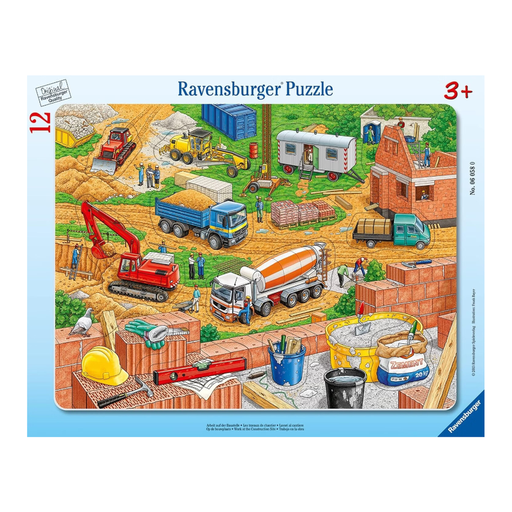
Why this product suits this profile: According to the product information, this frame puzzle is intended for children from age 3 and offers an accessible introduction with 12 pieces. The building-site design may appeal to children who are interested in vehicles.
The outlines in the frame provide guidance and reduce the risk of a beginner starting with an unsuitable piece count.
12 sturdy frame puzzle pieces, no batteries required and openings for easier removal.
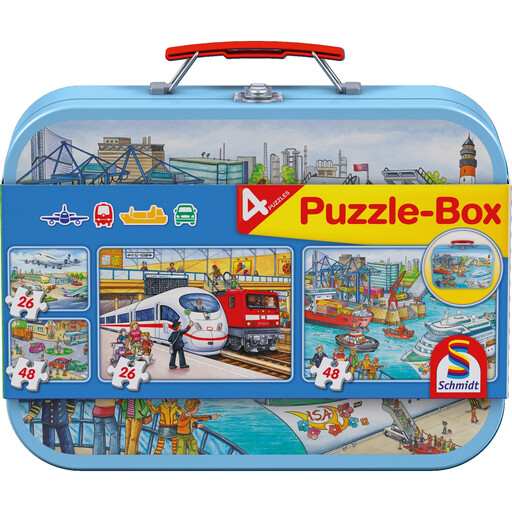
Why this product suits this profile: The set contains four vehicle pictures with 2 × 26 and 2 × 48 pieces, as well as a metal case. This allows the difficulty level to be varied within one set.
The case keeps the pieces together, while puzzle posters with cut lines make it easier to get started.
Four designs, metal storage, a matt cardboard surface and piece counts for different stages of play.
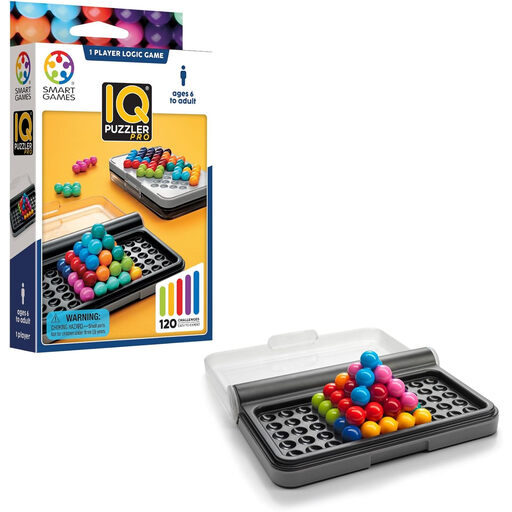
Why this product suits this profile: According to the product information, this compact solo game is intended for children from age 6 and includes 120 challenges in 2D and 3D formats. It fits in a rucksack or travel bag.
The challenges are structured by game modes and difficulty levels, rather than creating difficulty through a high piece count alone.
120 challenges, three game modes, a compact plastic case and solo play without batteries.
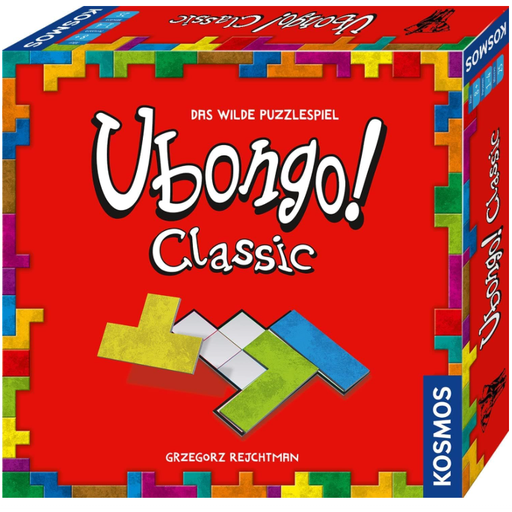
Why this product suits this profile: The game is designed for 1 to 4 players aged 8 and over. Two difficulty levels and 648 challenges allow for shared games with changing levels of challenge.
The number of players and difficulty levels are clearly stated, so the product is not mistakenly bought as a solo puzzle for younger children.
For 1 to 4 players, two difficulty levels, 648 challenges and an optional explanatory app.
For children from 1 year, the hauck Wooden Baby Puzzle with an animal design, wooden board and wooden knobs is one option. According to the product description, it is intended for children from 12 months; the edges are rounded and the material is stated to be FSC-certified wood. Supervision by an adult remains important when there are small parts and depending on how the child handles the product.
A Ravensburger children’s puzzle set with 15 pieces is suitable from age 3, for example, while versions with 24 or 40 pieces introduce more picture detail from age 4. Fans of character designs may enjoy a 40-piece Anna and Elsa frame puzzle. If you are looking for a puzzle as a gift for children, consider the child’s interest in the design, the recommended age and the storage options together.
For older children and adults, options also include a 6x6 V-Cube speed puzzle or a DIY wooden model with a Bluetooth speaker. Both products contain small parts and are therefore not intended for children under 3. The DIY model also has accessible functional edges; it should be used in accordance with the manufacturer’s instructions and under supervision.
We have put together a complete, regularly updated list of products that fully meet these strict selection criteria and the safety regulations applicable in the EU.
It depends on the piece size, product design and manufacturer’s recommendation. Large wooden shapes with knobs are common for children from 1 year. Frame puzzles with 12 to 15 pieces are often intended for children from age 3. Small parts can present a choking hazard.
For beginners from age 3, 12 to 15 pieces may be sufficient. From age 4, 24 to 48 pieces may be suitable if the child already has some puzzle experience. From age 6, logic and 3D challenges with their own difficulty structure may be an option.
A classic puzzle requires a flat surface and is more difficult to transport when the contents are loose. A compact logic game with a rigid case and activity booklet is usually more practical for the car, train or holiday. Before buying, check the dimensions, how the pieces are stored and the recommended age group.