
Lieferung heute & morgen

Qualitätsgarantie

Willkommens-Angebote freischalten: KOSTENLOSE Lieferung | Bis zu 80 % RABATT | Kostenlose 30-Tage-JoyPlus-Testphase
App herunterladen
A children’s puzzle should suit the child’s stage of development, attention span and everyday circumstances. Failed purchases are often not down to the picture, but to unsuitable piece sizes, excessive difficulty or unclear safety information. Parents, grandparents and other family members should therefore check key product details before buying, rather than being guided solely by colourful images or advertising claims.
A puzzle “from 4 years” is not automatically easy for every four-year-old to complete. Previous experience, concentration span and the ability to distinguish between similar colours or shapes also play a role. A picture that is too challenging may soon end up unused. For younger children, peg puzzles, large knobs and clearly recognisable shapes are generally more suitable than traditional puzzle pieces.
A children’s puzzle from 6 years with 100 pieces may be easier than a puzzle with fewer pieces but many similar areas, thanks to a high-contrast animal picture. A children’s puzzle from 8 years will often feature more detailed scenes. The picture’s layout, piece format, guide image and the option of completing the puzzle in stages are therefore also important.
A wooden puzzle for children can be robust and easy to handle, provided that the edges are smoothly rounded and the knobs are securely attached. However, the term “educationally valuable” is no substitute for specific information about the material, recommended age and safety warnings. With small children, loose pieces, damaged surfaces and detachable handles should be checked regularly.
For a puzzle for babies from 12 months, a small number of large elements with sturdy handles is a sensible choice. A board with cut-out shapes makes matching easier. A learning puzzle for toddlers featuring animals, fruit or colours can also encourage children to name and sort objects. Even so, play should always be voluntary and adapted to the child’s current interests.
From around the age of 2, sets with several simple pictures and an increasing number of pieces can provide a gradual introduction. For a children’s puzzle from 4 years, frame puzzles or a printed guide image can be helpful. From the ages of 6 or 8, the number of pieces can increase if the child already has experience with traditional puzzles.
For wooden puzzles, solid or durable wood, smooth surfaces and rounded edges are important points to check. FSC-certified wood indicates that the material comes from appropriately certified forests, but it does not replace checking the workmanship and safety of the product.
For cardboard puzzles, the pieces should be sufficiently sturdy, cleanly cut and as resistant as possible around the edges. A matt surface can reduce reflections in bright daylight. Claims such as “BPA-free” or “non-toxic” should come from the manufacturer’s information and should not be inferred generally from the product image.
Look for the CE marking, the recommended age and the manufacturer’s safety warnings. The European EN 71 series of standards sets out safety requirements for toys; the specific declaration of conformity remains the manufacturer’s responsibility. For children under three, small pieces are particularly important, as they may be swallowed.
Wooden puzzles should not be soaked in water or cleaned in the dishwasher unless the manufacturer expressly permits this. A damp cloth followed by thorough drying is generally sufficient. Before each use, it is advisable to carry out a quick visual check for cracks, splinters and loose handles.
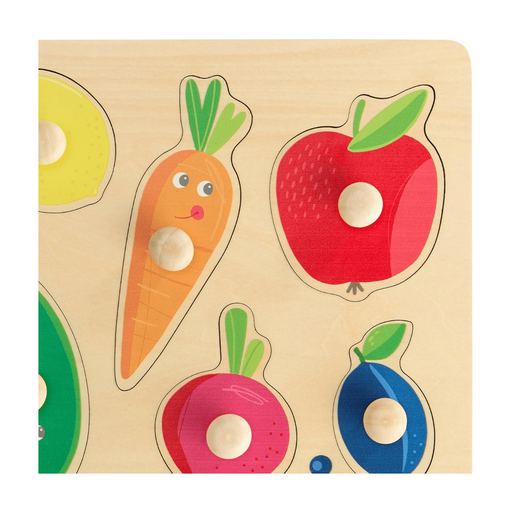
Why this product suits the profile: This first wooden puzzle for children from 12 months combines simple shapes with familiar everyday pictures. Large wooden knobs make it easier for little hands to grip the pieces.
The recommended age, large knobs and simple matching tasks are clearly specified. This avoids an unnecessarily complicated choice of pieces.
Solid wood, large handles, plus colour and fruit pictures. According to the product information, the board measures 30 × 21 cm.
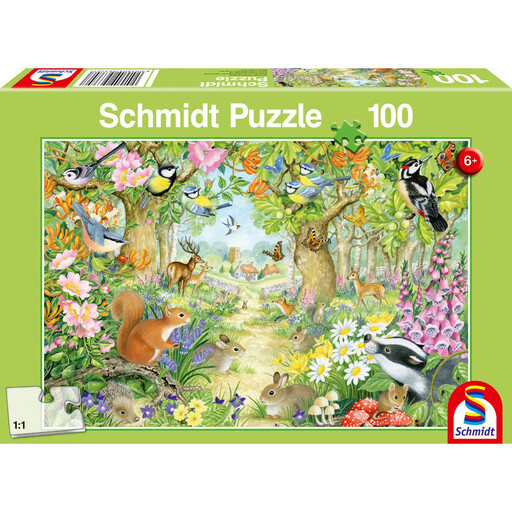
Why this product suits the profile: This animal puzzle is designed for children from 6 years and, with 100 pieces, offers a clearly defined next step in difficulty.
The number of pieces, recommended age and picture are clearly stated. A puzzle poster with cutting lines helps children get started.
100 precision-cut cardboard pieces, a matt linen-textured surface and a guide image with helpful lines.
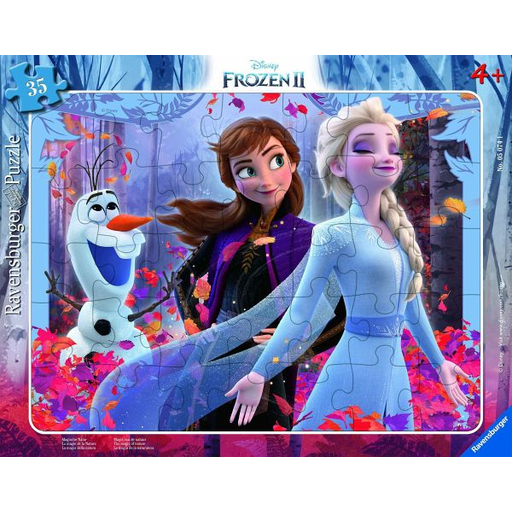
Why this product suits the profile: Featuring Disney characters Anna and Elsa, this puzzle is suitable for children from 4 years who find it easier to get into puzzling through familiar figures.
The frame provides a firm guide. With 35 pieces, the selection remains manageable without sacrificing a classic picture.
35 pieces, a frame puzzle and a completed size of 32,5 × 24,5 cm. The product information states that it is suitable from 4 years.
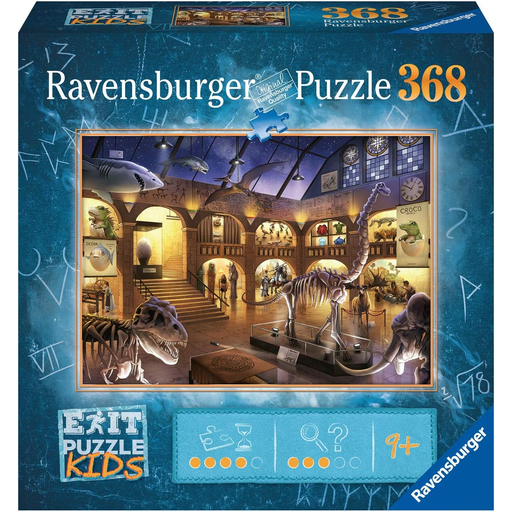
Why this product suits the profile: For children from 9 years and families looking for longer play sessions with an additional puzzle-solving element.
The high number of pieces is complemented by instructions and a solution envelope. This makes the intended use clearer than with a generic large puzzle.
368 cardboard pieces, EXIT elements, instructions and a solution envelope. According to the product information, the completed puzzle measures 70 × 50 cm.
We have put together a complete, regularly updated list of products that fully meet these strict selection criteria and the safety regulations applicable in the EU.
It depends on the type of puzzle. According to the manufacturer’s information, a peg puzzle or wooden puzzle with large handles may be suitable from 12 months. Traditional cardboard puzzles often start at 2 or 4 years. The recommended age, piece size and safety warnings for the individual product are always decisive.
For toddlers who are just starting out, a small number of large elements is sensible. From 4 years, around 35 to 48 pieces may be suitable; from 6 years, 100 pieces can be used as a possible guide. Children’s puzzles from 8 years may contain 200 pieces or more. The child’s experience is more important than a rigid age limit.
Its lifespan depends on the thickness of the cardboard, the quality of the woodwork, storage and handling. Store the pieces somewhere dry and keep them complete in their original packaging. With wooden puzzles, regularly check that the handles are secure and that the surface is free from splinters. Damaged small pieces should no longer be given to young children.