
Lieferung heute & morgen

Qualitätsgarantie

Willkommens-Angebote freischalten: KOSTENLOSE Lieferung | Bis zu 80 % RABATT | Kostenlose 30-Tage-JoyPlus-Testphase
App herunterladen
A children’s puzzle from age 4 should be neither overwhelming nor boring after just a few minutes. Parents, grandparents and other relatives therefore often look at the picture, brand or eye-catching packaging. However, these features alone do not determine whether a puzzle for children is well suited to everyday use.
Three typical purchasing problems occur particularly often:
The following selection therefore focuses on verifiable details such as the recommended age, number of pieces, format, material and available guidance aids.
The age recommendation on the packaging is a useful starting point, but it does not replace assessing the individual child. As a general guide:
A 24-piece puzzle can often be completed quickly and is suitable for shorter periods of play. A 35-piece puzzle or a 3 x 48-piece puzzle offers more of a challenge. For sets containing several pictures, each image should be considered separately: three puzzles with 48 pieces each are not the same as one 144-piece puzzle.
A children’s puzzle with a frame, also known as a tray puzzle, includes a base with outlines or a fixed border. This guidance can help children match pieces by shape, colour and picture. The pieces also stay on the base and are easier to store after playtime.
A loose puzzle, on the other hand, offers greater flexibility but requires a level and sufficiently large playing surface. A tray puzzle is often easier for beginners to manage. Before buying, check:
For example, the Ravensburger tray puzzles included here specify outline markings on the base. The Ravensburger Magical Nature Frozen Puzzle has 35 pieces and measures 32.5 × 24.5 cm. The Ravensburger Anna and Elsa Puzzle contains 40 pieces and measures 37.3 × 28.8 cm according to the product details.
Children’s puzzles are usually made from paper or printed card. The specific construction is more important than a marketing quality label:
Many of the products listed here are approved for children from age 4, but contain small parts. They are therefore not suitable for children under 3 years. Adult supervision is particularly advisable for younger children. For material or safety information, always refer to the product description and the labelling on the packaging.
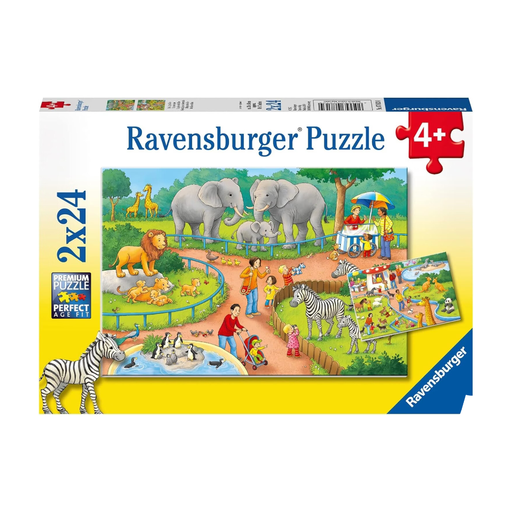
Why this product suits this profile: Two animal pictures with 24 pieces each offer variety and an easy-to-manage introduction for children from age 4.
The manageable number of pieces reduces the risk of a child being put off by a level that is too difficult.
Two puzzles with 24 pieces each, animal pictures and a mini poster to use as a picture guide.
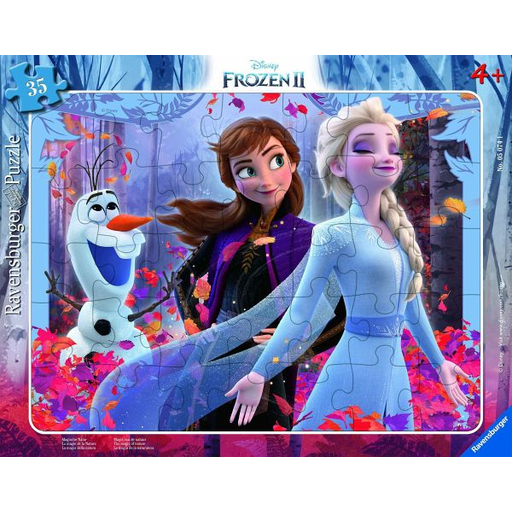
Why this product suits this profile: The Disney Frozen puzzle combines a familiar picture with a sturdy frame and a medium number of pieces for children from age 4.
The frame provides guidance and prevents the individual pieces from being scattered without a fixed boundary.
35 pieces, base, 32.5 × 24.5 cm format and an age recommendation from 4 years.
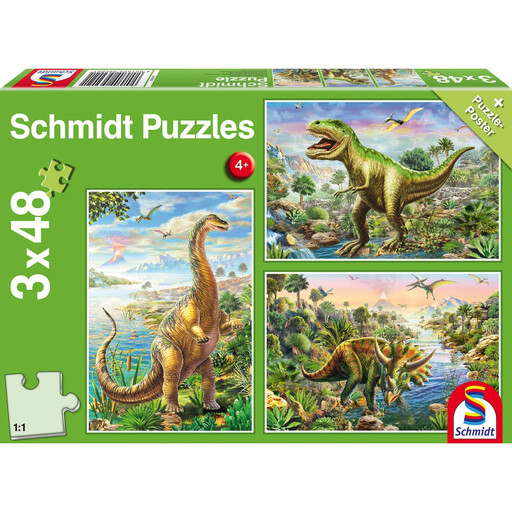
Why this product suits this profile: This dinosaur puzzle is aimed at children from age 4 who prefer several pictures and a higher number of pieces.
The three separate 48-piece puzzles provide variety without requiring a single picture made up of 144 pieces.
Three puzzles with 48 pieces each, puzzle poster with cut lines, and a matt surface with linen texture according to the product details.
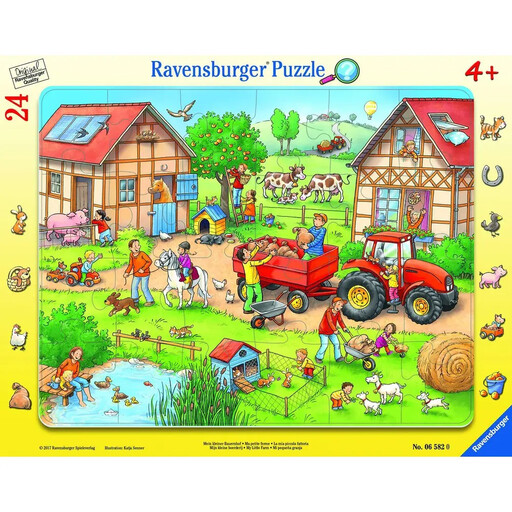
Why this product suits this profile: This farm puzzle appeals to children who like familiar animals and everyday scenes and need a clearly guided base.
The 24 pieces and printed outlines make getting started more straightforward than with a completely free-form puzzle.
24 pieces, frame with base, 32.5 × 25 cm format and additional find-and-seek elements according to the description.
We have put together a complete, regularly updated list of products that fully meet these strict selection criteria and the safety regulations applicable in the EU.
For beginners, 24 to 35 pieces are often a suitable guide. Children with puzzle experience can also tackle a 3 x 48-piece puzzle or a set containing 40 to 48 pieces. The picture, piece size and a possible picture guide are also important.
A tray puzzle can make getting started easier because the base indicates where the pieces go. It is particularly suitable for children who have little experience or quickly lose track when assembling a free-form puzzle. More experienced children may enjoy greater independence with a loose puzzle and mini poster.
Its lifespan depends on the thickness of the card, die-cutting, storage and handling. Puzzles should be stored in a dry place, not bent and returned to their original packaging in full after playtime. For the products mentioned, wiping them gently with a dry cloth is sufficient. Also check regularly whether any pieces have been damaged or lost.