
Lieferung heute & morgen

Qualitätsgarantie

Willkommens-Angebote freischalten: KOSTENLOSE Lieferung | Bis zu 80 % RABATT | Kostenlose 30-Tage-JoyPlus-Testphase
App herunterladen
A children’s puzzle for age 4+ should be neither too challenging nor boring after just a few minutes. Yet packaging often puts colourful pictures, educational claims and age recommendations centre stage. Important details such as piece size, storage and the actual level of difficulty can easily be overlooked.
For parents, grandparents and other family members, three common buying mistakes are especially relevant:
As a rough guide, Schmidt Spiele suggests the following ranges:
These figures aren’t a definitive measure of development. Children vary in their experience, patience and visual awareness. A puzzle for beginners with fewer pieces can therefore be a good choice for an older child, too. Conversely, a child with some puzzle experience may already be ready for a more challenging puzzle for a 4-year-old.
The picture matters, too. Large areas of colour and clearly recognisable characters make it easier to match the pieces. Similar shades, lots of small details or a uniform background make a puzzle more challenging.
A children’s puzzle with a frame sits on a firm base. Printed outlines can help children work out where each piece goes. This is particularly useful for beginners, as the puzzle is less likely to slide around.
For a puzzle without a frame, you’ll need a flat surface with enough room to play. A puzzle poster with outlines can also provide a useful guide. For example, the Schmidt Spiele 56508 Vehicles set includes posters with pre-printed outlines to help guide children. The reverse shows the picture without outlines and, according to the product description, can be used as a decoration.
If the puzzle will be played with regularly, look for the following:
Always follow the age recommendation. Many children’s puzzles contain small pieces, so aren’t suitable for children under 3. Even with a puzzle for age 3+, supervision may be advisable, depending on the model—particularly if there are younger siblings at home.
The selection below groups specific products by play situation and objective product features. Brand names such as Ravensburger children’s puzzle and Schmidt children’s puzzle aren’t a guarantee of quality; they simply help identify the products clearly.
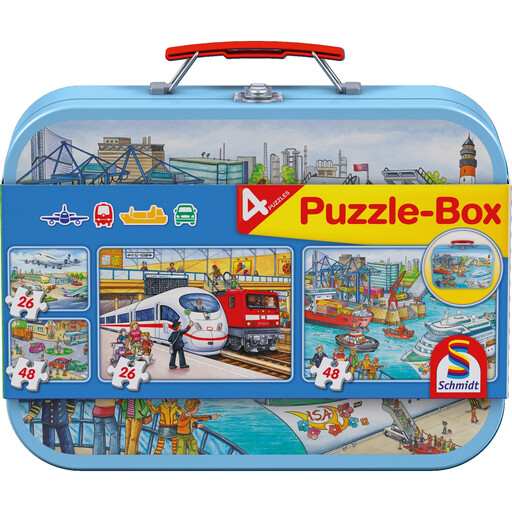
Why this product suits this type of player: Four pictures with 26 or 48 pieces each offer several levels of difficulty in one metal tin. The set is designed for children aged 4 and over, and suits families who prefer vehicle pictures.
The piece count is clearly stated, and posters with outlines help children get started. The metal tin also provides handy storage.
Four pictures, 2 × 26 and 2 × 48 pieces, a matt finish and a metal storage tin.
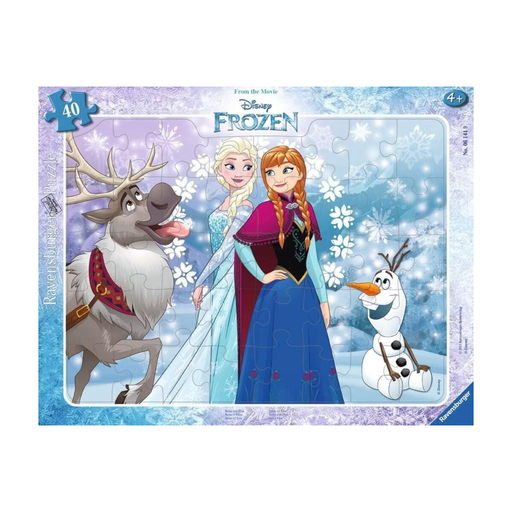
Why this product suits this type of player: This frame puzzle is designed for children aged 4 and over and comes with a base featuring printed outlines. The Disney Frozen picture may appeal to children who enjoy familiar characters.
The base shows where the pieces go, keeping the picture easy to follow even for a child with little puzzle experience.
40 pieces, a frame base, a size of approximately 37.3 × 28.8 cm and an age recommendation of 4+.
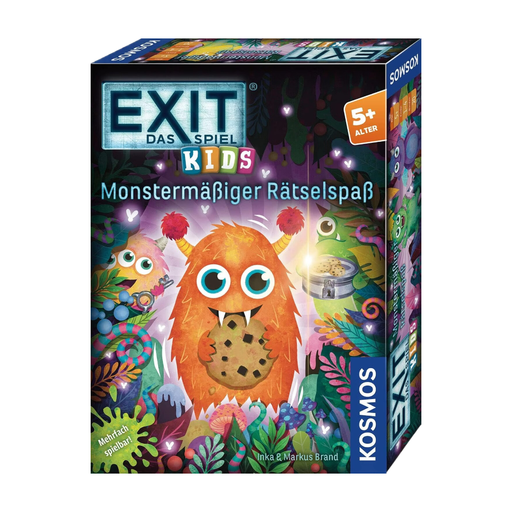
Why this product suits this type of player: Designed for children aged 5 and over, this cooperative puzzle game offers an alternative to a traditional children’s puzzle. It’s made for 1 to 4 players and, according to the product description, can be played more than once.
The age recommendation and number of players are clearly stated. The game is designed for solving puzzles together, rather than for an unclear solo-play experience.
For 1 to 4 players, age 5+, with child-friendly puzzles and an optional explanatory app.
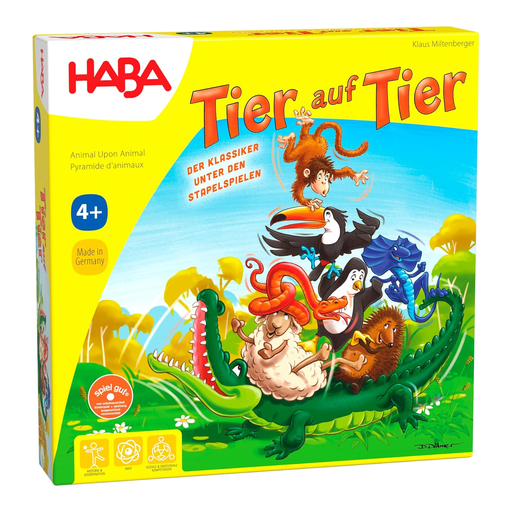
Why this product suits this type of player: This wooden stacking game for age 4+ adds a family game for 2 to 4 players to the selection. It’s ideal for short play sessions and, according to the product details, can also be played alone.
There’s no unclear piece count to worry about: it’s a clearly described stacking game with wooden figures and a set number of players.
Wooden figures, 2 to 4 players, an age recommendation of 4+ and the option to play solo.
We’ve put together a complete, regularly updated list of products that meet these strict selection criteria and the safety regulations in force in the EU.
After playing, count the pieces and store them somewhere dry. Cardboard puzzles are sensitive to moisture and prolonged exposure to sunlight. Storing them flat helps prevent the pieces from bending. If you have a frame puzzle, it’s best to store it on its base, if you have room.
For children aged 4 to 5, an adult can explain how to look for matching parts of the picture when setting up the puzzle for the first time. That doesn’t mean giving away the solution. It’s more helpful to offer prompts such as: “Sort the edge pieces first” or “Which colours belong to the sky?” This leaves the child to work out the puzzle.
As a guide, look for around 24 to 48 pieces. Puzzle experience, the picture, piece size and whether it has a frame all matter, too. For beginners, 24 pieces with clear outlines may be a good fit; children with more experience can try 40 or 48 pieces.
Yes. A frame with printed outlines can make it easier to match the pieces and help stop them sliding around. It’s particularly suitable if your child has little puzzle experience or wants to get started independently. However, the base doesn’t replace the need to check the age recommendation and whether the puzzle contains small pieces.
Its lifespan depends on the thickness of the cardboard, the quality of the cut, how it’s stored and how it’s handled. Keeping it dry, removing the pieces carefully and sorting them after every play session can help them last longer. If any small pieces are missing or damaged, don’t leave the puzzle unsupervised with younger children.