
Lieferung heute & morgen

Qualitätsgarantie

Willkommens-Angebote freischalten: KOSTENLOSE Lieferung | Bis zu 80 % RABATT | Kostenlose 30-Tage-JoyPlus-Testphase
App herunterladen
Children’s puzzles are an easy activity for home, holidays and quality family time. However, the wide range of options does not automatically make it easy to choose the right one. A puzzle may appear age-appropriate on the packaging, but very small pieces, a confusing picture or flimsy card can quickly lead to frustration.
As a Joybuy Product Recommendation Officer, I therefore focus on the details that really matter when buying. The key factors are not eye-catching designs or marketing claims, but age recommendation, piece format, material, storage and the actual level of difficulty.
More pieces do not automatically mean a better learning experience. For a children’s puzzle from age 3, as few as 12 to 15 pieces can be a sensible choice. A children’s puzzle from age 4 can become more challenging with 24 or 40 pieces. If the number of pieces is increased too soon, children often need constant help and lose their independence during play.
Labels such as learning puzzle, educational game or logic game for children do not say much on their own. More informative features include outlined frame spaces, easy-to-recognise pictures, easy-to-grip pieces, different difficulty levels or an accompanying task guide. Developmental benefits should be viewed as potential skills practised through play, not as a guaranteed outcome.
Thin cardboard pieces can warp when exposed to moisture or stored carelessly. With wooden puzzles, smooth edges, neatly finished cut-outs and easy-to-grip elements are important. For products with small pieces, you should also follow the warning on the packaging. Children under three should not use such puzzles if the manufacturer warns of a choking hazard from small parts.
The recommended age is a useful first filter, but it does not replace assessing the individual child. For beginners, choose designs with clear blocks of colour and a small number of differently shaped pieces. A frame puzzle for children makes matching easier because the outline shows where the pieces belong.
Puzzles with large pieces are easier for small hands to grip and turn. With a frame puzzle, the base should sit securely and the outlines should be easy to see. You should also check whether the completed puzzle fits the intended playing surface. For children who often play while travelling, compact travel or solo games with a storage box may be more practical than a loose puzzle without a way to sort the pieces.
Cardboard puzzles should be stored in a dry place and, when necessary, cleaned carefully with a dry cloth only. Wooden puzzles also need a dry environment. Look out for:
With a 3D puzzle for children or a logic game, you should also consider the building instructions, the number of tasks and how easy the solutions are to understand. Such products are not automatically suitable for younger children simply because they are marketed as educational games.
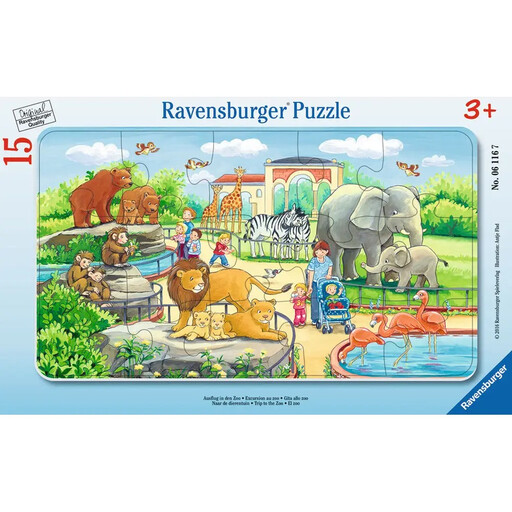
Why this product suits this profile: This frame puzzle is designed for children from age 3 and offers an approachable introduction with 15 pieces. The zoo illustration is ideal for short play sessions and naming the animals together.
The outline lines on the base provide clear visual guidance, so beginners do not have to rely solely on matching the picture.
15 pieces, frame base, cardboard construction and no batteries required.
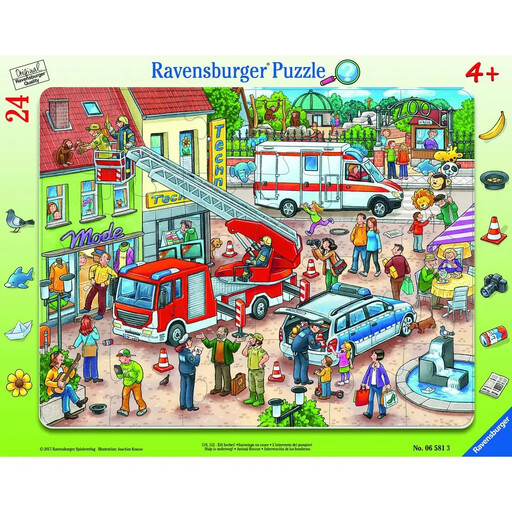
Why this product suits this profile: For children from age 4, this 24-piece frame puzzle combines a guided base with an additional matching game. According to the product information, it measures 37,2 × 29,3 × 0,5 cm.
The number of pieces remains manageable, while the frame and additional game offer more than a one-off build.
24 pieces, practical mat, search and matching elements, plus cardboard construction.
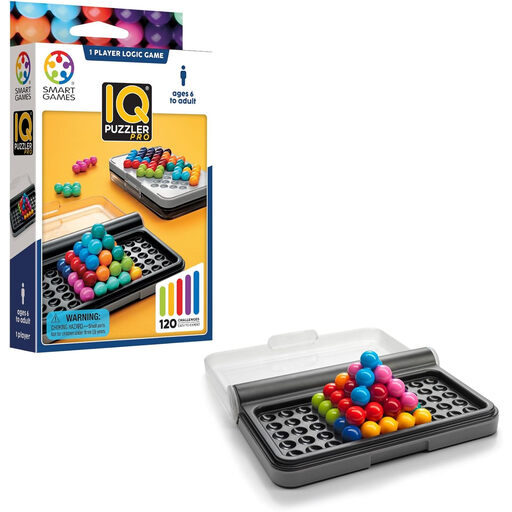
Why this product suits this profile: According to the product information, this compact solo game is designed for children from age 6 and offers 120 challenges in 2D and 3D formats. It is suitable for travel and independent play.
The number of challenges and three ways to play make the range of difficulty clearer than a simple marketing claim about educational value.
120 challenges, 13 pieces, solo play and compact dimensions.
We have put together a complete, regularly updated list of products that fully meet these strict selection criteria and the safety regulations applicable in the EU.
A puzzle as a gift should match the child’s current level of experience. A design featuring their favourite animals or vehicles can make it easier to get started, but it is not the only criterion. For siblings or shared family time, several difficulty levels may be useful. A set with four designs, such as Schmidt Spiele 56508 with 2 × 26 and 2 × 48 pieces, offers variety for children from age 4 and can be stored in a metal tin.
For older children, logic games for children, a number puzzle or a small 3D model may also be suitable. In every case, check the recommended age and the size of the individual pieces. A 6×6 cube, for example, is intended for experienced cube players and should not be confused with a simple puzzle for beginners.
A good starting point is around 12 to 15 pieces with clear designs and a frame base. However, the child’s individual experience matters more than a fixed number. Once they can complete a puzzle confidently without constant help, you can gradually introduce a more complex design.
Puzzles can help children practise matching shapes and colours, gripping pieces and working with concentration. The actual play value depends on the piece size, design and the child’s interest. Claims about skills should therefore be understood as potential areas for practice, not as guaranteed developmental benefits.
Count all the pieces after play and store them in a dry place. A box, metal case or the original packaging helps prevent pieces from getting lost. Frame puzzles should ideally be stored flat so that the base and cardboard pieces are less likely to warp.