
Lieferung heute & morgen

Qualitätsgarantie

Willkommens-Angebote freischalten: KOSTENLOSE Lieferung | Bis zu 80 % RABATT | Kostenlose 30-Tage-JoyPlus-Testphase
App herunterladen
A children's puzzle should suit the child's age, hand size and patience. However, choosing the right one involves more than familiar characters or eye-catching packaging. Too many pieces can overwhelm beginners, while very simple designs may quickly lose their appeal for older children. Material thickness, frame construction and safety information are also often overlooked when buying a puzzle.
This guide explains what parents, grandparents and relatives in the UK should look for, so that a puzzle for children does not end up unused in the cupboard after just a short time.
“From 3 years” or “from 6 years” is an important guide, but it does not replace considering the child's previous puzzle experience. A child with little experience may struggle with a complex children's puzzle from age 4, while an experienced child may already be able to complete a puzzle for ages 6 and over.
You should also consider:
A 15-piece puzzle in a frame may be more suitable for a younger child than a loose puzzle with a similarly sized picture. With a 100-piece puzzle or a 200-piece puzzle, clearly defined image areas and an easy-to-follow picture guide become more important. A high number of pieces alone says little about the actual difficulty.
Terms such as “extra thick”, “durable” or “educationally valuable” should be assessed against specific product details. Verifiable criteria include the material type, cardboard thickness, surface texture, fit of the pieces, product dimensions and the age recommendation shown on the packaging. Claims about concentration or fine motor skills are not a guarantee of a particular developmental outcome. Puzzling can engage these skills through play, but it does not replace targeted support.
For beginners, large, easy-to-grip pieces and a limited number of pieces are often best. A children's puzzle from age 3 often contains 12 to 24 pieces and has a frame or base with outline guides. A children's puzzle from age 4 usually contains 24 to 48 pieces. A 3x48-piece puzzle can also be a suitable choice, as several designs provide variety without greatly increasing the number of pieces for an individual picture.
For children aged 6 and over, 60, 100 or more pieces may be suitable. A children's puzzle from age 7 with 150 to 200 pieces provides a longer-lasting activity, but requires more perseverance and organised sorting.
A frame puzzle for children has a fixed base. Outlines or a printed design help children identify where individual pieces belong. This is particularly useful for beginners and reduces the risk of the whole picture falling apart when it is moved.
Loose puzzles offer more flexibility when being assembled and can then be stored back in the box. However, they require a sufficiently large, level surface. Storage is important for younger children, as small pieces should be kept out of reach of children below the stated age limit.
Look for sturdy cardboard, clean-cut edges and a surface that can easily be wiped clean with a dry cloth. The products featured include extra-thick cardboard, precision-cut pieces and, in some cases, a matt, linen-textured surface. These features can affect how easy the puzzle is to handle and how clearly the design can be seen.
The age marking and warning about small parts that may be swallowed must always be observed. A puzzle marked “from 3 years” is not suitable for younger children, even if they already play carefully. Adults should supervise the first puzzle session with younger children.
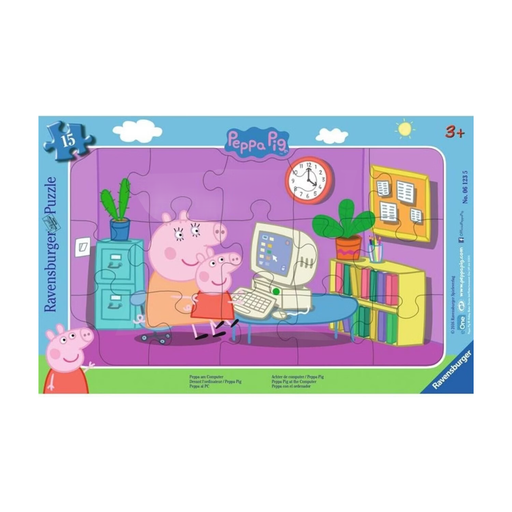
Why this product suits this profile: This 15-piece frame puzzle is designed for children aged 3 and over, combining a familiar Peppa Pig design with a base and outline guides.
The limited number of pieces avoids an unnecessarily difficult start. The frame provides a clear visual guide and reduces the need to search freely for each piece.
15 pieces, a frame with outlines, extra-thick material according to the product description and a wipe-clean surface.
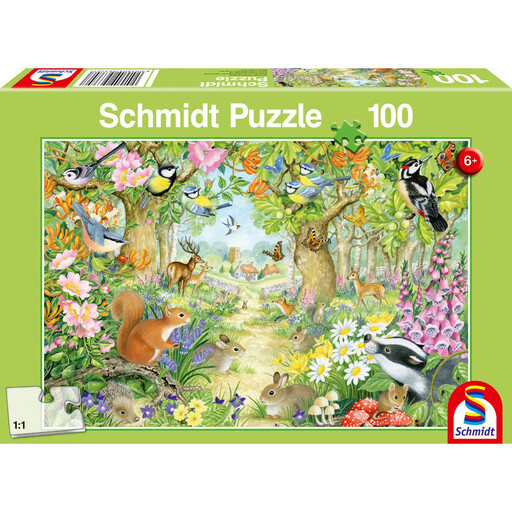
Why this product suits this profile: The forest design appeals to children aged 6 and over who are interested in nature. The specifications include 100 pieces, a completed size of 27.5 × 19 cm and a poster with cut lines.
The number of pieces is clearly stated, and the poster provides additional guidance. This makes it easier to assess the difficulty before buying.
100 precision-cut pieces, a matt linen-textured surface and a nature design featuring forest animals.
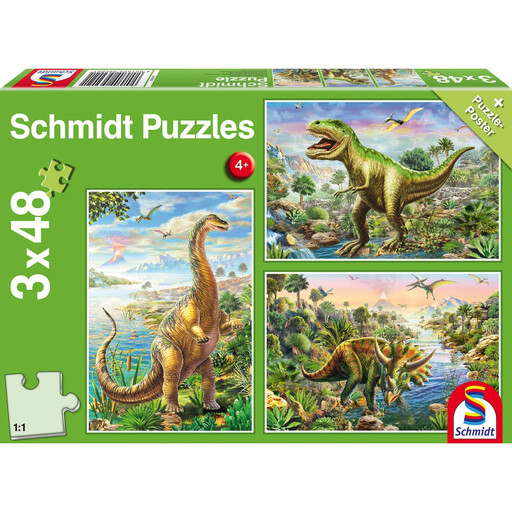
Why this product suits this profile: Three different dinosaur designs provide variety for children aged 4 and over, and are also suitable for puzzle sessions shared with siblings or adults.
It states not only the total number of pieces, but also the number per design. The posters with cut lines help children get started on each of the three pictures.
3 × 48 pieces, dinosaur designs, poster storage and a matt linen-textured surface according to the product specifications.
We have put together a complete, regularly updated list of products that fully meet these strict selection criteria and the safety regulations applicable in the EU.
The design influences whether a child wants to carry on puzzling. Animal puzzles for children and forest scenes are ideal for those interested in nature. Dinosaur fans can find suitable scenes in the dinosaur puzzles for children range. With popular series, a Disney Frozen puzzle, Peppa Pig or Bibi & Tina can make choosing easier. Vehicles, farms and space are also popular themes.
With brands such as Ravensburger children's puzzle or Schmidt Spiele children's puzzle, you should check the specific version. The brand alone does not tell you whether the number of pieces, frame and age range are right for the child. A children's educational puzzle featuring recognisable designs such as animals, vehicles or the solar system can provide a useful starting point for conversation, but it is not a guarantee of a particular learning outcome.
For beginners, 12 to 24 larger pieces with a frame are often suitable. A frame puzzle with outline guides makes it easier to match the pieces. The child's experience and the warning information on the packaging are also important.
A 100-piece puzzle can be suitable from age 6 if the child already enjoys puzzling regularly. Clearly defined image areas, a picture guide and easy-to-identify colours make the task easier. If you are unsure, a set with several smaller designs is a flexible alternative.
Yes, a puzzle gift for children can be chosen according to age and interests. Before buying, check the number of pieces, design, dimensions and age recommendation. Frame puzzles are often easier for younger children to manage, while older children may enjoy puzzles with 100, 150 or 200 pieces.