
Lieferung heute & morgen

Qualitätsgarantie

Willkommens-Angebote freischalten: KOSTENLOSE Lieferung | Bis zu 80 % RABATT | Kostenlose 30-Tage-JoyPlus-Testphase
App herunterladen
A children’s puzzle can vary greatly in suitability depending on the child’s age, the number of pieces and the material. A puzzle for toddlers should be easy to grip and clear to understand, while older children may enjoy logic challenges, 3D puzzles or interactive adventures. Adults also often look for 1000-piece puzzles as a leisure activity or gift.
To avoid frustration or unnecessary expense, it is worth taking a close look at the product information. The Joybuy Product Recommendation Officer selection therefore focuses on clear, verifiable criteria rather than blanket marketing claims.
A children’s puzzle for ages 2 and up with a few large pieces may be more suitable than a 20- or 30-piece picture. The child’s hand size, experience and the complexity of the image are what really matter. Too many pieces can quickly make it difficult for beginners to start or complete the puzzle independently.
The recommended age is not simply a marketing statement. It takes into account factors including piece size, image difficulty and possible choking hazards. Products containing small parts must not be used by children under three if the manufacturer explicitly warns of a choking hazard. An adult should check the information on the packaging and product page.
A learning puzzle for children can encourage the development of shape and colour recognition, hand-eye coordination or logical thinking in a playful way. However, this is not a guarantee of any specific developmental result. More important is choosing a puzzle that matches the child’s current abilities and can be used regularly without excessive help.
The following categories provide a useful starting point:
When choosing a wooden puzzle for children, look for a smooth finish, easy-to-grip shapes and safe storage. For cardboard puzzles, thick pieces, precise cuts and a clearly printed picture guide are practical features. A frame puzzle keeps the pieces in place while the puzzle is being completed and is often easier for beginners to understand than a puzzle without a base.
For use on the go, compact logic games with integrated storage are a sensible choice. The SmartGames IQ Puzzle or a comparable travel puzzle takes up little space and can often be played alone. Nevertheless, check whether it contains small parts and whether everything can be stored securely again after opening.
The theme affects motivation, but also the level of difficulty. Animal and vehicle pictures often feature clearly recognisable shapes. Landscapes, fantasy scenes and detailed collages can be appealing in a puzzle for adults, but they require more time. A 3D puzzle or adventure puzzle is better suited to users who expect more than simply assembling pieces and also want to build something or follow a story.
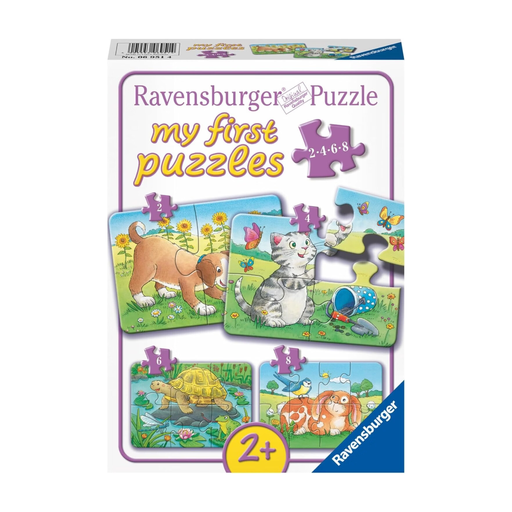
Why this product suits this profile: According to the product information, the set is intended for children aged 2 and over and contains four puzzles with increasing difficulty. This allows children to build their skills gradually.
The different difficulty levels help prevent a single, overly challenging picture from making it difficult to get started. The age recommendation and safety information should still be followed.
Four pictures, sturdy cardboard pieces and an age-appropriate introduction from age 2.
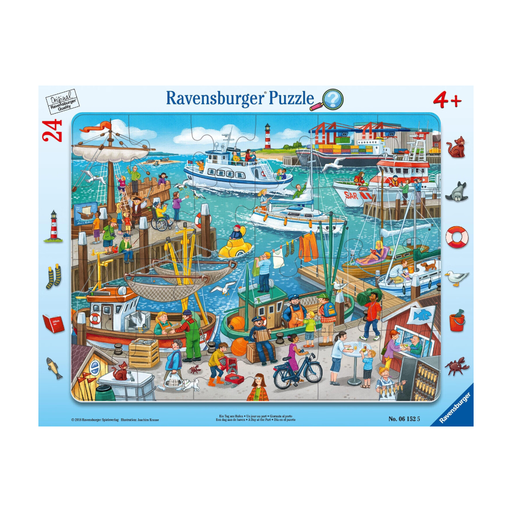
Why this product suits this profile: Suitable from age 4, this 24-piece frame puzzle includes an additional search activity. The outlines help children find their bearings while completing the puzzle.
The frame outlines make it easier to work out where the pieces belong. The separate search activity provides an additional way to play without unnecessarily increasing the number of pieces.
24 sturdy cardboard pieces, a frame base and ten picture details to find.
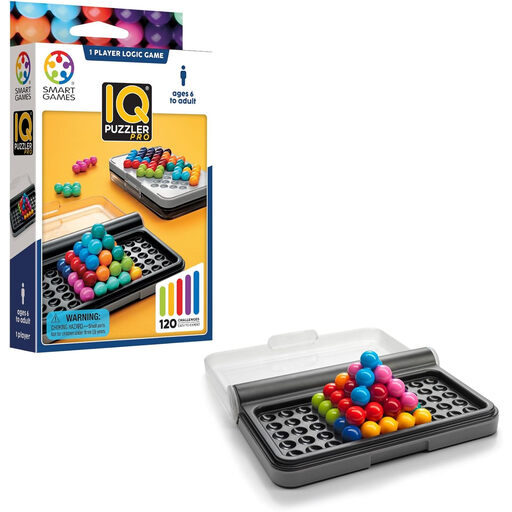
Why this product suits this profile: According to the product description, this compact single-player game for ages 6 and up offers 120 challenges in two- and three-dimensional formats, making it suitable for both home and travel.
A defined number of challenges is more transparent than a general claim of “unlimited” fun. The compact format makes storage easier, but it does not replace checking the age recommendations.
120 challenges, three game modes, single-player play and a compact format.
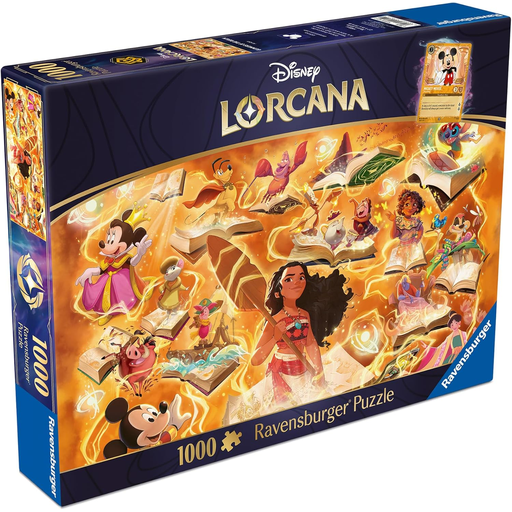
Why this product suits this profile: According to the product information, this 1000-piece Ravensburger puzzle is intended for people aged 14 and over and measures 70 × 50 cm when complete. This makes it well suited to longer puzzle sessions and detailed images.
The number of pieces, completed size and age recommendation are all clearly stated. This makes it easier to judge before buying whether you have enough space and time available.
1000 pieces, a completed size of 70 × 50 cm and an image from the Disney Lorcana world.
We have put together a complete, regularly updated list of products that fully meet these strict selection criteria and the safety regulations applicable in the EU.
For a children’s puzzle for ages 2 and up, large, easy-to-grip pieces, simple pictures and a low number of pieces are sensible choices. A set with several pictures and increasing difficulty can make the transition to more challenging puzzles easier. The manufacturer’s specific age recommendation remains decisive.
A children’s puzzle for ages 4 and up can contain around 24 to 48 pieces, depending on the child’s experience. A frame, outline markings or a picture guide can make it easier to get started. The key question is whether the child can complete the puzzle with little support.
Its lifespan depends on the material, storage and how it is handled. Thick cardboard pieces or carefully finished wood can be used for a long time when stored in a dry place. Moisture, bending and frequently losing individual pieces shorten the product’s useful life. Before buying, therefore, check the material information, piece format and whether suitable storage is available.