
Lieferung heute & morgen

Qualitätsgarantie

Willkommens-Angebote freischalten: KOSTENLOSE Lieferung | Bis zu 80 % RABATT | Kostenlose 30-Tage-JoyPlus-Testphase
App herunterladen
A children’s puzzle should suit the child’s developmental stage, patience and interests. In practice, however, unsuitable purchases are caused by more than just too many pieces or an unappealing picture. Materials, dimensions and safety information are also often overlooked when shopping.
A 100-piece puzzle is not automatically suitable for every child aged six and over. A detailed picture with many similar colours can be more challenging than a clearly structured image with more pieces. When choosing a 100-piece puzzle for children, the picture, piece size and aids such as a poster should therefore be considered together.
For younger children, frame puzzles with pre-defined outlines are often easier to use. A children’s puzzle for ages 3 and over with 15 pieces presents different challenges from a children’s puzzle for ages 6 and over with 100 pieces.
The recommended age is a useful guide, but it does not replace checking the safety information. Small puzzle pieces should not be given to children under three. Magnetic construction sets require particular care: any magnets included must remain securely enclosed. If strong magnets are swallowed, they can cause serious injuries. A set such as the XINQIYUAN magnetic toy therefore specifically warns about small parts and strong magnets.
Descriptions such as “educational”, “premium” or “XXL” should be assessed against specific product features. Important aspects include:
An XXL puzzle for children usually refers to larger pieces or a larger format, not necessarily a lower level of difficulty.
For a children’s puzzle for ages 2 and over, particularly large, sturdy pieces and clear pictures are ideal. The Ravensburger “My First Puzzle” contains four puzzles with an increasing level of difficulty and animal pictures. A wooden puzzle with large knobs, such as the HABA Grasping Puzzle “Fruit & Colours” for ages 12 months and over, is also designed to help children grasp and match simple shapes.
A children’s puzzle for ages 3 and over should contain just a few clearly recognisable pieces. For a children’s puzzle for ages 4 and over, a frame, outline markings and around 35 to 40 pieces can make getting started easier. From the age of six, 100-piece puzzles or several smaller pictures may be suitable. A children’s puzzle for ages 8 and over can contain 200 or more pieces, finer picture details and additional game elements.
The number of pieces alone does not determine the level of difficulty. A 200-piece puzzle for children can be easy to handle if it uses large XXL pieces. The Ravensburger “Shimmering Underwater Paradise” consists of 200 XXL pieces and measures 49.5 × 36.2 cm when assembled. The Ravensburger “Magic Unicorn Night” also contains 200 pieces and features additional glow-in-the-dark effects.
With popular themes such as Disney puzzles for children, unicorns, fairies, dinosaurs or woodland animals, the choice of picture is an important factor. A familiar theme can make it easier to get started, while landscapes with many similar areas of colour require greater perseverance.
Sturdy cardboard, cleanly cut edges and a clearly visible picture surface make assembling a puzzle easier. Schmidt Spiele children’s puzzles are described as featuring, among other things, a linen-effect structure, a matt surface and a puzzle poster with cutting lines. For sets containing several pictures, a box or metal case is practical because the pieces can be stored separately.
An educational puzzle or construction toy should be stored in a dry, clean place after use. Magnetic building blocks should be checked regularly: damaged pieces or loosened magnet capsules should no longer be used.
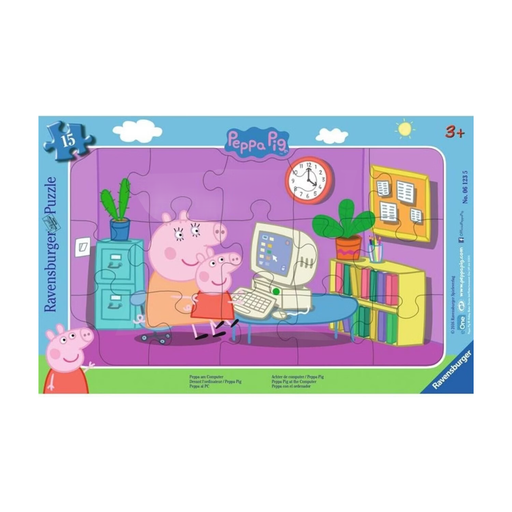
Why this product suits this profile: This frame puzzle for ages 3 and over is designed for children having their first experiences with puzzles. Peppa Pig provides a familiar picture for short play sessions.
The 15 pieces and the outlines in the frame reduce the risk of becoming overwhelmed by too many pieces.
Frame with outline guide, extra-thick material and a format measuring 29.7 × 19 cm.
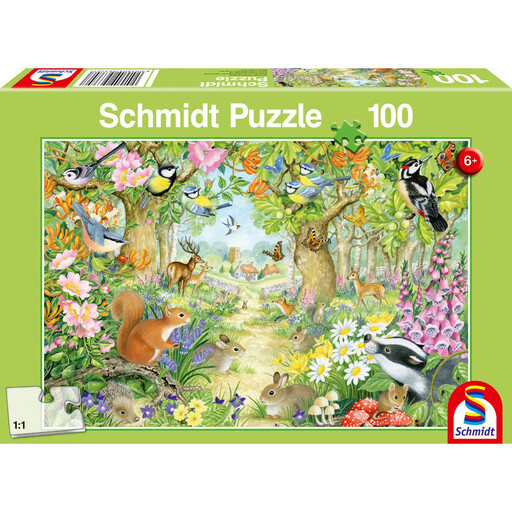
Why this product suits this profile: The woodland animal picture is suitable for children aged 6 and over who can already concentrate on puzzles for longer periods and enjoy detailed scenes.
The included poster with cutting lines provides clear guidance, rather than leaving the choice to the picture alone.
100 pieces, matt linen-effect surface, stated assembled dimensions of 27.5 × 19 cm and a puzzle poster.
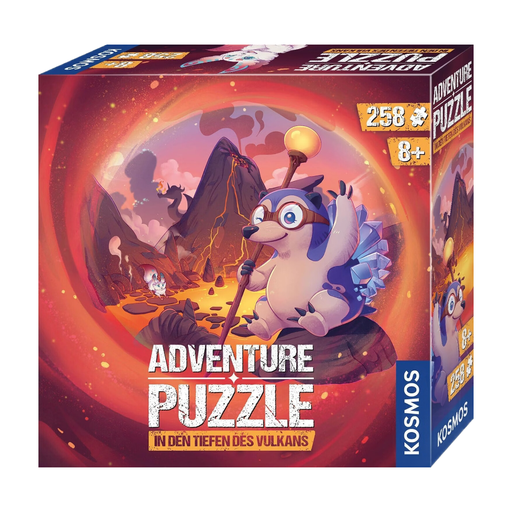
Why this product suits this profile: For children aged 8 and over who are looking for a puzzle with a story and interactive elements. It is designed for one to three players.
The challenge is not based solely on a high number of pieces, but is combined with a story told in sections and app support.
258 pieces, interactive point-and-click adventure, read-aloud or independent reading and no batteries required.
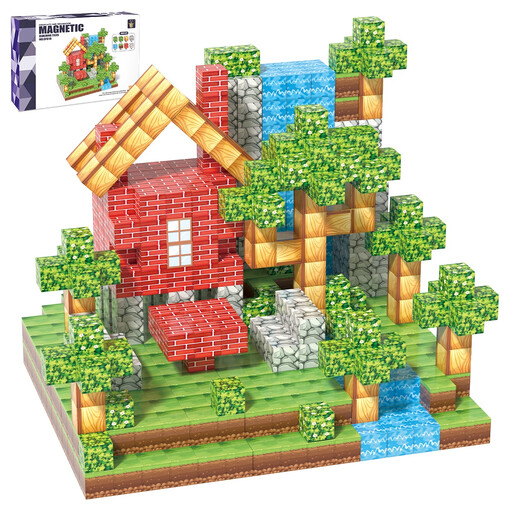
Why this product suits this profile: This construction set for ages 3 and over is designed for children who want to create two-dimensional patterns and three-dimensional structures as well as lay out designs.
The product details explicitly state the recommended age, material and storage information, as well as warning about small parts and strong magnets.
100 pieces, storage bag, ABS plastic with smooth edges and compatibility with other 2.5-cm magnetic tile sets according to the product description.
We have put together a complete, regularly updated list of products that fully meet these strict selection criteria and the safety regulations applicable in the EU.
For a puzzle gift for children, the picture should ideally match the child’s interests. Animal lovers will find suitable scenes featuring animals or dinosaurs. Disney fans might enjoy Anna and Elsa, Lilo & Stitch or other familiar characters. A metal case containing several pictures can be a good choice if variety is wanted and different difficulty levels are needed.
Before buying, you should also check whether the puzzle will fit on a table or play mat. With XXL formats, the completed size is crucial. For families, a sturdy, dry and well-lit surface is recommended.
From the age of two, large, sturdy pieces and simple pictures are a sensible choice. A set containing several small puzzles with increasing levels of difficulty can make getting started easier. The manufacturer’s specific age recommendation and the safety information should always be followed.
This depends on the child’s age, experience and the picture. For beginners, around 15 to 40 pieces may be suitable. Depending on their experience, children aged six and over may be able to complete 60- or 100-piece puzzles. From the age of eight, 200 pieces or interactive versions may be suitable. XXL pieces can make a puzzle easier to handle, but they do not automatically change the level of difficulty.
Its lifespan depends on the thickness of the cardboard, moisture, storage and handling. Puzzle pieces should be stored in a dry place and not bent. Wooden puzzles and magnetic building blocks should be checked regularly for loose, damaged or sharp-edged parts. If a piece is missing, the puzzle should be carefully compared by picture and number of pieces before buying a replacement.