
Lieferung heute & morgen

Qualitätsgarantie

Willkommens-Angebote freischalten: KOSTENLOSE Lieferung | Bis zu 80 % RABATT | Kostenlose 30-Tage-JoyPlus-Testphase
App herunterladen
A children’s puzzle should suit the child’s age, dexterity and interests. In practice, however, unsuitable purchases are often caused not by the picture, but by an inappropriate number of pieces, material that is too thin or confusing age recommendations. Parents, grandparents and educational settings should therefore check a few specific product features before buying.
A high piece count may seem appealing at first, but it can overwhelm younger children. For a children’s puzzle from age 3, large, easy-to-grip pieces and a manageable picture are usually more practical than an overly demanding challenge. From around age 4, frame puzzles with 24 to 40 pieces can be a good option. For children aged 6 and over, 100-piece puzzles or more complex logic games may be suitable, depending on their previous puzzle experience.
The manufacturer’s age recommendation is an important starting point, but it does not replace adult supervision. Many puzzles contain small parts and are therefore not suitable for children under 3 years of age. The information on the packaging and product page is crucial, particularly the warning about a choking hazard from small parts.
Phrases such as “supports development” should not be the only reasons to buy. Specific details are more informative:
A learning puzzle for children, for example, may involve colours, shapes, matching or observation. This does not guarantee learning outcomes, however. The aim of the game should suit the child’s stage of development and interests.
The following ranges provide a rough guide:
This classification is not a fixed developmental rule. A child with previous puzzle experience may be able to complete more pieces at an earlier age, while a simpler picture may be the better choice for another child.
For a wooden puzzle for children, the thickness of the pieces, rounded edges and a carefully finished surface are important. With cardboard puzzles, look for sufficient material thickness, precise cutting and a clearly recognisable picture surface. A puzzle should be stored in a dry place and cleaned according to the manufacturer’s instructions. A damp cloth or cleaning product is not automatically suitable.
A frame puzzle provides a fixed boundary and can make matching easier. Printed outlines show where the pieces should be placed. This is particularly practical for beginners, as the picture does not have to be assembled on a completely open surface. For older children, a puzzle without a frame can provide greater independence and a higher level of challenge.
Animal pictures, vehicles, farm scenes or familiar characters often make it easier to get started when the child is already interested in them. A children’s animal puzzle can also be used for naming and sorting animals. For a logic game, parents should additionally check whether it is designed for individual or group play and whether the rules are clearly explained.
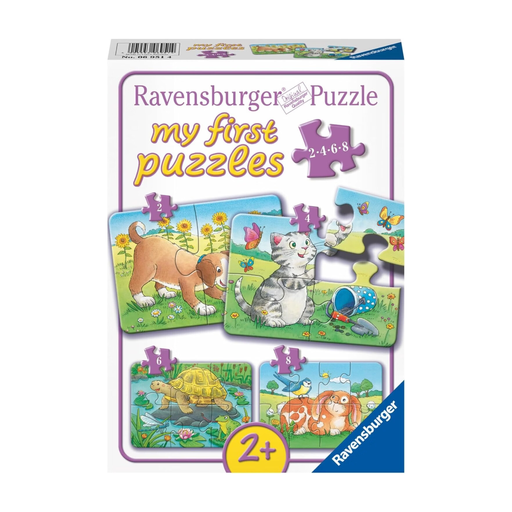
Why this product suits this profile: According to the product details, the set is designed for children aged 2 and over and contains four puzzles with increasing levels of difficulty. This makes it possible to begin with familiar pet pictures.
The pieces are not all focused on one difficult challenge. The age recommendation and warning about small parts should still be checked before buying.
Four pictures, sturdy cardboard pieces and a format measuring 21 × 15 cm, according to the product description.
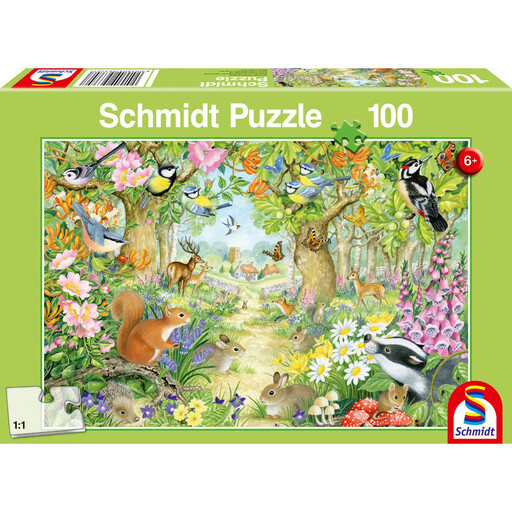
Why this product suits this profile: According to the manufacturer, the picture is intended for children aged 6 and over. A puzzle poster, a matt linen-textured surface and precisely cut pieces are clearly stated features.
The number of pieces and age recommendation are clearly stated. The poster can make it easier to get started instead of relying solely on a challenging picture.
100 pieces, forest animals as a nature-themed picture, puzzle poster and matt, textured surface, according to the product data.
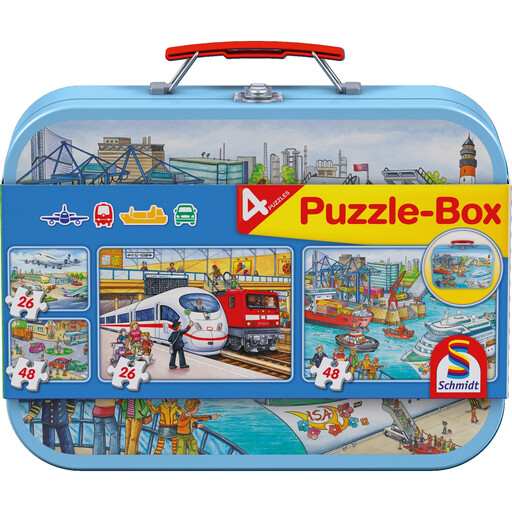
Why this product suits this profile: The set contains four puzzles with 2 × 26 and 2 × 48 pieces and is suitable for children aged 4 and over, according to the product details. The metal case supports separate storage in everyday family or group settings.
Several piece counts make it possible to adapt the challenge to different stages of play. The case reduces the risk of different pictures becoming permanently mixed together.
Four vehicle pictures, two difficulty levels, a puzzle poster and metal case, according to the product description.
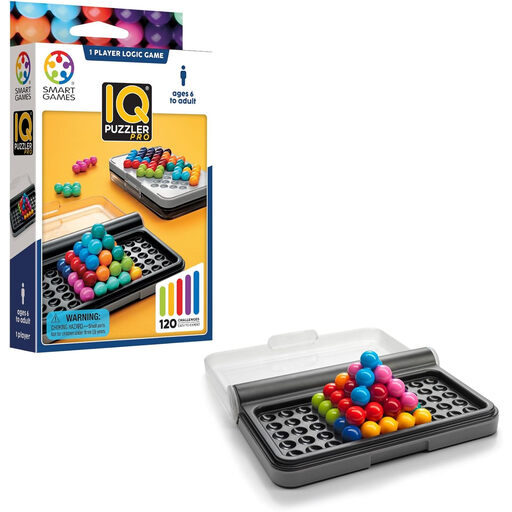
Why this product suits this profile: According to the product details, this compact logic game is designed for children aged 6 and over and for one player. It offers 120 challenges in three game modes, including 2D and 3D puzzles.
The number of challenges and game modes are clearly specified. Before buying, check whether solo play and small plastic parts are suitable for the intended use.
Compact format, 120 challenges and 2D/3D game modes according to the manufacturer’s description; batteries are not required.
We have put together a complete, regularly updated list of products that fully meet these strict selection criteria and the safety regulations applicable in the EU.
A puzzle given as a gift should not be chosen solely because it features a familiar character. Also check:
For nurseries and kindergartens, several piece counts or a set with different pictures can be a sensible choice. A wooden puzzle for children is often suitable for repeated handling and sorting, while a cardboard puzzle with a large picture can be stored in a space-saving way.
For beginners, around 12 to 24 larger pieces is a practical guide. A frame or base with outlines can make matching easier. The manufacturer’s specific recommendation and the safety information on the packaging remain decisive.
Its lifespan depends on the material thickness, cutting quality, handling and storage. Dry storage, keeping all the pieces together and careful handling will extend its useful life. With wooden puzzles, parents should also check that the edges are free from splinters and that the surface is undamaged.
A 3D puzzle for children is generally intended for older children, as it may contain smaller parts and involve more complex construction steps. For example, the Ravensburger Big Ben 3D puzzle has a stated minimum age of 8 years. Before buying, check the size of the pieces, the assembly instructions and the level of adult support required.