
Lieferung heute & morgen

Qualitätsgarantie

Willkommens-Angebote freischalten: KOSTENLOSE Lieferung | Bis zu 80 % RABATT | Kostenlose 30-Tage-JoyPlus-Testphase
App herunterladen
A children's puzzle should suit the child's age, patience and existing abilities. In practice, however, parents and grandparents often choose a design that looks appealing but is either too challenging or not challenging enough during play. Material, piece size and safety information can also easily be overlooked when buying.
A high piece count may look impressive at first glance, but it is not automatically suitable for young children. A puzzle with just a few pieces enables quicker feelings of achievement and makes it easier to recognise colours and shapes. For children aged 2 and over, large, easy-to-grip pieces and simple designs may be more suitable than a classic puzzle with lots of small elements.
The “from 3 years” recommendation is not merely a general guideline. Among other things, it relates to the size of the pieces and the potential risk of swallowing them. A children's puzzle from 3 years should therefore not be passed on to younger children, even if they already enjoy doing puzzles.
A popular licensed design alone says little about how practical a puzzle is for everyday use. Important factors include sturdy cardboard, pieces that fit together neatly and a baseboard. With a frame puzzle for children, pre-cut outlines help children match the pieces correctly. This can be particularly useful for beginners.
The number of pieces is a useful first indication of difficulty, but it is not the only one:
Children develop at different rates. One child may already be able to complete a 24-piece puzzle confidently, while another may get more enjoyment from a 15-piece puzzle.
Look for extra-thick cardboard, sturdy edges and a surface that can be wiped clean with a dry cloth. With wooden puzzles, check the edges and corners. According to the product description, the MIMI Deluxe Wooden Sudoku is made from wood, measures 23.2 × 23.2 × 4 cm and contains small pieces. It is therefore intended to be used under supervision and is not suitable for children under 3 years.
With a learning puzzle for children, it is also important that the task remains easy to understand. A design may introduce words, shapes, numbers or spatial reasoning without automatically guaranteeing a particular learning outcome. What matters is whether the child can understand the task independently.
Before buying, read the manufacturer's information on age suitability, materials and warnings. If a product contains small parts, there is generally a risk of swallowing. Adult supervision is advisable for younger children.
For longer-lasting use:
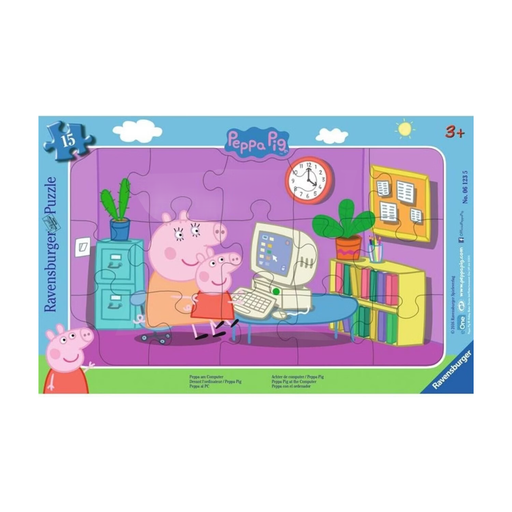
Why this product suits this profile: According to the manufacturer's information, this 15-piece frame puzzle is suitable for children aged 3 and over. Its familiar Peppa Pig design makes it a welcoming introduction to puzzling.
The frame outlines provide clear guidance and reduce the need to search for suitable positions. The number of pieces remains manageable.
Extra-thick material, 15 pieces and a frame with baseboard; suitable for children aged 3 and over.
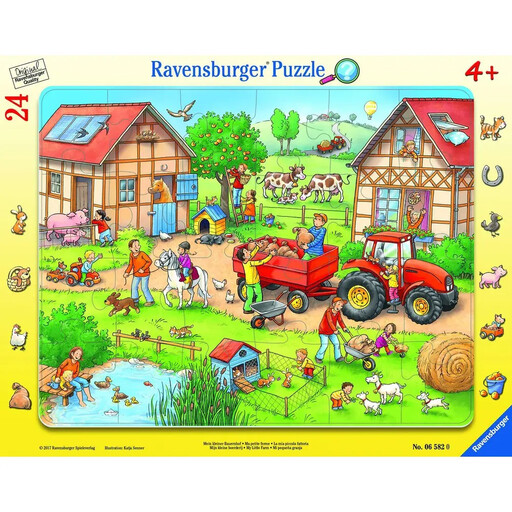
Why this product suits this profile: The combination of 24 pieces, a frame and an additional search game is suitable for children aged 4 and over who are ready to move from a simple introduction to a longer activity.
The baseboard supports matching, while the search game adds variety without unnecessarily increasing the number of pieces.
24 pieces, a frame with outlines and an additional search activity; according to the product information, suitable from 4 years.
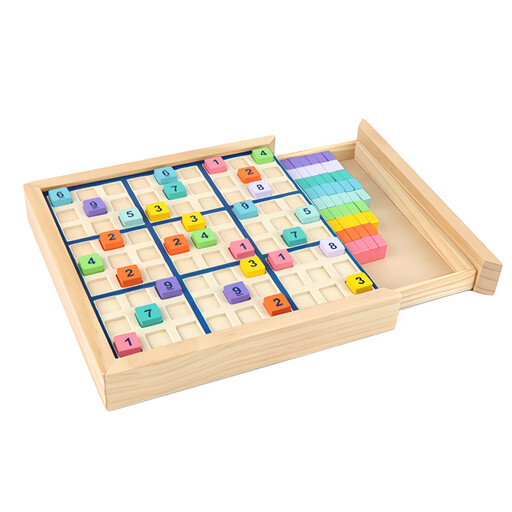
Why this product suits this profile: The wooden board combines 4×4, 6×6 and 9×9 Sudoku challenges, making it suitable for users looking for a reusable logic game for children and adults.
The different grids allow the challenge to be adjusted. This means the game is not limited to one particular number of pieces or a single design.
Wooden construction, three Sudoku sizes and a drawer; take note of the small pieces and use under supervision.
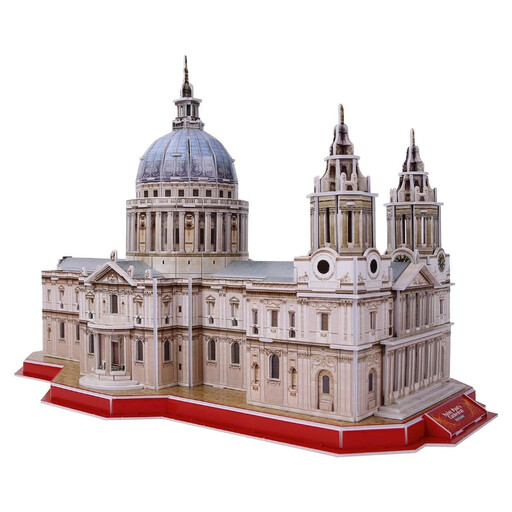
Why this product suits this profile: According to the product information, this 3D puzzle with 131 pre-cut EPS foam board pieces is suitable for children aged 10 and over. It can be used as both a building and a decorative project.
The age recommendation clearly distinguishes this product from a children's puzzle for toddlers. The pieces are pre-cut and assemble without tools.
131 pieces, a three-dimensional result and an enclosed photo booklet; assembly under supervision is recommended.
We have put together a complete, regularly updated list of products that fully meet these strict selection criteria and the safety regulations applicable in the EU.
For children aged 2 and over, products with large, sturdy pieces and a clear picture layout are worth considering. The manufacturer's specific age recommendation must be followed. Even with larger pieces, adult supervision is advisable if the child still often puts objects in their mouth.
For beginners, 12 to 15 pieces are often a manageable starting point. From around 4 years, 24 to 40 pieces can provide a suitable step up. The design, frame, piece size and the child's previous experience are also important. A beginner's puzzle can deliberately contain fewer pieces, allowing the child to complete the task independently.
A frame puzzle for children is completed on a sturdy baseboard, whose outlines indicate where the pieces go. This makes it easier to find the right position. A classic puzzle without a frame requires more sorting and matching. For older children, a 3D puzzle for children, Sudoku or another logic game can provide an enjoyable alternative.