
Lieferung heute & morgen

Qualitätsgarantie

Willkommens-Angebote freischalten: KOSTENLOSE Lieferung | Bis zu 80 % RABATT | Kostenlose 30-Tage-JoyPlus-Testphase
App herunterladen
A children’s puzzle should suit your child’s age, hand size and stage of development. In practice, though, three common buying mistakes can quickly lead to frustration: too many pieces can overwhelm beginners, small or loose parts are unsuitable for younger children, and an attractive picture doesn’t tell you how easy the puzzle is to handle. Claims such as ‘especially durable’ or ‘educational’ should also be checked rather than taken at face value.
This guide explains what parents, grandparents and anyone buying a gift should look for when choosing children’s puzzles. Options range from wooden puzzles for babies and peg puzzles for toddlers to frame puzzles for children aged 3 or 4 and up.
A children’s puzzle for 1-year-olds is generally designed differently from a traditional puzzle with lots of small pieces. For babies and young toddlers, large, easy-to-grip pieces, simple shapes and a stable base are essential. A puzzle with 15 or 24 pieces, on the other hand, may only be suitable for older children, even if they like the picture.
The manufacturer’s age recommendation is therefore a useful starting point. You should also check whether your child can already match shapes and place pieces where they belong.
Terms such as ‘learning puzzle’ or ‘puzzle to develop fine motor skills’ simply describe a possible use. More useful details are those you can check:
A puzzle can help children practise gripping, matching and concentrating as they play. However, it can’t guarantee a particular developmental outcome or learning result.
Check children’s puzzles for cracks, splinters or loose joints before every use. Wooden puzzles usually shouldn’t be soaked in water. Cardboard or paper puzzles are best cleaned with a dry cloth. For children under 3, pay particular attention to warnings about small parts. The age recommendation shouldn’t be ignored on the basis that an adult will only be playing with the child for a short time.
For a children’s puzzle for 2-year-olds, sets with a small number of larger pieces and a gradual increase in difficulty are often a good choice. Ravensburger’s ‘My First Puzzle’, with four pictures and a recommended age of 2+, is designed as a starting point. The product description lists sturdy cardboard pieces and different difficulty levels.
A children’s puzzle for 3-year-olds could be a 15-piece frame puzzle. The frame and printed outlines help children see where the pieces go. For a children’s puzzle for 4-year-olds, a 24-piece picture puzzle may be suitable, for example. Children practise not only fitting individual shapes into place but also assembling a complete picture.
For a wooden puzzle for babies, rounded edges, securely fitted pieces and suitably sized knobs are particularly important. FSC-certified wood tells you where the material comes from, but it doesn’t replace checking the specific safety and care instructions.
For cardboard pieces, a good thickness and neatly finished edges are practical features. The Ravensburger products in this selection are described as having extra-thick or sturdy pieces. Even so, they should be kept dry and checked regularly.
Many children find animal pictures easy to engage with. An animal puzzle can also prompt conversations about animals and colours. But more important than an elaborate picture is that the colours and details are easy to make out, and that the picture matches your child’s interests.
Compact frame puzzles are handy for smaller homes or for taking with you. A peg puzzle with a fixed base is less likely to lose pieces than a set of loose puzzle pieces. If you often do puzzles together at the table, look for one with a base or frame.
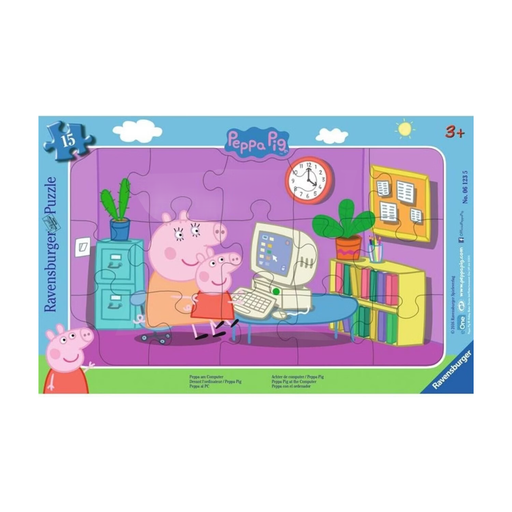
Why this product suits this profile: According to the product information, this frame puzzle is for children aged 3 and up. Its 15 pieces make it a manageable first challenge.
The frame and outlines make it easier to work out where the pieces go than with a loose puzzle that has no guide picture.
15 pieces, an integrated frame, extra-thick material and a Peppa Pig picture.
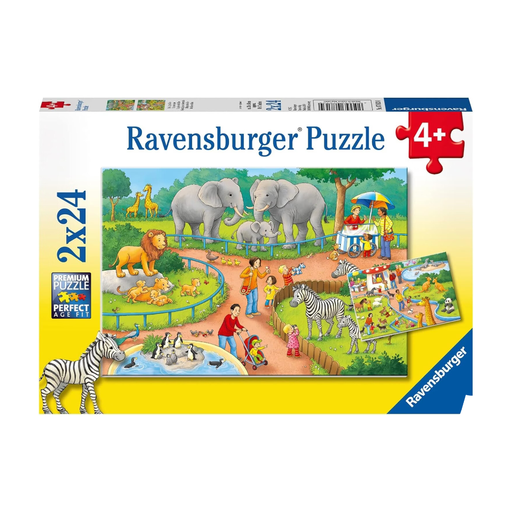
Why this product suits this profile: With two animal pictures, each made up of 24 pieces, this set offers children aged 4 and up some variety and a step up in difficulty.
The number of pieces and age recommendation are clearly stated, while the two separate pictures help keep play varied.
Two 24-piece animal puzzles, sturdy cardboard pieces and a mini poster for each puzzle to use as a guide.
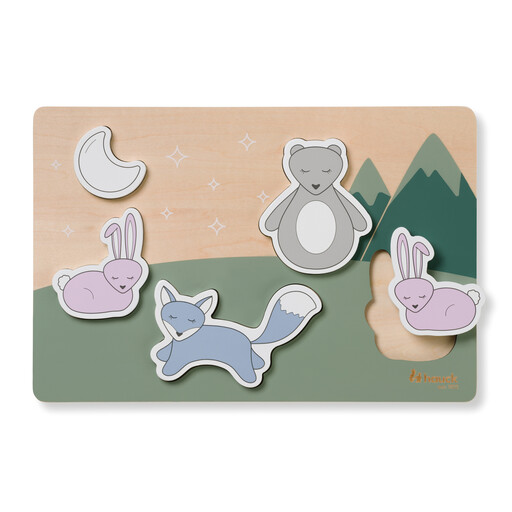
Why this product suits this profile: According to the product description, this peg puzzle is suitable from 12 months and has a fixed wooden base with animal shapes.
Large knobs, rounded edges and a base make it more practical for first matching attempts than loose small pieces.
FSC-certified wood, an animal picture, rounded design and dimensions of approximately 30 × 20.5 × 2 cm.
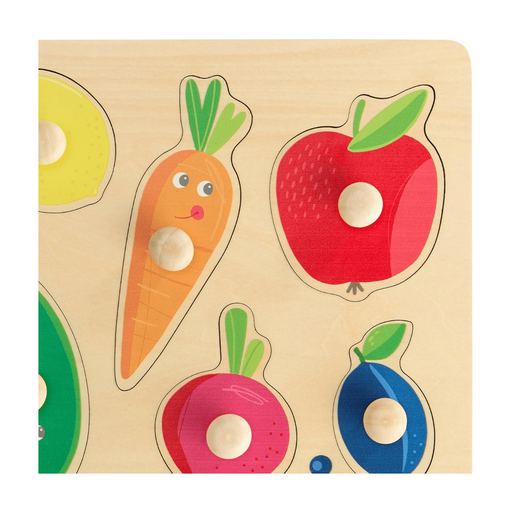
Why this product suits this profile: According to the product information, this HABA wooden puzzle is designed for children aged 12 months and up, and combines colour, shape and picture matching.
Large wooden knobs make the pieces easier to grip, while the simple design avoids unnecessary complexity in the number of pieces and pictures.
Solid wood, large knobs, fruit and colour themes; recommended for children aged 12 months and up.
We’ve put together a complete, regularly updated list of products that meet these strict selection criteria and the safety regulations applicable in the EU.
To get started, all you need is a flat, well-lit surface. Put out just a few pieces at first and let your child match shapes, colours or animals. With a puzzle to develop fine motor skills, try not to do the whole task for them: pointing out the matching outline or picture can help without giving away the answer.
After playtime, count the pieces and store them somewhere dry. A soft cloth is best for cleaning wooden puzzles; avoid harsh cleaning products and soaking them for long periods. Any damaged pieces should be removed from the toy box.
For a children’s puzzle for 1-year-olds, consider a peg or grasping puzzle with a large base, easy-to-grip knobs and just a few shapes. Follow the specific age recommendation and any instructions about direct supervision. Loose small pieces aren’t suitable for children of this age.
It depends on the child’s experience and the design of the puzzle. A 15-piece frame puzzle can suit beginners aged 3 and up, as the outlines help guide them. A 24-piece puzzle, on the other hand, may be intended for children aged 4 and up. Consider the child’s age, the size of the pieces and whether the puzzle has a frame.
How long it lasts depends on the material, how it’s stored and how it’s used. Sturdy cardboard and wooden puzzles can stay in good condition for a long time if kept dry. They should still be checked regularly. Replace the puzzle if pieces start to splinter, come loose or become badly damaged.