
Lieferung heute & morgen

Qualitätsgarantie

Willkommens-Angebote freischalten: KOSTENLOSE Lieferung | Bis zu 80 % RABATT | Kostenlose 30-Tage-JoyPlus-Testphase
App herunterladen
Children’s puzzles combine an engaging activity with recognising shapes, colours and connections. However, to ensure the game is genuinely suitable for the child, parents, grandparents and educational settings should look beyond the picture and packaging design. The number of pieces, age rating, material and game format determine whether a puzzle works well in everyday use or is quickly left unused.
A high number of pieces often looks challenging and durable on the packaging. For a younger child, however, it can become a frustrating task. A children’s puzzle from age 2 should therefore consist of a few pieces that are easy to handle. For a puzzle for children aged 3 and over, a frame, template or outlines can be helpful. Larger pictures and more pieces only become suitable with increasing experience.
The age recommendation is not a competition, but a guide. Among other things, it takes into account the size of the pieces, the complexity of the picture and any small parts.
A children’s frame puzzle provides a fixed boundary and can make matching pieces easier. However, if there are no clear outlines or the base is too thin, the pieces can slide around during play. With children’s wooden puzzles, you should also check whether the pieces are well finished and the handles are securely attached.
For paper and cardboard puzzles, material thickness, clean printing and accurately fitting connections are more important than eye-catching packaging. The product description should provide these details as specifically as possible.
Terms such as “children’s educational puzzle” or “supports development” are not, on their own, sufficient selection criteria. Specific features are more meaningful: increasing difficulty, search tasks, outline lines, different game modes or clear instructions. A puzzle can engage concentration, hand-eye coordination or logical thinking through play; its effects should not automatically be taken as guaranteed.
Pay attention to the recommended age group and the manufacturer’s safety information. Many puzzles contain small parts and are therefore not intended for children under 3 years of age. Even if a child is already skilled at handling toys, the age rating should not be ignored.
For general guidance:
The age recommendation does not replace supervision. With younger children, check the pieces regularly for damage and ensure they are kept out of the mouth.
The number of pieces is only meaningful when considered alongside the format. Large XXL pieces may be easier to handle than smaller standard pieces. Also check the dimensions of the completed puzzle and the amount of table space required.
A 200-piece puzzle may be suitable for a child aged 8 and over, but it requires considerably more sorting space and time than a 24-piece frame puzzle. For travelling, compact versions with secure storage are more practical. This category also includes travel games and children’s brain teasers, provided the pieces are not easily lost during transport.
Cardboard is lightweight and commonly used for classic puzzles. Wood offers a different feel and is particularly suitable for larger elements in peg puzzles. Plastic brain teasers can usually be cleaned with a dry or slightly damp cloth; cardboard should be stored in a dry place.
For products intended for the European market, pay attention to the information on the packaging and product page. This includes the CE marking, age recommendation, warning notices and manufacturer information. A CE marking is not a quality judgement; it indicates that the manufacturer has declared compliance with the applicable EU requirements. The specific information on the packaging applies to each product.
The following children’s puzzles have been deliberately chosen to differ in age suitability, number of pieces and game concept. This makes it easier to base your choice on everyday needs rather than the picture alone.
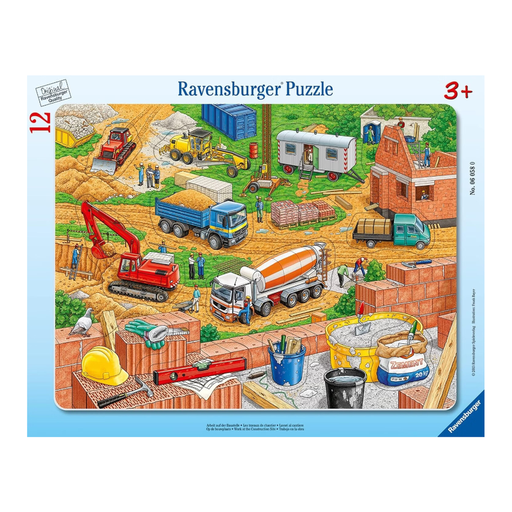
Why this product suits the profile: This frame puzzle is intended for children aged 3 and over. With 12 pieces, it is aimed at children gaining their first experience with classic puzzles.
The low number of pieces and the base with openings reduce complexity and make it easier to remove the pieces.
12 cardboard pieces, a building-site picture, a frame format and no batteries required.
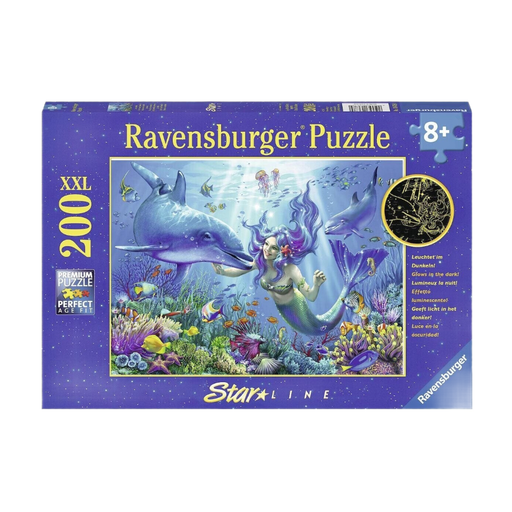
Why this product suits the profile: Suitable for children aged 8 and over, this puzzle combines 200 XXL cardboard pieces with an underwater picture and is designed for longer, focused play sessions.
The stated number of pieces, XXL format and completed dimensions make it easier to assess the space required and difficulty level before buying.
200 XXL pieces, completed dimensions of approximately 49,5 × 36,2 cm and glow effects according to the product description.
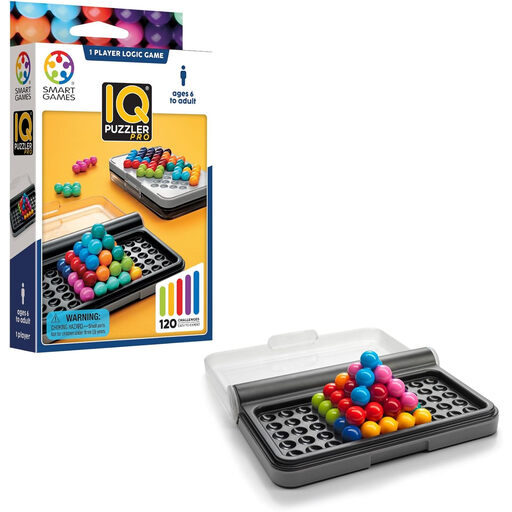
Why this product suits the profile: This compact SmartGames IQ puzzle is intended for children aged 6 and over and designed for one player, making it suitable for use at home or on the go.
Instead of a single fixed number of pieces, the game offers 120 challenges in three game formats, including 2D and 3D challenges.
Compact dimensions, no batteries or electronics, 120 challenges and a single-player game concept.
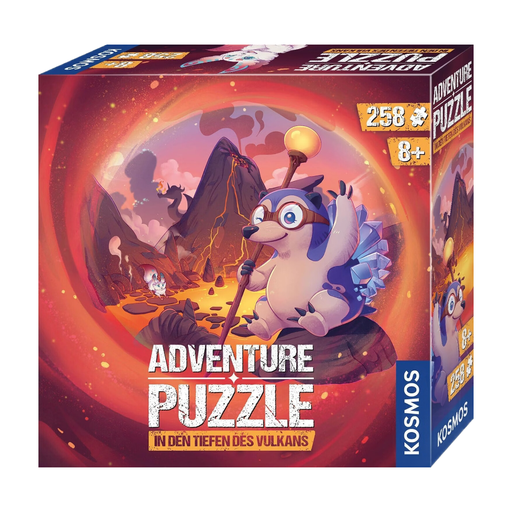
Why this product suits the profile: Suitable for children aged 8 and over, this interactive puzzle combines an ongoing story with 258 pieces and can be played by one to three players.
The product description clearly states the number of pieces, age group, number of players and use with an explanatory app.
258 pieces, 1 to 3 players, a story-driven format and no batteries required.
We have put together a complete, regularly updated list of products that fully meet these strict selection criteria and the safety regulations applicable in the EU.
Puzzle and brain-teaser pieces remain usable for longer when they are counted thoroughly after play and stored in a dry place. Cardboard puzzles should not be wiped with a damp cloth. A flat surface helps prevent pieces from becoming bent. For wooden puzzles, regular checks for loose handles, splinters or sharp edges are advisable. Plastic games such as compact logic puzzles can be cleaned with a slightly damp cloth in accordance with the manufacturer’s instructions.
Simple peg or inset puzzles with large pieces, clear shapes and only a few elements are suitable. A children’s wooden puzzle with large knobs can make it easier for a child to pick up the pieces independently. The specific age recommendation and adult supervision remain essential.
That depends on the child’s age and experience. For younger beginners, 12 to 15 pieces are often manageable. From the age of 4, puzzles with 24 to 40 pieces are often suitable. A 200-piece children’s puzzle is generally better suited to children aged 8 and over and requires sufficient space and time.
Yes, if the child prefers solving tasks to assembling a picture. Games such as the SmartGames IQ Puzzle offer individual challenges and can be practical for travelling. Before buying, check the number of players, age recommendation, number of challenges and size of the game pieces.