
Lieferung heute & morgen

Qualitätsgarantie

Willkommens-Angebote freischalten: KOSTENLOSE Lieferung | Bis zu 80 % RABATT | Kostenlose 30-Tage-JoyPlus-Testphase
App herunterladen
A children’s puzzle can be an ideal toy for quiet play, spending time together or giving as a present. However, the wide selection can quickly lead to unsuitable purchases: an elaborate package says little about whether the number of pieces, format and game concept are right for the child. As a Joybuy Product Recommendation Officer, I therefore filter the information using practical selection criteria and match products to different user profiles.
A 15-piece puzzle may be more suitable for a younger child than a design with lots of additional features. Conversely, a 150-piece puzzle is not automatically suitable for every child of the recommended age. The level of detail, piece size and available guidance also affect the difficulty.
A children’s puzzle for ages 2 and up, one for ages 3 and up and one for ages 4 and up will usually differ in piece size, material thickness and task. Small pieces can pose a choking hazard. The age recommendation on the packaging should therefore not be ignored in favour of a particularly appealing design.
Terms such as ‘educational puzzle for children’ often describe a type of play, but do not prove a specific developmental benefit. By contrast, concrete features such as a frame, poster, story or set with increasing numbers of pieces can be clearly assessed. Claims relating to concentration, motor skills or logical thinking should be understood as possible playful practice, not as medical or therapeutic effects.
For children aged 2 and over, large, easy-to-grip pieces and simple designs are generally more accessible. The Ravensburger ‘My First Puzzle’ featuring animal designs consists of four puzzles with increasing levels of difficulty and, according to the product information, is intended for children aged 2 and over.
A 15-piece children’s puzzle for ages 3 and up is suitable for first attempts at completing a puzzle independently. For children aged 4 and over, 24 to 37 pieces and a clearly recognisable design can provide a suitable next step. From around age 7 or 8, a 150-piece puzzle, 200-piece puzzle or interactive format may be worth considering. What matters most is whether the child already has experience with puzzles.
A children’s puzzle with a frame provides a fixed boundary and can help prevent the pieces from sliding around while the puzzle is being completed. Printed outline lines make it easier to sort pieces by shape. This feature is particularly practical for younger children, but it does not replace an age-appropriate number of pieces.
For larger puzzles, posters with marked cutting lines can provide helpful guidance. A matt, textured design can reduce reflections on the surface. These are specific product features and should be checked directly in the description.
Look for sturdy cardboard or paper materials, clearly worded warnings and a well-defined age recommendation. The products featured include warnings about the danger posed by small parts; some models are specifically not suitable for children under 3 years of age. A dry cloth is generally sufficient for cleaning. The original packaging or a sealable box is suitable for storage, helping to prevent pieces from being lost.
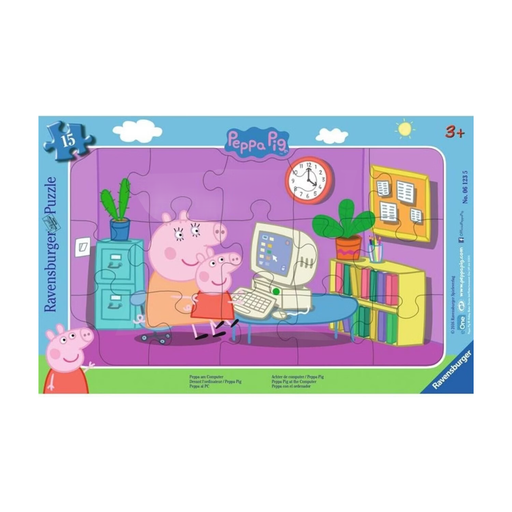
Why this product suits this profile: According to the product information, this 15-piece frame puzzle is suitable for children aged 3 and over and features Peppa Pig, a design that is easy to identify.
The manageable number of pieces prevents beginners from starting with a design that is too complex. The outlines in the frame provide additional guidance.
15 pieces, a frame with outline lines and a format of approximately 25 × 14,5 cm, according to the product information.
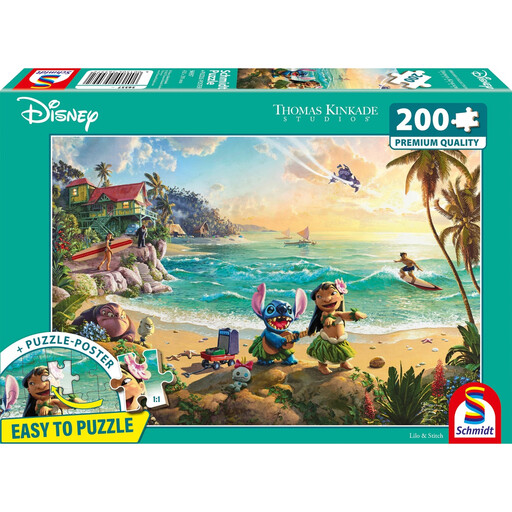
Why this product suits this profile: For children aged 8 and over, this puzzle combines a detailed Disney design with a medium number of pieces and an accompanying poster.
The number of pieces and age recommendation are clearly stated. The poster with cutting lines helps with a detailed design without giving away the entire task.
200 pieces, a matt linen-textured surface and a puzzle poster, according to the product description.
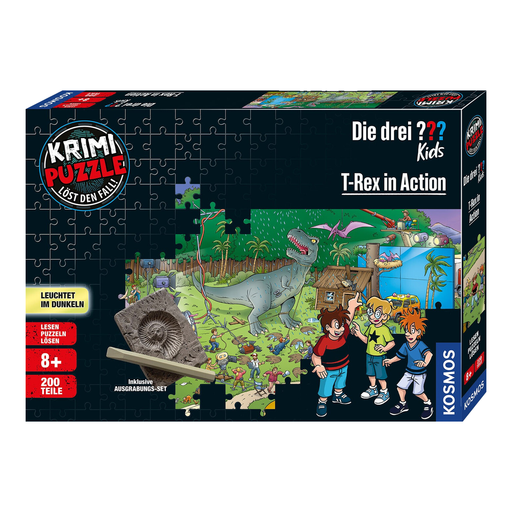
Why this product suits this profile: Children aged 8 and over get a 200-piece puzzle, a short story, clues and an excavation task in one detective game.
The additional features are clearly specified: read, complete the puzzle, search for clues and excavate a fossil block. This makes it clear that the product offers more than a traditional puzzle.
200 pieces, a glow effect according to the product information, a short story and excavation set; intended for 1 to 3 players.
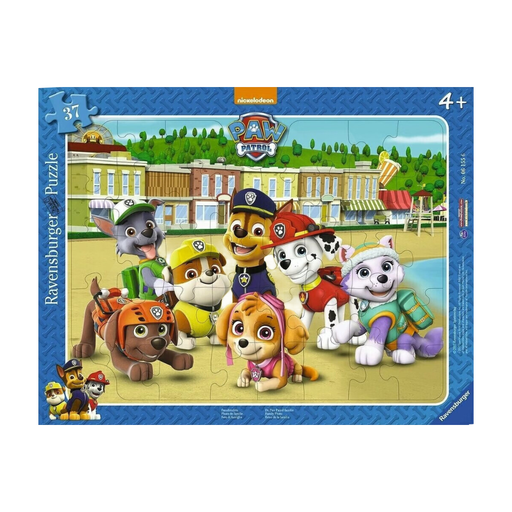
Why this product suits this profile: According to the product information, the Paw Patrol design and frame base are intended for children aged 4 and over who already have some initial puzzle experience.
The base defines the boundaries of the design and provides visual guidance. The age recommendation and warning about small parts should be checked before purchase.
37 pieces, a frame base and a puzzle format of approximately 24,5 × 32,5 cm, according to the product data.
We have put together a complete, regularly updated list of products that fully meet these strict selection criteria and the safety regulations applicable in the EU.
A children’s puzzle for ages 2 and up should consist of a small number of easy-to-grip pieces and feature a simple design. According to the product description, the Ravensburger ‘My First Puzzle’ contains four puzzles with increasing levels of difficulty. The packaging information and safety instructions should still be checked before use.
That depends on the child’s age and experience. For first attempts, 15 pieces may be suitable. For children aged 4 and over, around 24 to 37 pieces may be appropriate, depending on their experience. From age 7 or 8, 150-piece or 200-piece puzzles are possible. A poster, frame or clearly structured design can make the task easier.
Its lifespan depends on the thickness of the cardboard, how it is handled and how it is stored. Puzzle pieces should be kept dry, not bent and collected in full after play. A frame can make it easier to use the puzzle in a fixed location. For products with excavation or additional materials, all small parts should be checked and stored safely after play.