
Lieferung heute & morgen

Qualitätsgarantie

Willkommens-Angebote freischalten: KOSTENLOSE Lieferung | Bis zu 80 % RABATT | Kostenlose 30-Tage-JoyPlus-Testphase
App herunterladen
Children’s ride-on toys give children aged 3 to 10 opportunities for exercise, play and their first experience of steering. The choice ranges from the classic scooter for children and the children’s go-kart to the steering bobsled for children. However, not every model is suitable for every age, height or surface.
When buying, costs often arise from three common misjudgements:
For short journeys on level ground, a classic children’s scooter without a motor is a good choice. It is usually lightweight, does not need a battery and is easy to transport. A folding children’s scooter can be useful if it needs to be stored in the car or at home. For models with light-up wheels, check whether the lights are battery-operated and whether small components are securely attached.
An electric children’s scooter is intended for older children and requires particular attention to speed, braking distance and protective clothing. Your child should be able to control the scooter safely. Before buying, also check whether the specific model may be used in the intended area. According to many product descriptions, electric children’s vehicles are not intended for public roads.
A children’s electric car is mainly used on private, level ground. For these vehicles, the remote control, safety belt, drive system and charging instructions are important points to check. If detailed technical information is missing, the product page should be reviewed carefully before purchase.
The children’s go-kart is pedal-powered and does not depend on a battery or charger. It is suitable for courtyards, appropriate paths and play areas. For winter outings, a steering bobsled for children or a sled with a brake may be suitable. Here, controllable steering, braking function, load limit and a suitable snowy route are essential.
The stated age is only a guide. The following are also important:
A children’s ride-on toy from 3 years should be particularly easy to use. Depending on the model, a children’s ride-on toy from 6 years may offer more complex functions, provided your child understands how to operate it and an adult supervises its use.
For scooters, the type of brake, handlebar height and tyre material are all relevant. Puncture-proof tyres reduce the risk of a flat tyre, but do not replace checks of the tyre condition. For go-karts, limited steering movement, a stable frame and easily accessible pedals provide additional reassurance.
A steering bobsled should have a working brake that the child can reach. The route must be free from traffic, trees, fences and other obstacles. A CE or TÜV mark is not a guarantee that the vehicle is suitable for every riding situation; the instructions and intended conditions of use remain decisive.
Plastic parts should be suitable for the intended temperature range. For outdoor toys for children, dry storage and regular checks for cracks, loose screws or sharp edges are recommended.
For electric vehicles, consider battery capacity, charging time, range and the charger. Range figures depend on weight, surface, temperature and riding style. Water-resistance protection such as IPX4 means protection against splashing water, not against significant water ingress or immersion. Batteries and chargers must be kept out of children’s hands and used only in accordance with the instructions.
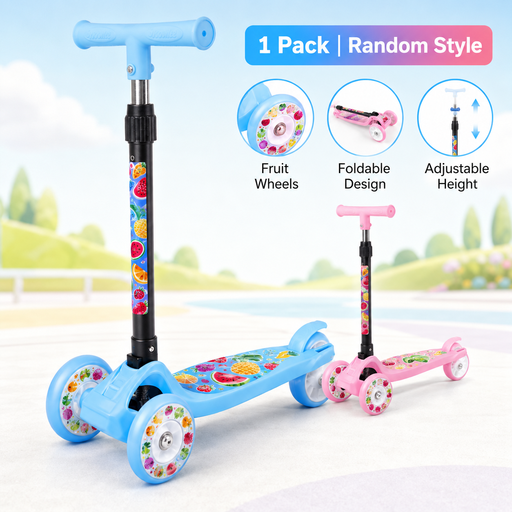
Why this product suits the profile: This folding children’s scooter is ideal for families looking for a simple model for play, presents and shared activities.
The product description explicitly mentions the folding design and light-up wheels. The random design selection should be taken into account before buying.
Folding design and light-up wheels; supplied as 1 piece.
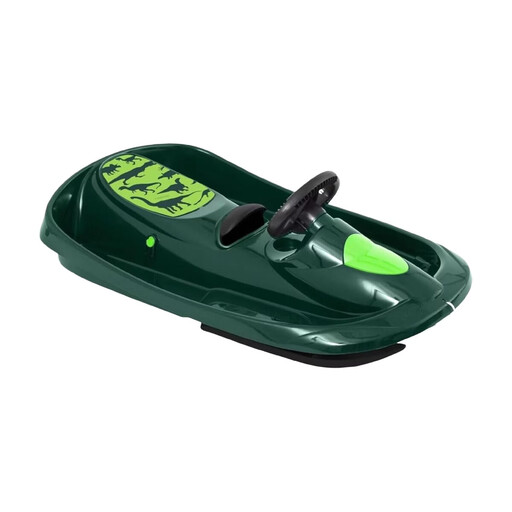
Why this product suits the profile: This steering bobsled for children is aimed at families who value steering, braking and a stated load limit for snow rides.
The specifications state that it has a brake and steering system, a maximum load of 80 kg, and is suitable from 3 years under supervision.
95 cm length, wide plastic runners, tow rope and CE marking according to the product description.

Why this product suits the profile: This children’s go-kart is suitable for children aged 3 to 8 who want to ride regularly using pedals on suitable outdoor surfaces.
The adjustable seat accommodates growth, while the stated 30 kg load limit prevents use beyond the intended specifications.
Two-position adjustable seat, forward and reverse gears, plus a metal frame; suitable for various level surfaces.
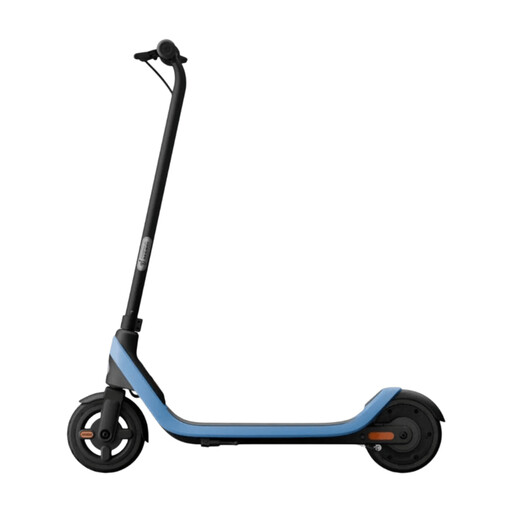
Why this product suits the profile: According to the product specifications, this electric children’s scooter is intended for 6- to 10-year-olds with a height of 115 to 145 cm.
Three riding modes enable gradual use. The product specifications also state a maximum load of 50 kg and indicate that it is not intended for use on public roads.
Top speed of 16 km/h, range of up to 14 km, 7-inch solid rubber tyres, drum brake and folding frame according to the product data.
We have put together a complete, regularly updated list of products that fully meet these strict selection criteria and the safety regulations applicable in the EU.
Before the first ride, adults should:
For a children’s electric car, also check that the remote control works and that the safety belt fits correctly. Winter vehicles must not be used on roads or in areas with obstructed visibility and unpredictable traffic.
This depends on the type of vehicle and the manufacturer’s specifications. According to the stated product data, a children’s go-kart or steering bobsled may be suitable from 3 years, while the Segway-Ninebot C2 Lite is specified for 6- to 10-year-olds with a height of 115 to 145 cm. Age, height, weight and motor skills should all be considered together.
Its service life depends on load, surface, storage and care. Regular checks of the wheels, brakes, folding mechanism and handlebars help identify wear at an early stage. For electric children’s scooters, charging cycles, temperature and correct storage also affect battery life.
In addition to the purchase price, the main costs are electricity for charging and any replacement wear parts. Actual running costs depend on charging frequency, battery capacity and the electricity tariff. A kick scooter or go-kart, on the other hand, does not require a battery and may have lower ongoing energy costs for comparable use.