
Lieferung heute & morgen

Qualitätsgarantie

Willkommens-Angebote freischalten: KOSTENLOSE Lieferung | Bis zu 80 % RABATT | Kostenlose 30-Tage-JoyPlus-Testphase
App herunterladen
The right children's ride-on vehicle should suit the child's age, height and intended place of use. In practice, however, eye-catching colours and extra features are not what make the right purchase. Clear information about dimensions, brakes, materials and adjustability is far more important. These criteria help you choose a children's ride-on vehicle as a toy, learning aid or gift.
“Children's ride-on vehicle from 2 years” or “children's ride-on vehicle from 3 years” provides an initial indication. However, children develop at different rates. A balance bike or scooter may still be unsuitable despite the age recommendation if the handlebars are too high or the seat height cannot be adjusted correctly.
You should therefore also check:
Light-up wheels appeal to many children, but they say little about how practical a children's scooter is for everyday use. What matters is a sufficiently wide, non-slip deck, smooth-running wheels and handlebars that can be securely fixed in place. A basket, bell or luggage rack is only useful if it is firmly attached and has no sharp edges.
A height-adjustable children's scooter can accommodate different heights. Even so, the adjustment range should be clearly stated. For a children's bicycle with stabilisers, the wheel size, ease of access to the frame and brake operation are also important. A larger model does not automatically offer better value if the child can initially control it only to a limited extent.
A children's balance bike is a good choice for first riding experiences, as children can practise getting on and off and steering without pedals. Models with an adjustable seat can be adapted more effectively to the child's height. A children's tricycle has a different three-wheel design and may be suitable for short journeys or supervised play.
A 3-wheel children's scooter with two front wheels and lean-to-steer technology responds to shifts in the rider's weight. This can feel different from a classic scooter, which turns directly with the handlebars. For children aged around 3 to 10, the manufacturer's specific information on height and adjustment range is what matters most.
With bicycles, parents should check whether the child can reach the handbrake levers and operate them with an appropriate amount of force. A back-pedal brake can provide an additional braking option. On a scooter, a working rear brake and a secure stance on the deck are among the key points.
The Hiland Starry models described here are listed as having a front V-brake and rear back-pedal brake. According to the product details, the models also feature a full chain guard and handlebar protectors. This information does not replace a check before every ride.
A steel frame can be durable, but it is often heavier than a frame made from lighter materials. The vehicle's own weight affects whether a child can lift or push it independently. Airless or puncture-resistant tyres reduce maintenance, while pneumatic tyres need to be checked regularly to ensure they have the correct tyre pressure.
The state of assembly is also relevant. According to the product description, the Hiland Starry 14-inch children's bicycle is delivered 90 per cent pre-assembled; complete assembly should take around 20 minutes using the included tools. Before first use, the handlebars, wheels, brakes, stabilisers and all screw connections must be checked.

Why this product suits this profile: This balance bike is listed for children aged 2 to 6 and features an adjustable seat and puncture-resistant tyres. It is suitable for first riding experiences without pedals.
The adjustable seat height makes it easier to achieve a better fit, while airless tyres reduce the need for regular pumping.
No pedals, an adjustable seat, puncture-resistant tyres and a stated age range of 2 to 6 years.
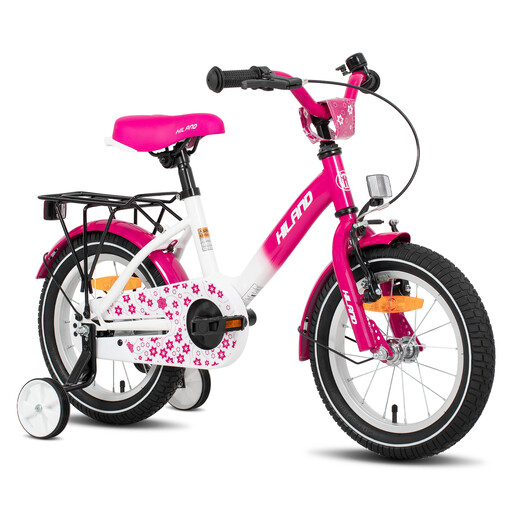
Why this product suits this profile: According to the product details, this children's bicycle is designed for children aged around 3 to 6 or measuring 90 to 125 cm. It is described as coming with stabilisers, a bell, a luggage rack and a basket.
The height-based sizing information makes choosing easier. Two braking systems, a chain guard and handlebar protectors are clearly specified.
Hi-Ten steel frame, 14-inch tyres, front V-brake, rear back-pedal brake and adjustable seat.
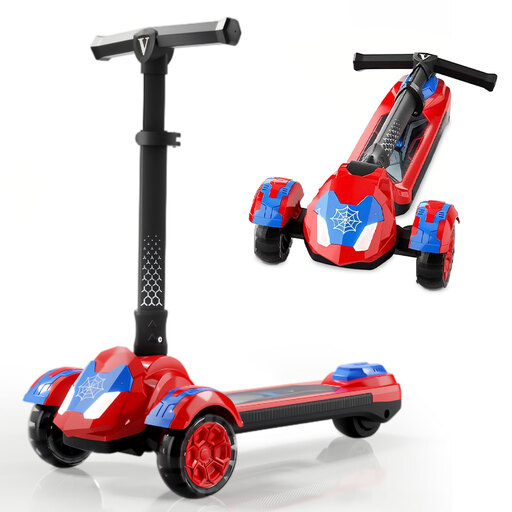
Why this product suits this profile: This children's scooter is designed for outdoor use and features adjustable handlebars, a wide non-slip deck and light-up wheels.
The wide, non-slip deck and three wheels address the common misconception that design features alone are enough for controlled use.
Three adjustable handlebar heights, lean-to-steer technology, non-slip deck and light-up wheels according to the product description.
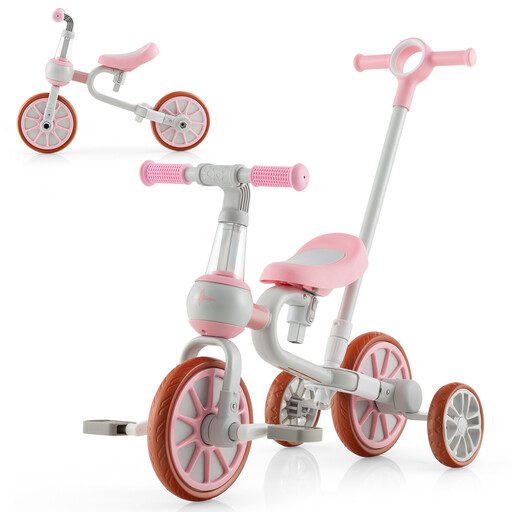
Why this product suits this profile: The adjustable push handle is useful for families who initially want to guide a children's tricycle under supervision. The model is listed for children aged around 2 to 4.
The age limit helps prevent the product from being used beyond the intended developmental stage. Before buying, you should check the features and adjustment range.
4-in-1 design, adjustable push handle and suitability for children aged around 2 to 4 according to the product name.
We have put together a complete, regularly updated list of products that fully meet these strict selection criteria and the safety regulations applicable in the EU.
Regardless of which children's ride-on vehicle you choose, adults should check a few points before every use:
A bicycle with stabilisers should not be viewed as a substitute for the correct frame size. When moving to a model without stabilisers, the child's height remains a decisive factor. Different rules may also apply to public roads and paths depending on the type of vehicle; a children's scooter or balance bike is not automatically approved for road use.
That depends on the child's height, motor skills and intended use. A balance bike or a supervised tricycle may be suitable for first riding experiences. A suitable seating position, manageable weight and direct adult supervision are essential.
The usable life depends mainly on the handlebar height, the child's height, the permitted weight and the condition of the wheels and deck. A height-adjustable children's scooter may remain suitable for longer if its adjustment range is sufficient. The manufacturer's information should be checked regularly against the child's actual height.
A children's bicycle typically requires regular checks and maintenance: checking tyre pressure, inspecting the brakes, tightening screw connections and checking the chain or chain guard. Models with airless tyres can reduce the work associated with punctures. Replacement parts and repairs depend on the specific model and how it is used.