
Lieferung heute & morgen

Qualitätsgarantie

Willkommens-Angebote freischalten: KOSTENLOSE Lieferung | Bis zu 80 % RABATT | Kostenlose 30-Tage-JoyPlus-Testphase
App herunterladen
The right children’s ride-on vehicle should suit your child’s age, height and the surface it will be used on. Parents also need to consider safety features, spare parts and how long the product is likely to be used. The product description alone is often not enough to make an informed choice.
A children’s ride-on vehicle from 1 year may already be uncomfortable for a child with long legs, while a model designed for older children may be too large and difficult to control. When choosing a children’s bike, details such as height, saddle height and wheel size are therefore more important than a general age recommendation.
A 5-in-1 tricycle can cover several stages of development. This is useful if the seat, push handle and footrests can genuinely be adjusted. At the same time, additional components create more adjustment and inspection points. Before buying, it should be clear which features will actually be needed day to day.
Illuminated wheels, a bell or a basket are visible features, but they do not replace a suitable seating position, working brakes or a covered chain. A bicycle with stabilisers should also only be used on suitable, level surfaces. Special requirements apply when riding on public roads; the play and leisure vehicles mentioned here are not automatically intended for road use.
With a children’s tricycle or balance bike, your child should be able to reach the ground securely with both feet. The saddle should be adjusted so that the knees remain slightly bent when pushing off. When choosing a children’s bike, wheel size and height can help narrow down the options:
Age recommendations are guidelines. The manufacturer’s specifications and your child’s ability to control the vehicle safely remain decisive.
When choosing a bicycle, parents should check whether the brake levers are easy to reach and whether the model has a fully enclosed chain guard. According to the product data, the Hiland Starry models combine a front V-brake with a rear coaster brake. Children must learn how the two different braking systems work before their first longer ride.
For a three-wheeled children’s scooter, a non-slip deck, height-adjustable handlebar and intuitive steering movement are important. A children’s kick scooter with lean-to-steer control handles differently from a classic scooter. A protective helmet and suitable safety equipment should be worn when riding.
A steel frame can provide a robust construction, but it is often heavier than an aluminium frame. The vehicle’s own weight affects how easily adults can carry or store it. The following are also important:
EVA or PU wheels do not need inflating. However, buyers should pay attention to wheel size, grip and the permitted load. The maximum load specified by the manufacturer must not be exceeded.
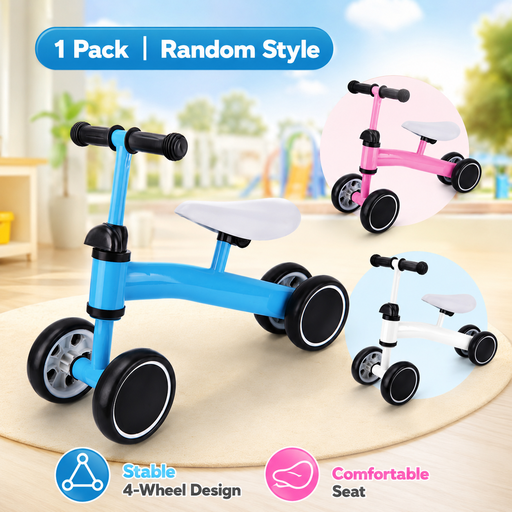
Why this product suits this profile: The four-wheel design provides a broad base and makes it easy to start learning to ride without pedals. The colour is selected at random, according to the product information.
The four wheels reduce the balance skills required at the beginning. Even so, age, seat height and the riding surface should be checked before buying.
Four-wheel construction, comfortable seat and supplied as a single item.
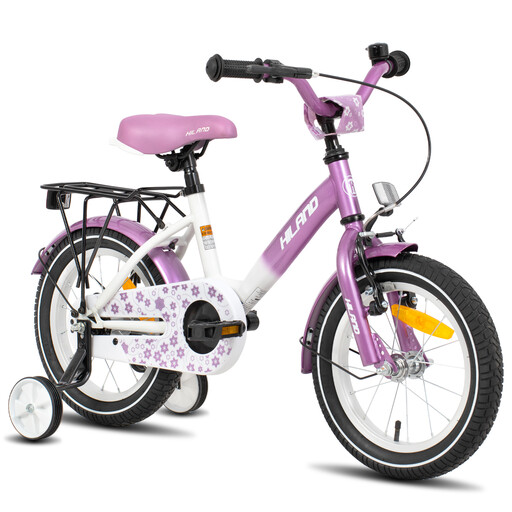
Why this product suits this profile: According to the product data, this model is designed for children aged around 4 to 7 or measuring 105 to 135 cm, and features two braking systems.
The information about height, 16-inch tyres and saddle adjustment makes it easier to check the size. Assembly and brake function should be checked before use.
Hi-ten steel frame, V-brake, coaster brake, chain guard and adjustable saddle.
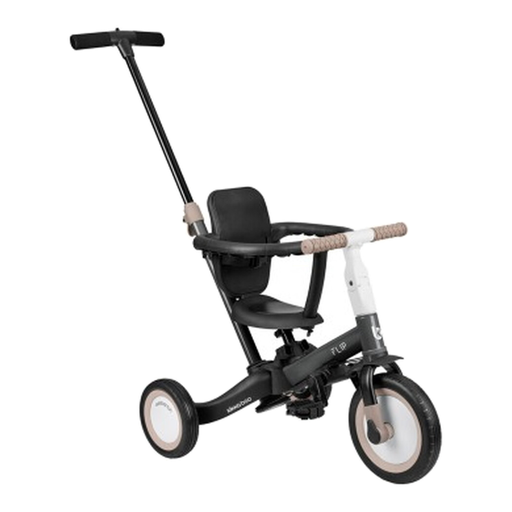
Why this product suits this profile: According to the product information, the 5-in-1 tricycle is designed for 12 to 72 months and can be adapted from parent-controlled use to independent riding.
The adjustable push handle, seat position and footrest allow the tricycle to be adapted as your child grows. The manufacturer also specifies a 2-point harness and a maximum load of 25 kg.
Five riding modes, height-adjustable push handle, rotating seat, plus a rubber front wheel and PU rear wheels.

Why this product suits this profile: According to the description, this pedal vehicle is designed for ages 3 to 8, a load of up to 30 kg and level surfaces such as concrete, wood or paved paths.
The age and load limits are clearly stated. Before buying, make sure you have enough storage space; this vehicle is not intended for use on public roads.
Two-stage adjustable seat, forward and reverse gears, metal frame and limited steering angle.
We have put together a complete, regularly updated list of products that fully meet these strict selection criteria and the safety regulations applicable in the EU.
Before the first ride, adults should:
A balance bike helps children practise balance and pushing off, but it has no pedals. A three-wheeled children’s scooter is often steered by shifting body weight. A bicycle with stabilisers, on the other hand, initially teaches a different way of riding. The choice should therefore be based on the learning goal, not just the design.
For younger children, models with a stable base, low seating position, footrest and parent-operated push handle may be suitable. A 5-in-1 tricycle can cover several stages. Suitability depends on the child’s height, stage of development and the manufacturer’s specifications.
A balance bike is often introduced from around 2 to 3 years, provided the child can sit securely and reach the ground with both feet. A children’s scooter or children’s kick scooter should only be used once the child can control steering, speed and braking, or can get off safely. Always observe the age recommendation for the particular model.
The useful life depends on your child’s growth, the frame and wheel size, and how far the saddle can be adjusted. A 14-inch model may suit smaller children, while a 16-inch children’s bike requires greater height. A bike that is too large should not be bought simply to avoid upgrading later: a safe seating position and easily reachable brakes must come first.