
Lieferung heute & morgen

Qualitätsgarantie

Willkommens-Angebote freischalten: KOSTENLOSE Lieferung | Bis zu 80 % RABATT | Kostenlose 30-Tage-JoyPlus-Testphase
App herunterladen
A children’s ride-on vehicle should suit the child’s stage of development, be safe and easy to handle, and not end up unused in the cellar after a short time. When choosing one, it is therefore not just the colour and accessories that matter. Unclear age recommendations, unsuitable dimensions or exaggerated claims about features often lead to disappointing purchases.
A children’s ride-on vehicle from 1 year may already be too small for a child with longer legs, while another child of the same age may still need more support. Age is only a guide. Other important factors include:
A balance bike for children should allow the child to sit in a position where both feet can reach the ground securely. With a children’s scooter, the handlebar must be adjustable so that the child can stand upright and remain in control.
A children’s ride-on vehicle from 2 years with several conversion options can be practical. Even so, parents should check whether each mode really suits the child and their everyday routine. Accessories such as baskets, bells or illuminated features are less important than suitable geometry, durable connections and controls that are easy to reach.
With a tricycle for children featuring a push bar, it is also important to establish whether parents can control the direction of travel and whether the push bar can be removed later. A conversion system without clearly explained usage steps can limit its practicality for everyday use.
EVA or PU wheels require little maintenance and can be pleasantly quiet on smooth surfaces. However, they are no substitute for suitable tyres on rough ground. Before buying, shoppers should therefore distinguish between indoor surfaces, asphalt, paving and unpaved paths.
With a balance bike, the child should be able to reach the ground with both feet while seated. An adjustable seat height can extend the useful life of the product, but it must lock securely into position. With a balance bike, the handlebar should be neither too high nor too low. For a children’s bicycle, the recommended height and wheel size are more important than the stated age alone.
The Hiland models provided specify precise height ranges:
These figures should be understood as the manufacturer’s recommendations. Before buying, parents should also take the child’s actual seating position and inside leg measurement into account.
A lightweight vehicle is easier for small children to turn, lift and slow down. According to the product details, the Kikka Boo Ride-On Balance Bike Zipi weighs 2 kg and has an aluminium frame. For parents, a low weight is also useful when transporting the vehicle in a car, around the home or on public transport.
A bicycle with stabilisers is often heavier by design. The Hiland Starry 14 Inch is listed as weighing approximately 10 kg, while the 12-inch model weighs approximately 9 kg. This difference can matter when manoeuvring or lifting the bicycle.
A children’s bicycle should have working brakes that the child can operate by hand or with a coaster brake. The Hiland Starry is listed as having a front V-brake and a rear coaster brake. A fully enclosed chain guard and handlebar protectors reduce access to moving or hard parts.
On a balance bike, limited steering can help reduce sudden, sharp steering movements. According to the product description, the Zipi model has this feature. It must not be altered or removed.
Regardless of the model, the manufacturer’s guidance applies: use under supervision, wear a suitable helmet and, where appropriate, use knee and elbow pads. Children’s ride-on vehicles are not suitable for use on public roads unless the product has been expressly approved and equipped for this purpose.

Why this product suits the profile: This compact balance bike is designed for children aged 1 to 3 and is suitable for first riding attempts on smooth surfaces.
The seat can be adjusted forwards and backwards. The limited steering and maintenance-free EVA wheels are clearly described features.
2 kg weight, aluminium frame, non-slip grips and removable basket.
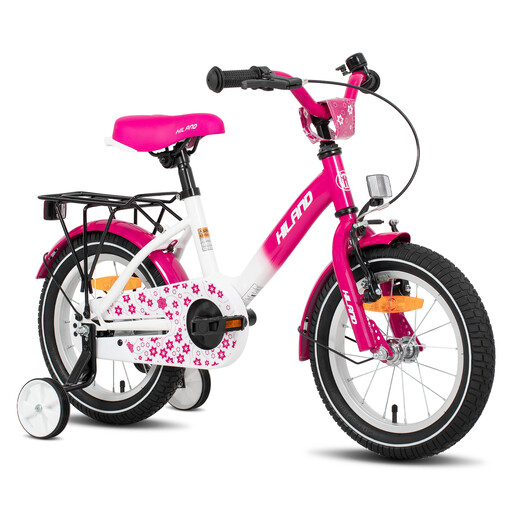
Why this product suits the profile: According to the product details, this model is intended for children aged 3 to 6 who are approximately 90 to 125 cm tall, and offers classic bicycle equipment.
The size and height recommendations are clearly stated. The chain guard, handlebar protectors and two braking systems make it easier to check the safety features before buying.
14-inch tyres, adjustable seat, V-brake, coaster brake and included stabilisers.
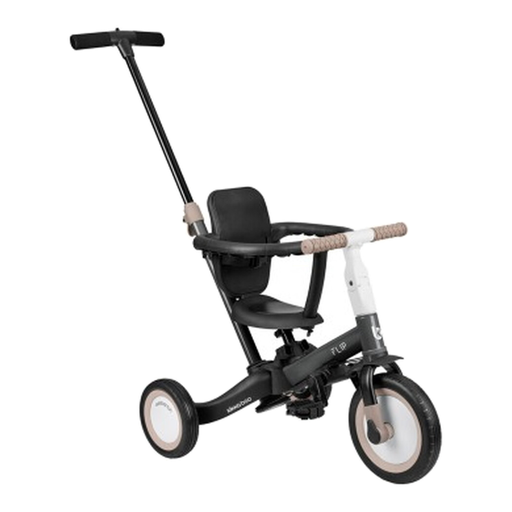
Why this product suits the profile: The five usage modes are appealing to families who want to use one vehicle from parent-guided riding through to independent cycling.
The conversion options are clearly named: push mode, tricycle, tricycle without pedals, balance bike and bicycle mode. The seat, push bar and footrest are adjustable or removable.
Suitable for ages 1 to 5, maximum load of 25 kg according to the product details, height-adjustable push bar and folding design.
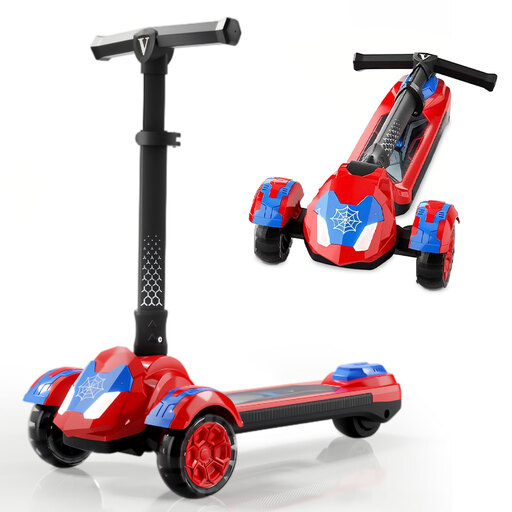
Why this product suits the profile: According to the product name, this three-wheel scooter is intended for children aged 3 to 10 and is suitable for riding on level paths.
The design specifies a wide non-slip deck, height-adjustable handlebar and lean-to-steer control. This makes it possible to check the key buying parameters in advance.
Three wheels, adjustable handlebar, wide deck and illuminated wheels according to the product description.
We have put together a complete, regularly updated list of products that fully meet these strict selection criteria and the safety regulations applicable in the EU.
Before ordering, parents or grandparents should tick off the following points:
For a children’s ride-on vehicle from 3 years, a balance bike, scooter or children’s bicycle may be suitable. However, the decision should be based on the child’s abilities. A baby bicycle or push model should not be considered equivalent to a bicycle ridden independently.
That depends on the child’s height, balance and experience. A balance bike set to a low height may be suitable for children who can sit and walk confidently. A tricycle with a push bar provides additional parental control. The manufacturer’s recommendations and the achievable seat height should be checked before buying.
The useful life depends mainly on the wheel size, seat adjustment and the child’s height. The Hiland Starry 12 Inch mentioned above is specified for children approximately 80 to 105 cm tall. Stabilisers should only be used while they are appropriate for the learning stage and securely attached. Regular checks of the brakes, tyres and screws are still required.
Balance bikes with EVA wheels and scooters with low-maintenance wheels generally do not require tyre pressure checks. Bicycles, on the other hand, may incur maintenance costs for the brakes, chain, tyres and inner tubes. Parents should also budget for a suitable helmet and, where appropriate, protective clothing.