
Lieferung heute & morgen

Qualitätsgarantie

Willkommens-Angebote freischalten: KOSTENLOSE Lieferung | Bis zu 80 % RABATT | Kostenlose 30-Tage-JoyPlus-Testphase
App herunterladen
Children’s ride-ons and RC toys offer plenty of ways to keep kids active: from the first children's balance bike and a children's scooter through to a remote-control stunt car. But products vary widely in age recommendation, load capacity, handling and where they’re meant to be used. If you only look at glowing wheels, top speed or a long feature list, it’s easy to miss important details.
This buying guide explains which specs matter before you buy, which marketing claims to question, and which vehicle fits which usage profile.
An age label is only a starting point. What really matters are seat height, handlebar height, inside leg length and body weight. A vehicle may be advertised for a certain age group yet still be too big or too heavy for an individual child.
With a children's ride-on from 3 years, parents should check that the child can place both feet securely on the ground. On scooters, the handlebar must be at a manageable height. For electric vehicles, speed, braking distance and the need for supervision also matter.
LED wheels, music and changing light effects appeal to kids, but they don’t replace a solid build. More important are a non-slip deck, an easy-to-reach braking mechanism, durable wheels and a clearly stated weight limit.
Even with a folding children's scooter, the folding mechanism should be secured against accidental collapse. Before every ride, it’s worth giving the screws, handlebar, wheels and brake a quick check.
An electric vehicle’s runtime depends on weight, surface, temperature, speed setting and breaks. Labels such as ‘up to’ or a nominal range shouldn’t be taken as guaranteed everyday values.
With a children's electric vehicle, charging time, battery type, availability of spare parts and a safe charging environment should influence your decision. A lithium battery must not be opened or charged unattended. For younger children, lower speed modes and a way for parents to limit speed are particularly relevant.
Compare the manufacturer’s figures with your child’s actual measurements:
The maximum load shouldn’t be fully exhausted. For a scooter rated at 30 kg or 50 kg, the total counts as the child’s weight including clothing and possibly a backpack.
For outdoor use you’ll want grippy tyres and enough ground clearance. A wide deck can make balancing easier. On a trike or balance bike, the wheelbase affects stability. For RC vehicles, tread pattern, suspension and drivetrain determine whether the model is suitable only for smooth floors or also for carpet, concrete and firm ground.
An RC off-road truck with four-wheel drive, shock absorbers and non-slip tyres is engineered differently from a small indoor model. Even so, ‘waterproof’ shouldn’t automatically be taken to mean unrestricted use in puddles. The stated protection rating and the care instructions are what count.
Look for clear labelling with:
The CE marking is a conformity marking required by law for certain product categories. It isn’t a quality seal and doesn’t replace checking the design and the user manual. On a sledge, for example, a brake or steering can be relevant. According to the product information, the Hamax Lenkbob SNO Formula is described as CE- and TÜV-certified; even so, children should only use it under supervision and on suitable slopes.

Why this product fits the profile: This pedal-free balance bike is designed for children aged 2 to 6 and makes an easy introduction for the driveway, park or quiet paths.
Adjustable saddle and handlebar heights help you adapt the bike as your child grows. Airless tyres avoid typical punctures from damaged inner tubes.
Lightweight build, adjustable soft saddle, adjustable handlebar and airless tyres.

Why this product fits the profile: This height-adjustable scooter is described for children aged 3+ and, thanks to its folding design, can be transported compactly.
The product details state a maximum load of 110 lb (around 50 kg) and three handlebar heights. That makes it easier to judge fit and expected use time.
Folding mechanism, height-adjustable handlebar, wide non-slip deck and rear wheel brake.
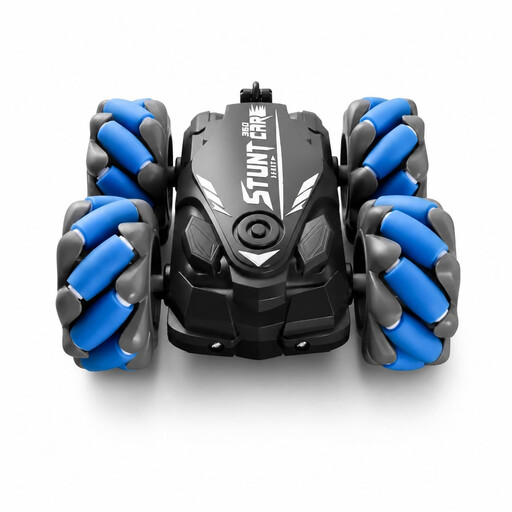
Why this product fits the profile: For children aged 8+ who want a remote-controlled stunt car for indoors and outdoors and fancy trying different control types.
The age limit, direct control via a 2,4-GHz remote control and gesture control are clearly stated. Wheels, body and connections should be checked before every run.
Four-wheel drive, Mecanum wheels, 360-degree spins, USB-rechargeable battery and three control modes as per the product description.
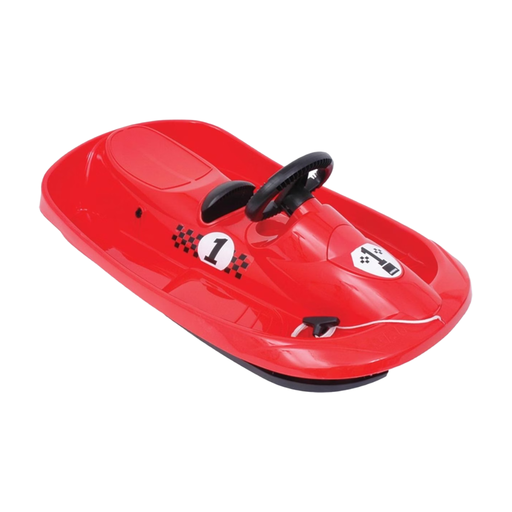
Why this product fits the profile: This sledge, for children aged 3+, is aimed at families who want a steerable winter ride for suitable, supervised descents.
The product information states a maximum load of 80 kg, steering and a brake. The bob is designed for one person and requires adult supervision.
HDPE construction, steering function, brake and no need for a battery or power.
A children’s electric motorbike isn’t an ordinary toy for pavements. Models with multiple speed settings, disc brakes and suspension belong strictly on suitable private property or designated tracks. A helmet, sturdy shoes and close adult supervision are essential. Figures like 18 km range or 30 km/h should be read as technical manufacturer data, not as a recommendation for every age group.
With an RC off-road truck, running costs are usually more modest. Check whether a battery is included, how long charging takes and whether the remote needs additional AA batteries. After use, remove dirt and moisture. A present for a child should also suit the available play space: for a flat, compact models with controllable speed are often more practical than large off-road vehicles.
We’ve put together a comprehensive, continuously updated list of products that fully meet these stringent selection criteria and the safety regulations applicable in the EU.
For many children aged 2 and up, a low balance bike with an adjustable saddle is a good option. A children’s trike can also fit the bill if the seating position, pedals and push bar suit the child’s size. What matters most are the specific manufacturer instructions and whether your child can get on, steer and stop safely.
Actual runtime depends on battery capacity, speed setting, surface, temperature and body weight. After every use, the battery should be charged as instructed and stored dry. With lithium batteries, avoid overcharging, heat and attempting to open the battery yourself.
Look for the age rating, a low-interference 2,4-GHz control system, included batteries and the AA batteries required for the handset. For carpet and outdoor areas, drivetrain, tyre tread and ground clearance also matter. Small parts and spinning wheels mean younger children require close adult supervision.