
Lieferung heute & morgen

Qualitätsgarantie

Willkommens-Angebote freischalten: KOSTENLOSE Lieferung | Bis zu 80 % RABATT | Kostenlose 30-Tage-JoyPlus-Testphase
App herunterladen
A children's rug can transform a simple room into a whimsical play area and a cozy retreat. But the selection is vast, and not every model that looks good at first glance will stand the test of daily use. Many parents quickly discover that their new rug wears out fast, is difficult to clean, or doesn't meet their quality expectations. To help you avoid this disappointment, we'll highlight the crucial factors and most common pitfalls of buying a rug.
This guide will help you separate the wheat from the chaff and find a children's room rug that is safe and durable as well as visually appealing.
Choosing the wrong rug often leads to frustration and unnecessary expense. Be sure to avoid these common mistakes:
To avoid a bad purchase, you should base your decision on objective criteria. The following three points are crucial for the durability, safety, and functionality of a children's rug.
The material significantly determines the rug's feel, durability, and maintenance needs.
The shape of the rug influences the room's ambiance and how it's used.
A good children's rug must be safe and easy to manage. Look for a non-slip backing or use a separate anti-slip mat. Check the manufacturer's specific care instructions. "Spot clean with a damp cloth" is the standard for many hand-woven natural fiber rugs, while others may require professional cleaning.
Based on these criteria, we have put together a few models for different needs and interior styles.
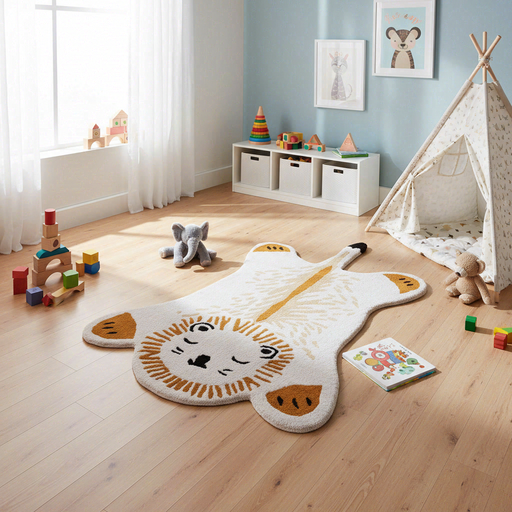
Why it's a great fit: Ideal for parents who value natural materials and a durable, imaginative design. The animal motif encourages play and creates a warm, inviting focal point in the room.
Made from 100% wool, it offers natural durability and stain resistance, thus avoiding the mistake of choosing a rug made from low-quality fibers that wears out quickly.
Hand-woven quality ensures a robust structure; the wool fiber is naturally resilient and long-lasting.
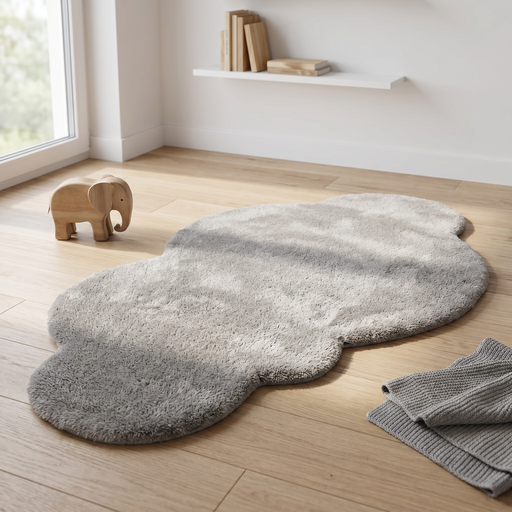
Why it's a great fit: The minimalist design in a neutral grey blends seamlessly into modern interior styles. The soft cotton is comfortable for babies and toddlers.
This model has a low pile, which makes stain removal easier compared to high-pile rugs. This avoids the pitfall of a high-maintenance design.
Made from 100% cotton for a soft feel; the subtle design remains relevant even as decor changes.
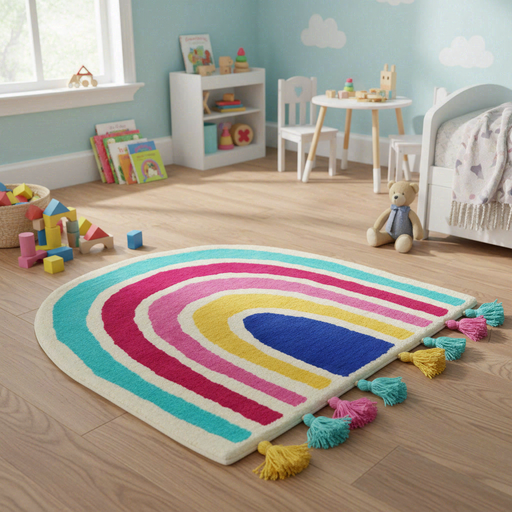
Why it's a great fit: The colorful rainbow design with tassels brings vibrancy and a touch of boho style to the child's room. It's a strong visual accent that fosters creativity.
Despite its playful design, this rug is made from durable wool. This ensures it can withstand active daily play and isn't just a short-lived decorative item.
The combination of a vibrant, multi-colored design and the robustness of hand-woven wool makes it both practical and inspiring.
We have compiled a complete, up-to-date list of products that fully meet these strict selection criteria and all applicable safety requirements.
The correct cleaning method depends on the material. For most natural fiber rugs like wool or cotton, spot cleaning with a damp cloth and a mild detergent is recommended. Regular vacuuming without the beater bar attachment removes loose dirt. For stubborn stains or a deep clean, professional cleaning is advisable for many high-quality rugs, especially those made of wool, to protect the fibers. Always follow the manufacturer's specific care instructions.
For a heavily used play rug, durability is the most important criterion. Wool is often an excellent choice here, as it is naturally robust, stain-resistant, and resilient. Cotton offers a softer surface and is ideal for a nursery rug, but it can show signs of wear more quickly under heavy mechanical stress. Synthetic fibers can be easy to care for, but it's worth paying attention to their quality and any certifications for harmful substances.
The ideal size depends on the size of the room and its intended use. A large rug can cover most of the floor and visually connect furniture like the bed and toy shelves. A common rule of thumb is to leave about 30-50 cm of space between the edge of the rug and the walls. Alternatively, a smaller rug, such as a round children's rug, can be used to define a specific play or cozy corner without dominating the entire room. Measure the intended area before buying to judge the proportions correctly.