
Lieferung heute & morgen

Qualitätsgarantie

Willkommens-Angebote freischalten: KOSTENLOSE Lieferung | Bis zu 80 % RABATT | Kostenlose 30-Tage-JoyPlus-Testphase
App herunterladen
A children’s rug should enhance the look of a child’s bedroom or playroom while remaining practical for everyday use. With striking patterns, soft surfaces and natural materials to choose from, the range can be overwhelming. However, not every advertised feature is equally relevant to the room where the rug will be used.
Parents should watch out for these three common buying pitfalls before placing an order:
The material affects the feel, appearance, care requirements and suitable uses:
“Hand-woven” and “hand-tufted” describe how a rug is made, but they are not automatically proof of a particular lifespan. The fibres, backing, workmanship, level of use and care remain the deciding factors.
Before ordering, mark out the available floor space with masking tape or newspaper. This makes it easier to check whether doors, drawers and chairs can still move freely.
Useful size guidelines from the selection:
A round children’s rug creates a different visual focal point from a rectangular model. When choosing a rug for a playroom, consider not just the design but also the amount of floor space that will actually be needed for play.
A rug should be placed on a clean, dry and level surface. For smooth floors, a suitable non-slip underlay is recommended unless the product already has an integrated non-slip backing. The Rainbow model specifically states that it has a non-slip surface.
Cleaning requirements also vary considerably:
With children, it is also important to check loose fibres, cords and tassels regularly. Rugs are not toys and should not be used as load-bearing surfaces. Open flames and strong sources of heat should always be kept away from textile products.
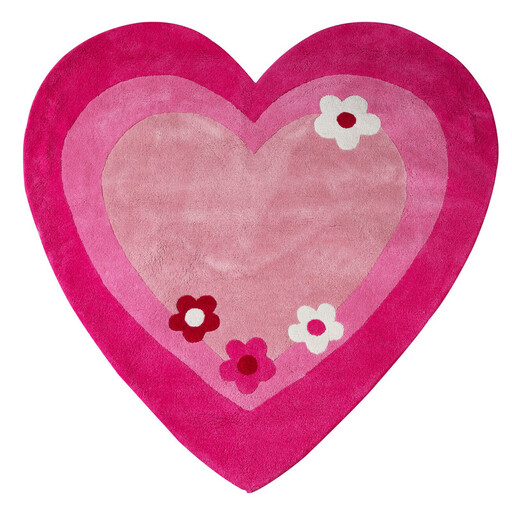
Why this product suits this profile: The square base and clearly specified cotton material make it easier to assess for smaller children’s bedrooms. The heart shape adds a decorative touch.
The product details specify the material, dimensions and a height of 2 cm. This allows you to check in advance whether the rug will fit in the desired location.
100% cotton, hand-tufted construction and a 100 × 100 cm surface.
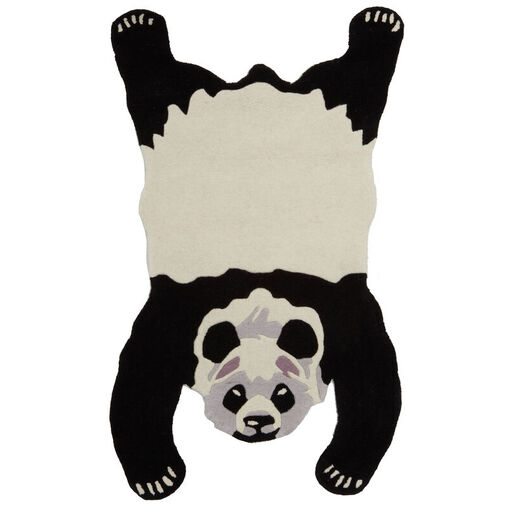
Why this product suits this profile: The combination of wool, hand-woven and hand-tufted construction, and the larger format is well suited to a thoughtfully designed playroom.
The description mentions spot cleaning and vacuuming, making the care requirements clear before purchase.
100% wool, 150 × 90 cm and a panda design with a contrasting look.
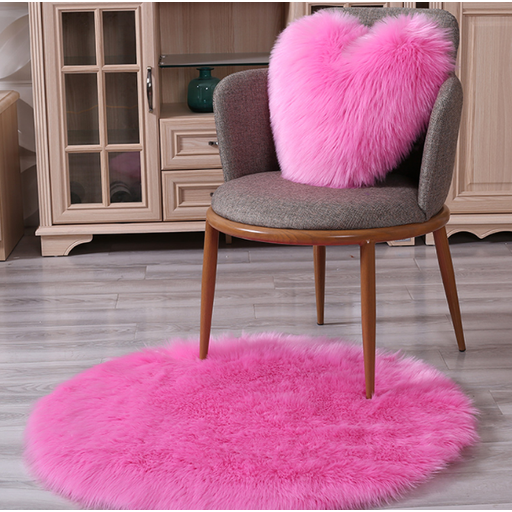
Why this product suits this profile: The round shape and high, fluffy pile work well as an accent in a bedroom, child’s bedroom or small seating area.
The integrated non-slip rubber backing is specifically mentioned. With small children, you should also take note of the guidance on loose fibres and sources of heat.
90 cm diameter, deep pile and the specified non-slip backing.
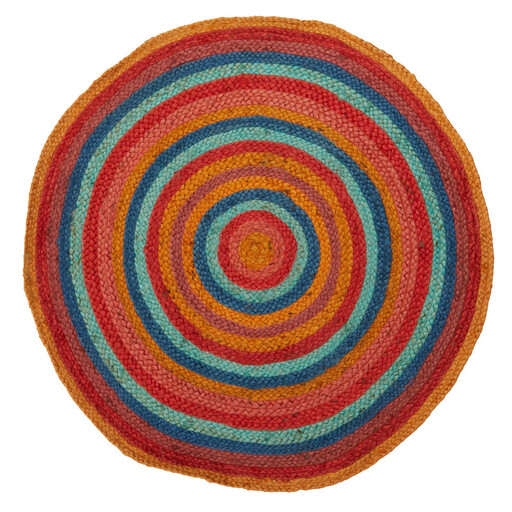
Why this product suits this profile: The round design and jute texture complement a natural, colourful interior. For intensive floor-based activities, its firm feel should be taken into account.
The 100% jute material clearly indicates that this is not a fluffy surface. Care is described as spot cleaning and vacuuming.
Jute material, round shape and 100 × 100 cm dimensions.
We have put together a complete, regularly updated list of products that fully meet these strict selection criteria and the safety regulations applicable in the EU.
For a colourful look, you could also consider a rainbow rug, an animal-print rug featuring a lion or panda, or a cloud rug. Cotton models in butterfly or heart shapes add smaller touches of colour. For larger areas, a 150 × 90 cm rug or several clearly defined rugs may be more practical than one small model.
Before buying, parents should also consider whether the child will mainly use the rug for playing, sitting, decoration or as a walkway. For frequent play, flat, securely fixed surfaces are generally easier to manage than very deep pile or loose tassels.
It depends on how it will be used. Cotton may be suitable for decorative areas where ease of care is a priority, while wool offers a distinctive textile texture. Jute is firmer and more decorative, whereas faux fur creates a fluffy surface. Always check the care instructions and intended use against the details of the specific product.
The surface underneath should be clean, dry and level. On smooth floors, a suitable non-slip underlay can help if the rug does not have an integrated coating. Trip edges, raised corners and loose tassels should be checked regularly.
There is no reliable one-size-fits-all answer. Its lifespan depends on the material, workmanship, level of use, exposure to sunlight and cleaning routine. Terms such as hand-woven or hand-tufted describe how the rug was made, but they do not replace checking the care instructions, pile height, backing and specific product details.