
Lieferung heute & morgen

Qualitätsgarantie

Willkommens-Angebote freischalten: KOSTENLOSE Lieferung | Bis zu 80 % RABATT | Kostenlose 30-Tage-JoyPlus-Testphase
App herunterladen
Whether they are worn on the school run, on holiday, in the garden or at the outdoor pool, children’s sandals and clogs have to withstand plenty in everyday life. Children’s feet are also constantly growing, and not every lightweight style is suitable for every purpose. Marketing claims such as “particularly comfortable”, “safe” or “suitable for every adventure” only offer limited help when choosing. What really matters are clear, verifiable features such as foot length, support, sole profile and ease of care.
A sandal that is noticeably too large can slip while walking. This increases the risk of the child catching their toe or stepping out of the shoe. A small amount of room in front of the toes is useful, but it does not replace choosing the correct size. For clogs with heel straps, you should also check that the strap actually sits against the foot.
A profiled sole or one described as slip-resistant may offer more grip on dry surfaces. On a wet poolside, tiles or smooth stone, however, actual traction also depends on water, dirt, wear and walking technique. Slip-resistant children’s shoes are therefore no guarantee of play without falls.
EVA or Croslite material is lightweight and usually easy to clean. Open sandals with textile straps, on the other hand, may offer a more airy construction, but protect the foot differently from a closed clog. Longer walks, wet environments and energetic play therefore each call for different features.
Age is only a rough guide. Measure the barefoot while standing, from the heel to the longest toe. Compare the result with the size chart for the specific style, as brands may use their own US, UK and EU size conversions.
For example, the size chart for the listed PUMA Epic Flip V2 models ranges from EU 19 to EU 40. This means that children’s shoes EU 37 to 40 are also available for older children. The PUMA model for older children assigns EU 37 to a foot length of 23 cm and EU 40 to a foot length of 25.5 cm. The specific chart on the product page remains the deciding factor.
Crocs uses US sizes such as C10 to J6 for many Classic Clogs. EU sizes are sometimes shown as dual sizes, such as EU 28/29 or EU 38/39. If a child falls between two sizes, the product information recommends rounding up. Then check that the heel strap provides sufficient support.
For dry paths, the garden and leisure activities, flat children’s sliders can be practical. A heel strap provides more support than a completely open pool shoe. For use around water, parents should also check whether the style dries quickly and whether the sole is suitable for the intended surface.
PUMA describes the Epic Flip V2 as having an EVA outsole with an anti-slip structure. The woven textile straps and contoured EVA footbed are designed to provide a secure fit while keeping the shoe lightweight. According to the product description, Crocs Classic and Crocband Clogs feature a pivoting heel strap and a profiled sole.
EVA soles and Croslite material can generally be cleaned with a damp cloth or with water and soap. This is practical for sand, grass and light dirt. However, the Crocs models mentioned are not designed to be machine-washed. The shoes should be left to air-dry, rather than placed directly on a radiator or other strong heat source.
Textile straps can be comfortable and flexible, but require more care when heavily soiled than a smooth clog surface. Also look out for chafing, pressure points and visible material deformation. These points are equally relevant for lightweight children’s shoes, children’s pool shoes and everyday footwear.
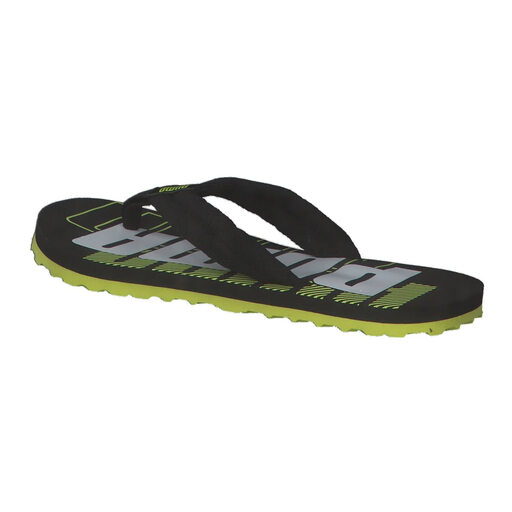
Why this product suits this profile: The straightforward sandal design is aimed at children aged around 4 to 8 and is suitable for dry summer days, leisure activities and short journeys.
The size chart gives specific foot lengths from 12 to 25.5 cm. This makes it easier to base your choice on measurement rather than age.
Woven textile straps, a contoured EVA footbed and CMEVA midsole; the outsole is described as having an anti-slip structure.
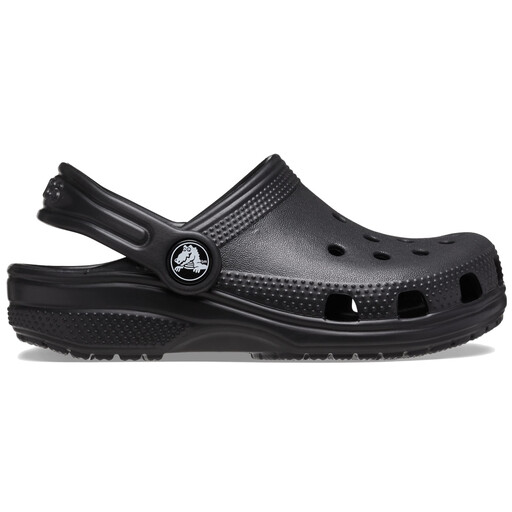
Why this product suits this profile: The closed clog offers an easy-care alternative to open summer shoes and can be put on independently by children.
Fit is not determined by age alone: Crocs uses its own US sizes, so foot length and the size chart should be checked before purchase.
Lightweight Croslite material, ventilation holes, a pivoting heel strap and a profiled, non-marking sole according to the product description.
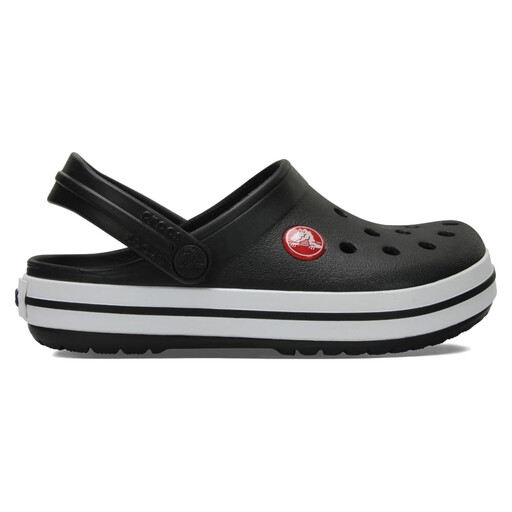
Why this product suits this profile: For active children who need an easy-to-clean shoe for the garden, leisure activities and changing everyday situations.
The heel strap can help keep the shoe secure during play. Cleaning with water and soap reduces the care required compared with more delicate upper materials.
Croslite material, a contoured footbed, ventilation holes and decorative stripes; according to the product details, customisable with Jibbitz charms.
We have put together a complete, regularly updated list of products that fully meet these strict selection criteria and the safety regulations applicable in the EU.
Measure both feet while standing and use the longer foot as your guide. Compare the measured length with the relevant manufacturer’s size chart. Crocs may use dual sizes and US designations, while the PUMA charts mentioned combine EU sizes with foot lengths. If your child falls between two sizes, follow the specific manufacturer’s recommendation.
That depends on the intended use and the fit. Clogs with ventilation holes and heel straps can be practical for certain leisure and water-based environments. However, care is still needed on wet, slippery surfaces. For swimming pools, beaches or splash parks, parents should check the sole, support and drying properties of the specific style.
It is not possible to give a reliable fixed lifespan. It depends on how often they are worn, the surface they are used on, growth and care. Check the sole profile, straps, stitching and pressure points regularly. If the foot touches the front, the shoe is noticeably deformed or the strap no longer holds securely, replacing the shoes is advisable – even if the upper still appears intact.