
Lieferung heute & morgen

Qualitätsgarantie

Willkommens-Angebote freischalten: KOSTENLOSE Lieferung | Bis zu 80 % RABATT | Kostenlose 30-Tage-JoyPlus-Testphase
App herunterladen
A children’s scooter should suit your child’s age and height, as well as how they plan to use it. But eye-catching product photos and claims such as “Pro”, “LED” or “extra sturdy” don’t automatically lead to the right choice. If you focus only on the design, you may overlook technical details that matter in everyday use.
“From 3 years” is a general recommendation from the manufacturer, but it doesn’t tell you whether the handlebar is the right height for your child. A handlebar that is too high or too low can make the scooter harder to control. Check whether the handlebar is height-adjustable and note the maximum load specified.
On a 3-wheel children’s scooter with lean-to-steer, your child steers by shifting their weight. This can be easier for younger children than turning a traditional handlebar, although it may take a little practice to get used to.
Many children’s scooters with LED wheels generate light as the wheels turn, so they usually don’t need batteries. Additional LED lights on the deck or other parts of the scooter, however, may be battery-powered. The Beleev V2-Pure is one example: according to the product description, its deck LEDs need two AA batteries, which aren’t included.
Before you buy, check exactly which lights are included, whether they need batteries and whether the LEDs are intended to replace proper visibility in traffic. Always follow local road rules and make sure your child can be seen.
A lightweight children’s scooter is easier to carry, but it may have different material requirements from a stunt scooter, particularly if it will be used intensively. Freestyle tricks put extra strain on parts such as the deck, fork, handlebar and clamp system. A standard children’s scooter with a folding mechanism isn’t automatically suitable for jumps or use at a skatepark.
For a scooter for children aged 3 and over, a low deck, a suitable handlebar height and a clearly stated maximum load are particularly important. Check limits such as “up to 30 kg” or “up to 100 kg” against your child’s current weight and how much they’re likely to grow.
For children aged 6 and over, a two-wheeled model with an adjustable handlebar may be a good choice. Models with several handlebar height settings offer more flexibility if the scooter will be used by different people or for a longer period. Don’t exceed the maximum load.
A wide, non-slip deck makes it easier to place both feet on the scooter and can provide more standing space when pushing off. Look for a clearly described anti-slip surface and check the deck width.
A children’s scooter with a brake should have an easy-to-reach rear or foot brake. Check regularly that the brake works properly and is securely attached. Large polyurethane wheels, such as 205 mm wheels, roll differently on suitable, flat surfaces from the smaller wheels found on stunt scooters. Large wheels may be a good choice for longer journeys and adults, while compact freestyle models tend to use smaller wheels.
A folding children’s scooter is handy at home, in the car boot and on public transport. Before every ride, check that the folding mechanism is fully locked into place. Skatepark use calls for different features: a stunt scooter for children and teenagers typically needs a solid construction, a reinforced deck, and a handlebar and clamp system designed for tricks.
The CE marking indicates that the manufacturer declares the product complies with relevant EU requirements. It isn’t an independent quality assessment, and it doesn’t replace checking the instructions, warnings, material details and maximum load.
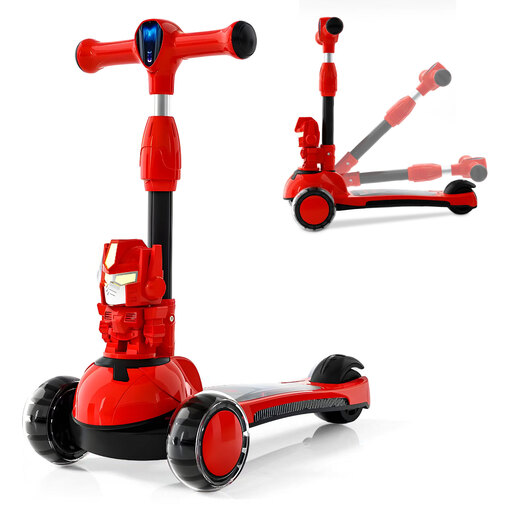
Why this product suits this profile: According to its product name, this 3-wheel children’s scooter is designed for children aged 3 to 10. It combines LED wheels, an adjustable handlebar and lean-to-steer control.
The stated age range and three wheels make it easier to choose than an unsuitable two-wheeled model for younger children.
According to the product details, it comes with LED wheels, an anti-slip deck and a height-adjustable handlebar.

Why this product suits this profile: This model has a folding design, three handlebar height settings and a wide deck. It’s listed as suitable from age 3 and for children under 158 cm tall.
The product description distinguishes between motion-powered LED wheels and battery-powered deck LEDs, and states which AA batteries are needed.
Folding design, three handlebar height settings, rear brake and a stated maximum load of 110 lb.
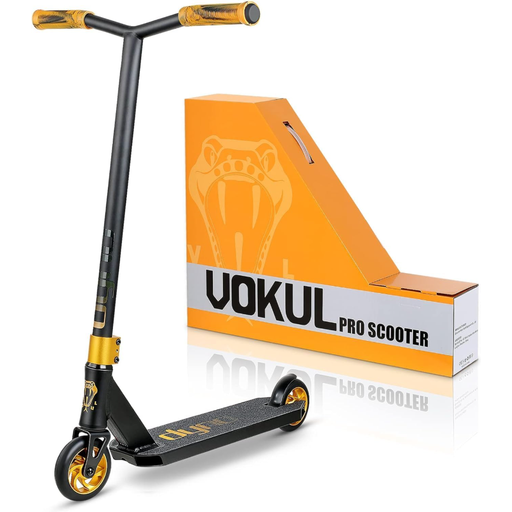
Why this product suits this profile: According to the product details, this stunt scooter is designed for children aged 8 and over, teenagers and adults, and is built for freestyle riding.
The clear minimum age and stated suitability for stunts help prevent it being confused with a leisure scooter.
T-6061 aluminium deck, 110-mm wheels, integrated T4T6 fork, ABEC-9 bearings and rear brake, according to the product details.
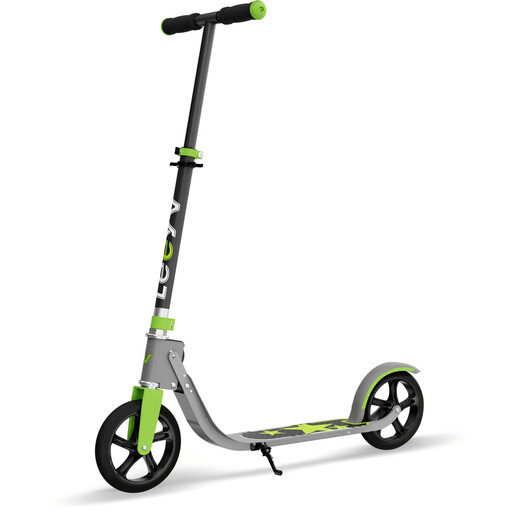
Why this product suits this profile: According to the product details, this two-wheeled scooter is designed for children aged 6 to 12 and adults. It’s suitable for leisure rides and everyday journeys.
The product details specify an adjustable handlebar, folding mechanism, weight limit and rear brake, rather than focusing on decorative features alone.
205-mm polyurethane wheels, adjustable handlebar, folding frame and a stated maximum load of 220 lb.
We’ve put together a complete, regularly updated list of products that meet these strict selection criteria and fully comply with the safety regulations in force in the EU.
Before the first ride, assemble or check the handlebar, clamps, wheels and brake according to the instructions. On folding models, make sure the lock is securely fastened. Stunt scooters also require you to follow these guidelines:
For children aged 3 and over, 3-wheel scooters with lean-to-steer control, a low deck and an adjustable handlebar are often a good option. Always check the manufacturer’s specific age recommendation, the maximum load and your child’s height.
Its lifespan depends on the materials, how often it’s used, the surface it’s ridden on and how well it’s maintained. A scooter used for daily journeys will face different demands from one ridden occasionally. Regularly checking the wheels, bolts, handlebar and brake can help you spot wear early.
Not all LED wheels need batteries. Many light up as they move. Additional lights on the deck or handlebar may be battery-powered, so check the product description carefully.