
Lieferung heute & morgen

Qualitätsgarantie

Willkommens-Angebote freischalten: KOSTENLOSE Lieferung | Bis zu 80 % RABATT | Kostenlose 30-Tage-JoyPlus-Testphase
App herunterladen
A children’s scooter should suit the child’s age, height and intended use. However, product descriptions often focus on attention-grabbing features such as LED lights, folding designs or high load capacity. Important details about handlebar height, brakes, maximum weight or use on public paths are not always immediately clear.
To make sure the new children’s scooter does not become impractical after a short time, it is worth considering the following buying criteria.
A scooter with light-up wheels may be more visible at dusk and visually appealing to children. However, lighting does not replace suitable protective equipment and does not automatically make a scooter suitable for use on the road. Check whether the LED wheels are powered by movement or batteries, and whether the vehicle has any additional lights.
Some products are advertised with a high maximum load. This figure alone does not show whether the model is comfortable and easy for a small child to control. A 4-wheel scooter for children may stand steadily by design, while a 2-wheel children’s scooter requires more balance. The deck height, handlebar position, wheel size and the scooter’s own weight are therefore also important.
“Suitable for children aged 3 and over” or “suitable for children aged 6 and over” are useful guidelines, but they are not a complete selection rule. An adjustable handlebar should be able to be set so that the child stands upright with their arms slightly bent. For electric models, you should also consider the maximum weight, recommended height, speed and type of brake.
A 3-wheel children’s scooter with lean-to-steer handlebars is controlled by shifting your weight. This can feel intuitive for younger children, but it does require a brief introduction. Wide, non-slip decks and a low footboard make getting on easier.
A classic 2-wheel kick scooter for children is more manoeuvrable and is often suitable for older children, teenagers or adults. Large polyurethane wheels, such as the 205 mm wheels on LEEYV models, can provide a smoother ride on even paths. However, rigid suspension does not compensate for uneven surfaces.
Look for specific details about handlebar adjustment and compare them with the child’s height. The maximum load is equally important. It should not be exceeded; accessories or a rucksack can increase the total weight.
If a product gives its load limit in pounds, the figure should be converted for comparison when shopping in Germany. 220 lb is approximately 100 kg. This does not automatically mean that such a model is suitable for every age group.
A children’s scooter with a brake often has a rear friction brake. Children should practise braking in a dry area away from traffic. Before every ride, check that the brake, handlebar clamp, wheels and screws are securely fitted.
A folding children’s scooter makes it easier to store in the hallway or transport in the car. The folding mechanism must lock fully into place and must not have any play while riding. With a folding model, you should also check whether its weight is still manageable for the child to carry.
An electric scooter for children requires particular attention. Details such as motor power, top speed, range, charging time and battery capacity should all be provided. The Segway-Ninebot C2 Lite, for example, is specified as having 130 W, speeds of up to 16 km/h, a range of up to 14 km, a maximum load of 50 kg and three riding modes.
According to the product description, this model is not approved for use on public roads. Before buying and using it in Germany, parents should therefore check the current legal position and the manufacturer’s guidance. If the necessary approval is not available, it may only be used on suitable private land. A helmet, knee pads and elbow pads are recommended regardless of the model.

Why this product suits the profile: The 3-wheel design with lean-to-steer handlebars and an adjustable handlebar height is aimed at younger children. Light-up wheels and a wide, non-slip deck complete the specification.
The description specifies the age range, handlebar adjustment, deck design and light-up wheels. This makes it possible to compare the key selection criteria before buying.
3 wheels, lean-to-steer system, adjustable handlebar and anti-slip deck; suitable for children aged approximately 3 to 10 years.
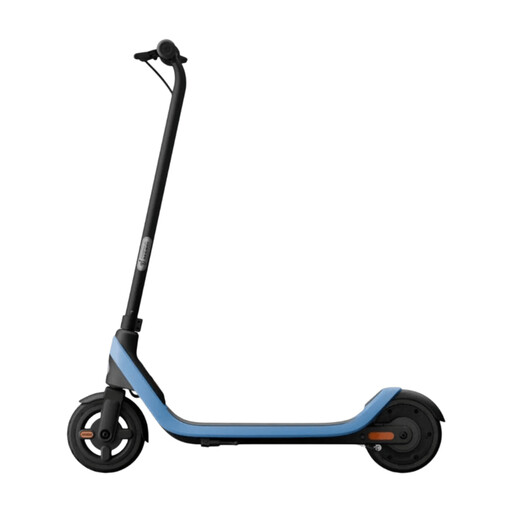
Why this product suits the profile: According to the product details, this electric model is aimed at children aged 6 to 10 and clearly specifies height, speed, range, riding modes and maximum weight.
The 50 kg limit, recommended height of 115 to 145 cm and note that it is not approved for road use make the usage limits clear.
Three riding modes, 7-inch solid rubber tyres, drum brake, folding frame and IPX4 splash resistance according to the product description.
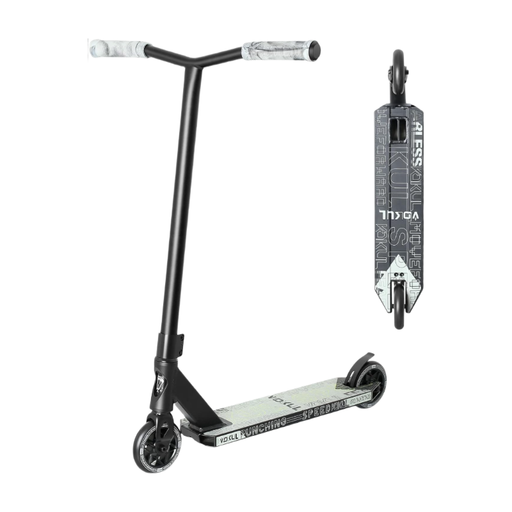
Why this product suits the profile: This stunt scooter for children is designed for skatepark sessions and controlled tricks, not for pre-school beginners or uneven public paths.
The minimum age of 8, along with advice on protective clothing, dry surfaces and pre-ride checks, clearly defines the intended use.
T-6061 aluminium deck, 110 mm polyurethane wheels, ABEC-9 bearings, rear brake and stated load capacity of up to 220 lb.
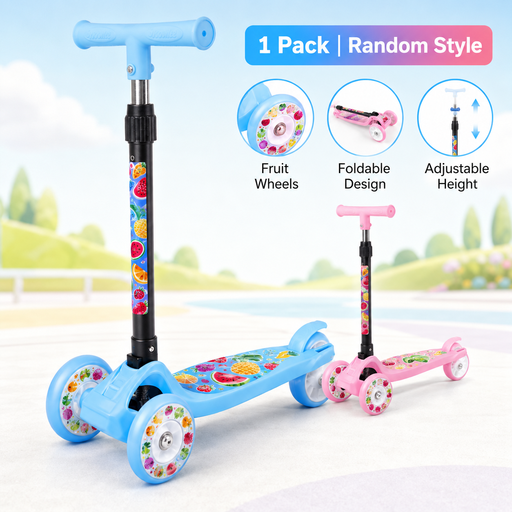
Why this product suits the profile: This model combines light-up wheels with a folding function, making it suitable for families who want to take the scooter on trips, give it as a present or store it away compactly.
The product description explicitly highlights the folding design and random colour or design selection. This helps you set realistic expectations about the appearance before buying.
Folding design, light-up wheels and supplied as a single item; batteries and small parts must be kept away from younger children.
We have put together a complete, regularly updated list of products that fully meet these strict selection criteria and the safety regulations applicable in the EU.
For many children aged around 3 and over, a 3-wheel model with a low, wide deck and lean-to-steer handlebars may be suitable. Actual suitability depends on the child’s height, coordination and the manufacturer’s specifications. An adult should accompany the child during their first rides.
Its lifespan depends on the load, surface, storage conditions and care. The wheels, brakes, screws and handlebar should be checked regularly. A scooter should be stored in a dry place and should not be cleaned with a pressure washer. Electric scooters also require attention to charging instructions and the condition of the battery and charger.
In addition to the purchase price, the main costs are electricity for charging and possible replacement parts. Depending on the model, these may include brake components, bearings or wheels. Before buying, check the charging time, range, availability of spare parts and permitted use.