
Lieferung heute & morgen

Qualitätsgarantie

Willkommens-Angebote freischalten: KOSTENLOSE Lieferung | Bis zu 80 % RABATT | Kostenlose 30-Tage-JoyPlus-Testphase
App herunterladen
A children’s scooter should suit the child’s age, height and intended use. In practice, however, eye-catching designs and unclear product information often lead to unsuitable purchases. Particularly when choosing a 3-wheel children’s scooter for younger children, it is not just the colour and light-up wheels that matter, but above all stability, steering system and build quality.
The description “children’s scooter from 3 years” is a guide, but it does not replace checking the actual handlebar height and weight limit. Children develop at different rates. Handlebars set too low can result in a hunched posture. If they are too high, control becomes more difficult.
You should therefore look for:
Children’s scooters with LED wheels are popular with many children. Depending on the model, the lights are powered by the movement of the wheels and often do not require batteries. They can improve visibility in twilight, but they do not replace legally required lighting for road use or reflective equipment.
A children’s scooter is generally intended for private paths, playgrounds and suitable pavements or riding surfaces. Parents must follow local regulations when using one in public traffic areas. A suitable helmet, as well as knee and elbow pads where appropriate, are also advisable.
“Folding” initially describes only the function. Before buying, you should check whether the folding mechanism can actually be operated without much effort and whether the folded dimensions are suitable for the boot of your car, cellar or hallway.
For younger children, a 3-wheel model with a fixed construction may be more practical, while older children may benefit from a folding 2-wheel scooter. The important thing is that the mechanism locks securely while riding and is checked regularly for signs of wear.
A lean-to-steer scooter responds to shifts in weight: the child steers by gently leaning their upper body and the handlebars to the left or right. This principle differs from conventional bicycle-style steering and needs to be practised initially.
A 3-wheel children’s scooter provides a broad base when stationary and at low speed. This can make it easier for beginners to get started. Nevertheless, check:
For children aged around 3 to 5, a 3-wheel model is often the obvious choice. However, suitability depends on the child’s level of development, height and the manufacturer’s information.
An anti-slip deck should be wide enough for the standing foot to be positioned securely. A textured surface helps provide grip, but it cannot prevent every slip in wet conditions or when unsuitable footwear is worn.
Look for:
A children’s scooter should only be used on surfaces suitable for the particular model. Wet leaves, sand, cobblestones and sloping paths increase the demands placed on control and braking distance.
Aluminium and steel frames can differ in terms of weight and stability. The material alone is not decisive; the entire construction matters, including the fork, handlebar mount and wheel attachments.
A brief visual inspection before every use is recommended:
The CE marking is a manufacturer’s declaration that relevant EU requirements have been met. It is not an independent quality assessment. Parents should also look for clear warnings, instructions in German and details of the responsible person in the EU.
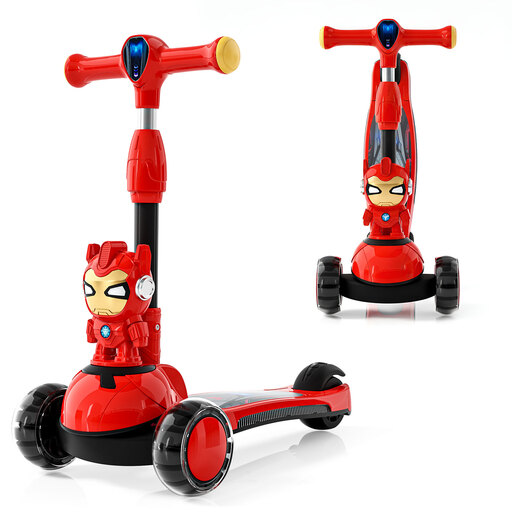
Why this product suits this profile: This model combines three wheels, an adjustable-height handlebar, a wide anti-slip deck and light-up wheels. This makes it a straightforward introduction to scooting on suitable outdoor surfaces.
The product information clearly states the key selection criteria: three wheels, an adjustable handlebar, a wide anti-slip deck and lean-to-steer steering.
Adjustable height and LED light-up wheels; according to the product name, designed for children aged 3 to 10.
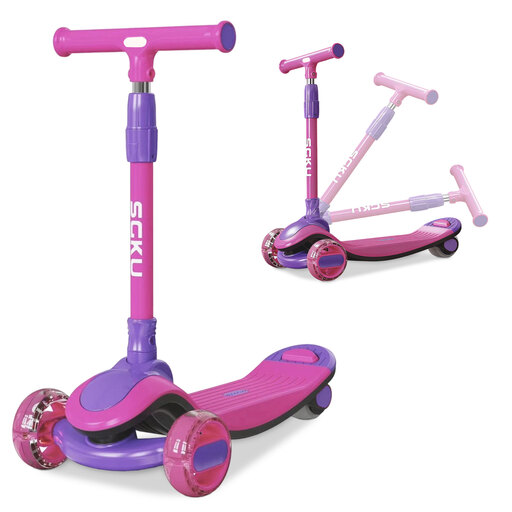
Why this product suits this profile: Four adjustable handlebar heights allow a more precise fit for the child’s height. The wide anti-slip deck and lean-to-steer steering are designed for use by boys and girls in the stated age range.
The four handlebar heights reduce the risk of buying based solely on the age recommendation. Before buying, the stated weight limit of up to 30 kg should be checked against the child’s body weight.
Four handlebar heights, LED-lit wheels and a wide anti-slip deck according to the product information.
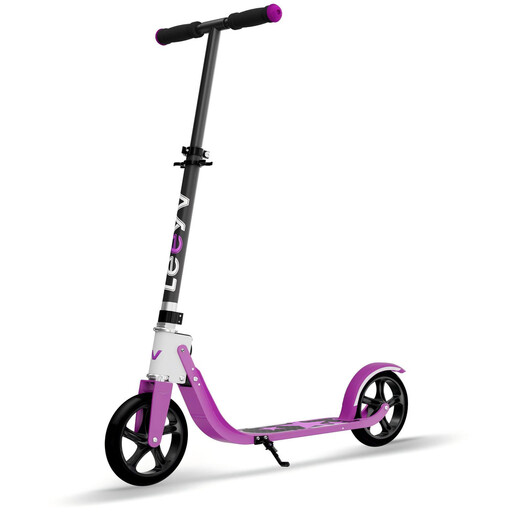
Why this product suits this profile: This 2-wheel scooter is aimed at older children, teenagers and adults. Its folding construction makes transport and storage easier, for example on the way to the park or when going on trips.
The age recommendation of 6 and over and the 2-wheel design make it clear that this is not intended as a beginner’s scooter for toddlers.
205 mm polyurethane wheels, adjustable handlebar, rear brake and folding construction according to the product description.
Before ordering a children’s scooter, check these points directly on the product page:
A children’s kick scooter should be assembled and checked together before the first ride. With 3-wheel models, a short practice period is also advisable so that the child can learn to use the lean-to-steer system safely.
We have put together a complete, regularly updated list of products that fully meet these strict selection criteria and the safety regulations applicable in the EU.
According to the product information, many 3-wheel children’s scooters are suitable from around 3 years of age. Height, coordination and the ability to follow instructions are also important. A child should initially use the scooter under supervision and on a suitable surface.
Its lifespan depends on the load, surface, storage and maintenance. Regularly checking the wheels, screws, brake and folding mechanism helps identify wear at an early stage. Damaged components should no longer be used.
On many models, the LED wheels are activated by movement while riding and therefore do not require batteries. The exact operating principle should be checked in the relevant product description or instructions.