
Lieferung heute & morgen

Qualitätsgarantie

Willkommens-Angebote freischalten: KOSTENLOSE Lieferung | Bis zu 80 % RABATT | Kostenlose 30-Tage-JoyPlus-Testphase
App herunterladen
A tidy child's room where books and toys have their own designated place—that's the dream for many parents. A children's shelf seems like the obvious solution. However, the selection process has several pitfalls that can quickly turn a well-intentioned purchase into a mistake. Certain design flaws or impractical layouts not only lead to frustration but can also compromise your child's safety.
This guide will help you recognise the common weaknesses and make an informed decision.
Before you decide on a model, you should be aware of the following points to avoid a short-lived or unsuitable purchase:
To avoid these pitfalls, focus on three core aspects. These guarantee safety, functionality, and long-term use.
Safety is non-negotiable. Look for the following features:
A good storage shelf for children promotes independence.
Instead of making a one-size-fits-all recommendation, we have selected models tailored to specific needs and living situations.
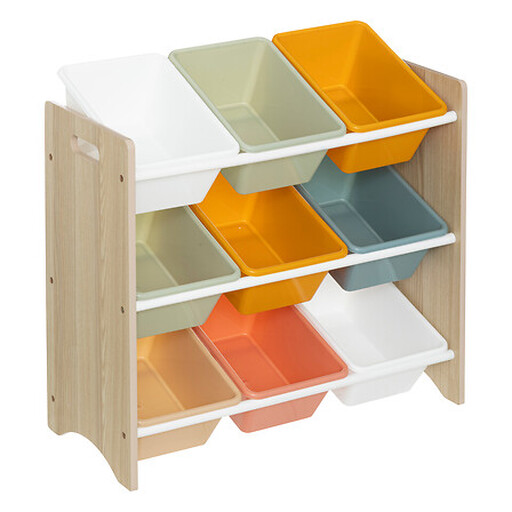
Why This Fits Their Persona: Ideal for parents seeking a straightforward and functional solution primarily for toy storage. The colourful bins motivate children to sort and tidy up.
Its low 66 cm height minimises the risk of tipping. The open, removable bins are maximally accessible, completely avoiding the trap of impractical compartments.
9 removable PP plastic bins for flexible organisation; child-friendly height promotes independence during clean-up.
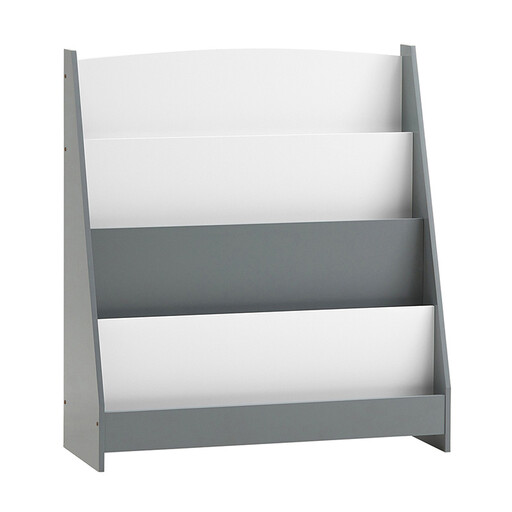
Why This Fits Their Persona: Perfect for families who follow the Montessori philosophy. This shelf is designed to foster a love of reading and independence by keeping books visible and within easy reach.
The front-facing book display is a direct answer to impractical, deep shelves. Its optimal 88 cm height and the included anti-tip hardware address both ergonomic and safety concerns.
Promotes independence according to Montessori principles; rounded corners and an anti-tip device for high safety; made from E1-grade MDF.
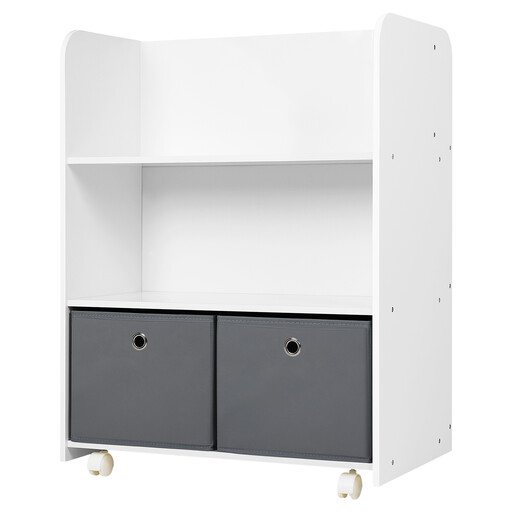
Why This Fits Their Persona: An excellent choice for families with limited space or those who need a flexible solution. The shelf can be easily moved between play and sleeping areas.
This 2-in-1 design combines a bookshelf and toy storage with bins, making it extremely practical. Its mobility via casters offers a flexibility that fixed shelves lack.
Double-sided use (one side for books, one for toys); mobile thanks to casters; includes two fabric bins.
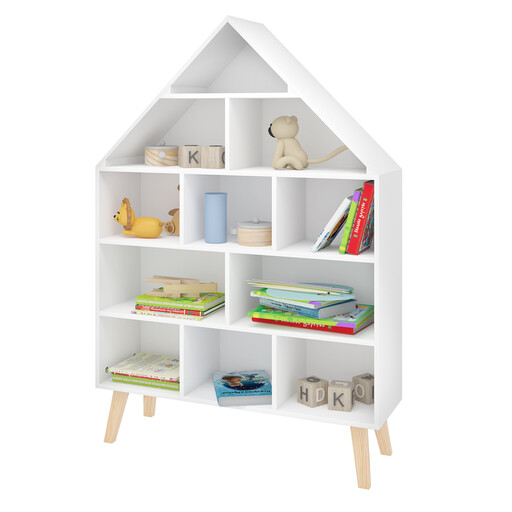
Why This Fits Their Persona: For anyone looking for a piece of furniture that is not only practical but also serves as a decorative highlight in the child's room. The playful design sparks the imagination.
Despite its creative design, functionality is maintained. The 11 open compartments across 5 levels are practical and accessible to children, avoiding the trap of a purely decorative but impractical piece of furniture.
Combines a playful house design with ample storage space; child-friendly height of 116 cm; made from E1-class MDF and solid wood legs.
We have compiled a complete, up-to-date list of products that fully meet these strict selection criteria and rigorous safety standards.
1. How do I securely attach a children's shelf to the wall? Every freestanding shelf comes with an anti-tip device. This usually consists of a bracket or strap that is screwed to the shelf and the wall. For wall mounting, use anchors and screws that are appropriate for your wall type (e.g., drywall, brick). Installation should always be carried out by an adult and exactly according to the instructions.
2. From what age is a Montessori shelf useful? A Montessori shelf is suitable for toddlers from around 18 to 24 months, as soon as they can stand securely and purposefully reach for objects. The front-facing presentation of books appeals to their visual curiosity at this age and encourages early engagement with books.
3. What material is recommended for a children's shelf? Look for materials that are rated as safe for children. E1-grade MDF boards are a common standard as they have low emissions. Solid wood is a durable and natural option. For plastic components, such as in a shelf with bins, polypropylene (PP) is a robust and safe choice. It is crucial that all surfaces have been treated with non-toxic, water-based lacquers or paints.