
Lieferung heute & morgen

Qualitätsgarantie

Willkommens-Angebote freischalten: KOSTENLOSE Lieferung | Bis zu 80 % RABATT | Kostenlose 30-Tage-JoyPlus-Testphase
App herunterladen
A child's room is a place for playing, learning, and dreaming. But over time, books, toys, and craft supplies accumulate, quickly turning the space into a cluttered mess. The right children's shelf can solve this problem by not only creating order but also fostering your child's independence. This guide offers expert advice to help you find a functional and safe storage solution for the nursery.
Choosing a storage shelf for kids depends on several factors. The following points will help you make an informed choice that meets your child's needs and suits the layout of the room.
When it comes to children's furniture, safety is paramount. Look for models with rounded corners and edges to minimise the risk of injury during play. Freestanding shelves should always be equipped with an anti-tip device that allows for secure anchoring to the wall. This prevents the shelf from toppling over if a child tries to climb it. Furthermore, the materials and finishes used should be non-toxic. Products that comply with the European standard for toy safety (EN 71) are a reliable benchmark.
Consider what you primarily need to store. A classic nursery bookshelf with slim ledges is perfect for displaying books with their covers facing forward. This makes it easier for younger children to recognise their favourite stories. For a wide variety of toys, a toy shelf with bins is often the more practical solution. These bins, typically made of fabric or plastic, are easy to remove and make for a quick clean-up.
Other functional options include:
Children's shelves endure a lot of wear and tear. Durable materials like solid wood or high-quality E1-grade MDF boards ensure a long lifespan. An easy-to-clean surface is also a major plus. Lacquered or melamine-coated shelves can be simply wiped down with a damp cloth, which is very practical for handling minor spills or sticky fingers. A white nursery shelf is a popular choice, as it fits neutrally into almost any design scheme and creates a bright, friendly atmosphere.
Based on functionality, safety, and design, we've curated a selection of models to inspire your purchasing decision.
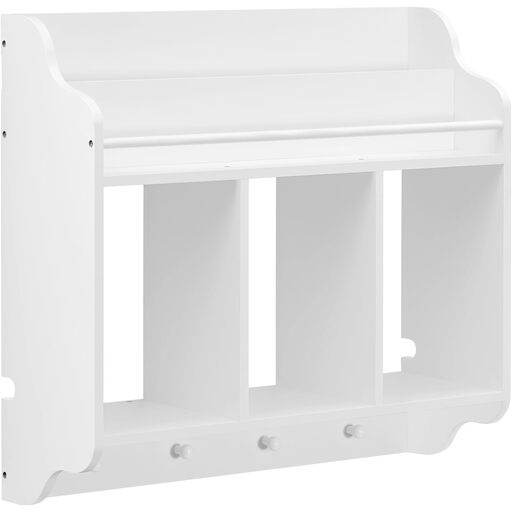
Why it stands out: This nursery wall shelf combines book ledges with practical hooks, making optimal use of vertical space. Its simple white design blends seamlessly into any room's decor.
Advantages:
Who is it for? Ideal for parents looking for a combined solution for books and small items in smaller nurseries, who want to keep the floor area clear.

Why it stands out: This kids' shelf on wheels is a true multi-tasker. It's dual-sided—one side serves as a bookshelf, while the other is a toy shelf with bins.
Advantages:
Who is it for? Perfect for families who need a flexible and mobile storage solution that can adapt to different play scenarios and offers ample storage for various items.
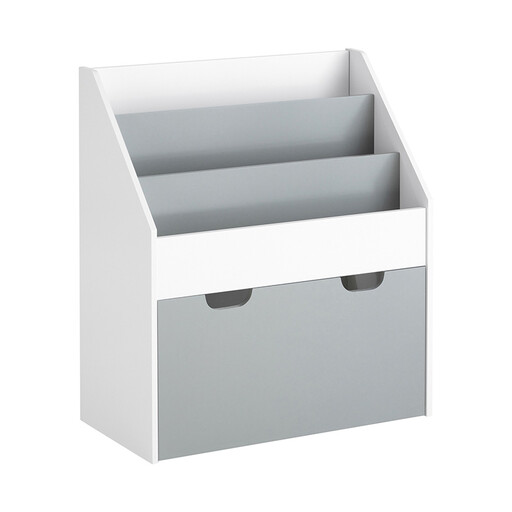
Why it stands out: This model combines open shelves for books with a large, removable toy chest on wheels at the bottom. Its low height makes it especially accessible for toddlers.
Advantages:
Who is it for? An excellent choice for parents of toddlers and preschoolers looking for an all-in-one solution for books and bulky toys that promotes independence.
A tidy room is one thing, but having the right clothes for play and fun is another. If you're looking to update your child's wardrobe for the upcoming season, you can find a selection of White Kids' Shorts here.
The ideal height depends on the child's age. For toddlers and preschoolers, the shelf should be low enough (approx. 70-100 cm) for them to reach the compartments and books independently and safely. For older children, taller shelves or wall shelves can be considered. It's important to always store heavy items on the bottom shelves.
Most freestanding shelves come with an anti-tip device. This usually consists of a bracket or a strap that is attached to the shelf and the wall. For wall mounting, use wall plugs and screws that are appropriate for your wall type (e.g., concrete, plasterboard). Always follow the manufacturer's assembly instructions.
Durable and low-maintenance materials are preferable. E1-grade MDF boards are a common and sturdy choice. They are often coated with a protective layer of lacquer or melamine, which is easy to clean. Solid wood is another durable but often more expensive option. With any material, ensure that the surface treatment (lacquers, oils) is non-toxic and safe for children.