
Lieferung heute & morgen

Qualitätsgarantie

Willkommens-Angebote freischalten: KOSTENLOSE Lieferung | Bis zu 80 % RABATT | Kostenlose 30-Tage-JoyPlus-Testphase
App herunterladen
Finding the right children's toy can be a challenge. The market is filled with products that promise joy and development, but not all of them live up to their advertising. As a Joybuy Product Recommendation Officer, I see it as my duty to provide you with objective and practical guidance. This guide will help you navigate common purchasing traps and make an informed decision that benefits both your child and your budget.
Before we dive into recommendations, it's important to understand the typical stumbling blocks that often lead to disappointment in the playroom.
To avoid these pitfalls, you should base your selection on objective criteria. The following three points are of central importance.
A child's safety is the top priority. Look for the following standards:
The manufacturer's age recommendation is more than just a rough guideline. It relates to the child's cognitive and motor skills.
A good toy is one that grows with the child or repeatedly offers new ways to play. Look for products that encourage open-ended and imaginative play. A set of simple building blocks offers infinitely more possibilities than a toy that repeats the same phrase at the push of a button. A good travel toy, for example, should be compact, quiet, and reusable to keep a child occupied on long journeys.
Based on the criteria above, we have identified several products that are well-suited for different profiles.
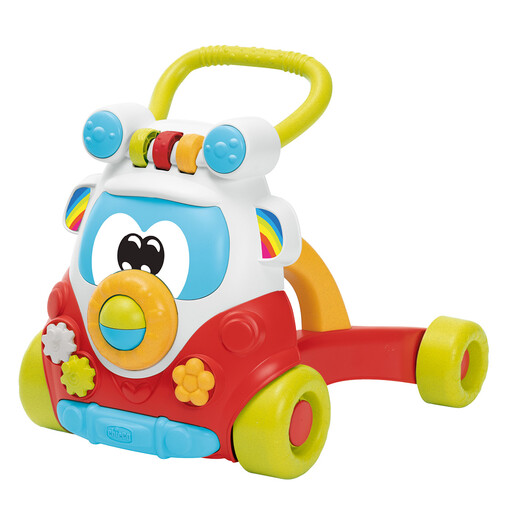
Why it's a great fit: This 2-in-1 walker is ideal as a toy for toddlers. It provides secure support for their first steps while also serving as an activity centre to promote fine motor skills.
The product combines two functions, offering long-lasting play value that extends beyond the walking phase. It avoids the trap of fleeting fascination.
Sturdy construction with four wide wheels for balance; five manual activities to train coordination and logical thinking; made from BPA-free plastic.

Why it's a great fit: This creative toy is a modern alternative to paper and pens. It's lightweight, durable, and ideal as a travel toy for cars, planes, or restaurant visits. A practical birthday gift for a child.
The tablet is infinitely reusable and encourages free drawing and writing. It offers high long-term play value and avoids the waste and mess of traditional art supplies.
Made from non-toxic ABS plastic (BPA-free); weighs only 106 grams; the screen clears without a trace at the touch of a button; rounded edges for safe handling.

Why it's a great fit: This electronic toy is more than just a camera. It allows children to instantly print, edit, and creatively design photos. Ideal for kids who show an interest in technology and creative expression.
Instead of passive entertainment, the camera offers active creative opportunities (over 40 effects, 110 print templates). It bypasses the trap of the overrated educational toy by leveraging technology as a tool for creativity.
Integrated thermal printer for black-and-white instant pictures; flippable 5-megapixel lens for selfies; video function and 3 built-in games; robust, child-friendly design.
We have compiled a complete, up-to-date list of products that fully meet these strict selection criteria and safety regulations.
Look for the CE Marking, which confirms compliance with EU safety standards. Check the material for harmful substances (e.g., BPA-free) and inspect the build quality for sharp edges or loose small parts. Extra caution is needed for toys intended for children under three, as there is an increased choking hazard.
In a way, every good toy is an educational toy, as it promotes skills like creativity, motor function, or social behaviour. A product marketed as an "educational toy" should stimulate active problem-solving or creativity rather than just presenting passive content. A building block set can be more educationally valuable than a tablet that only plays videos.
In such cases, open-ended toys are a safe bet. Creative toys like an LCD drawing tablet, reusable sticker books, or classic building blocks leave room for a child's own imagination and suit many different personalities and age groups. They are often a welcome gift for children as they provide long-lasting engagement.