
Lieferung heute & morgen

Qualitätsgarantie

Willkommens-Angebote freischalten: KOSTENLOSE Lieferung | Bis zu 80 % RABATT | Kostenlose 30-Tage-JoyPlus-Testphase
App herunterladen
Children’s toys should be fun, support development and be genuinely useful in everyday life. The choice ranges from baby toys and educational toys to building toys, construction sets and electronic products. However, this sheer variety often leads to unsuitable purchases.
“Toy for ages 1 and up” or “toy for ages 3 and up” is not simply a marketing message. The age range takes into account factors such as small parts, ease of use and motor skills. A toy with parts that could be swallowed may be unsuitable for younger children, even if it looks robust on the outside.
The recommended age should therefore always be considered alongside the child’s stage of development. For example, a three-year-old may find a complex building set overwhelming, while an older child may quickly lose interest in a very simple motor-skills toy.
Lights, music, sounds and remote controls attract attention. However, they do not replace versatile play concepts. Check whether the child can move, combine or experiment with things independently. A toy with adjustable volume, manual functions or several ways to play is often more flexible in everyday use than a product with just one automated sequence.
With baby toys and toddler toys, rounded edges, sturdy components and easy cleaning are important. Electronic toys also require attention to the battery compartment, charging instructions and moisture protection. Even a product that appears robust should be checked regularly for cracks, loose parts and damaged mechanisms.
Pay attention to the specific age recommendation and the manufacturer’s warnings. Products containing small parts require particular care: the PLAYMOBIL Excavator Set 71749 is intended for children aged 4 and over and warns against use by children under 36 months. The movable shovel and additional spade encourage realistic construction-site play, but the connections should be checked regularly.
Supervision should also be considered when choosing a gift for children. Products with projectiles, water features, magnets or batteries require clear rules for play and a suitable environment.
Details such as ABS plastic, PVC, BPA-free or EN 71 should be stated in the product description and, ideally, be verifiable on the packaging. The CE marking indicates that the manufacturer declares compliance with the relevant EU requirements; however, it is not an independent quality seal. The following points also remain important:
For branded products such as VTech, LEGO DUPLO, PLAYMOBIL or Chicco, the model number and manufacturer’s address are also useful if replacement parts or further information are needed later.
With interactive toys, check whether batteries are included, how many are required and whether volume control is available. For example, a VTech Tut Tut Baby Flitzer requires two AAA batteries; according to the product information, no separate battery accessory is therefore needed when buying it. Other activity tables and musical instruments, however, are supplied without batteries.
Also measure the intended play area. A larger building toy such as the LEGO DUPLO Bluey Family House contains 83 pieces and, once assembled, requires a considerably larger area according to the manufacturer than a small vehicle. Compact products or models with detachable support legs are suitable for flats.
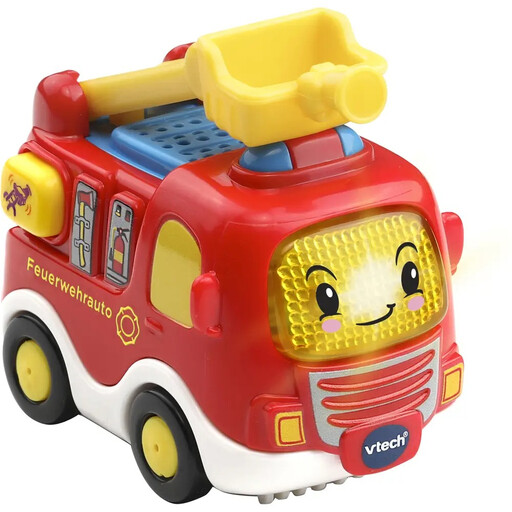
Why this product suits this profile: This compact vehicle is intended for children aged 1 and over, combining driving with lights, sounds and songs. Two AAA batteries are included according to the product information.
Operation is limited to pushing, rolling and a few interactive triggers. This reduces set-up time and the need for additional accessories.
Recommended for ages 1 and over, with light and sound functions and compatibility with other Tut-Tut-Baby-Flitzer playsets.
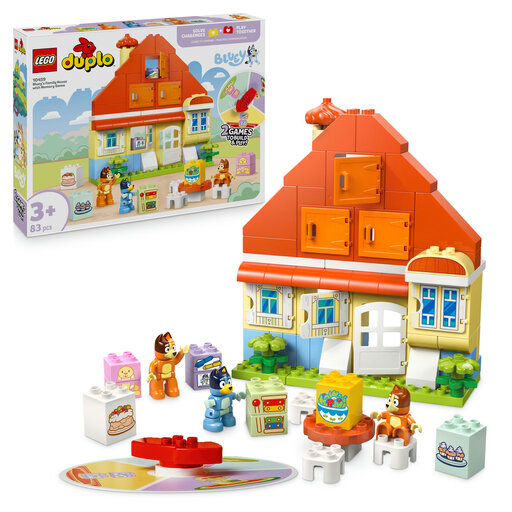
Why this product suits this profile: This set for ages 3 and over combines role play with a memory game and includes 83 pieces and three figures.
It offers more than a single automated effect: children can move figures, open windows, compare items and create their own scenes.
Large DUPLO bricks, a memory-game option and role play in one set; small parts mean the warnings must be observed.
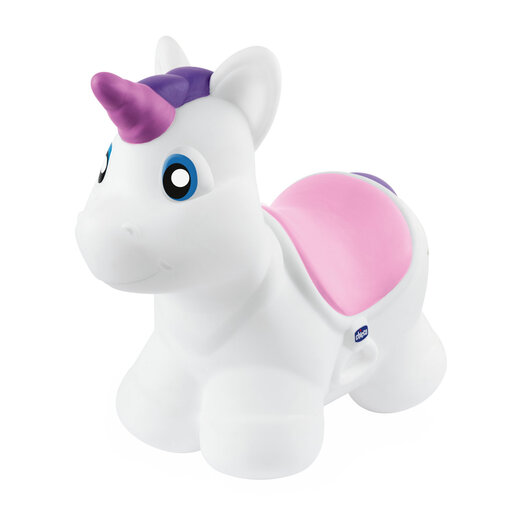
Why this product suits this profile: This inflatable toy is specified for children aged 2 to 5 years and weighing up to 25 kg. It is suitable for active use indoors and outdoors, provided the surroundings are appropriate.
The supplied pump makes it easy to get started. However, regular checks for air loss and cracks are required, and the valve cap must remain accessible.
Ergonomic seat, integrated handles, manual pump and specified BPA- and phthalate-free materials.
We have put together a complete, regularly updated list of products that fully meet these strict selection criteria and the safety regulations applicable in the EU.
For babies, simple grasping, tactile and sound-based toys made from easy-to-check materials are suitable. For toys for ages 1 and over, robust vehicles or interactive button toys are worth considering. Toys for ages 3 and over can include more complex role play, memory tasks and combinations of large building blocks. With toys for ages 4 and over, excavators, cranes and construction sets add realistic sequences to play.
With electronic toys, parents should keep the volume low and limit playtime. An activity table with detachable legs may suit families who want to use a product on the floor initially and later while standing. Check whether batteries need to be purchased separately.
Suitable products have a clear age recommendation of 1 year and over, larger components and straightforward operation. Push-along vehicles, simple motor-skills toys and robust sound toys can be suitable options. Small parts, magnets and hard-to-reach battery compartments should be checked particularly carefully.
Lifespan depends on the materials, construction, use and care. Check moving parts, wheels, seams, battery compartments and connections regularly. Damaged toys should no longer be used, even if they still appear to work.
Educational toys do not need to have lots of functions. Useful activities are those in which children can grasp, sort, build, compare, talk or practise movement sequences. It is important that the level of difficulty suits the child’s age and that they can start and vary the play as independently as possible.