
Lieferung heute & morgen

Qualitätsgarantie

Willkommens-Angebote freischalten: KOSTENLOSE Lieferung | Bis zu 80 % RABATT | Kostenlose 30-Tage-JoyPlus-Testphase
App herunterladen
Finding the right children's toys can quickly become a complex task. Faced with countless options, colourful packaging, and bold advertising claims, it's a challenge for parents, grandparents, and family members to stay on top of it all. Often, well-intentioned purchases lead to disappointment—whether due to flimsy materials, a lack of safety, or a play concept that loses its appeal after just a few days.
As your Joybuy Product Recommendation Officer, I'm here to help you navigate these pitfalls. This guide focuses on objective criteria to help you make an informed decision, rather than chasing short-term trends.
Before we dive into the selection criteria, it's important to understand the most common mistakes that often lead to unnecessary expense and frustration.
To make a smart choice, you should focus on verifiable features. These three aspects are crucial for safety, durability, and long-lasting play value.
Safety is the top priority. Look for the CE marking, which indicates the manufacturer's declaration that the product meets EU requirements. The voluntary GS mark ("Geprüfte Sicherheit" or "Tested Safety"), awarded by an independent testing body, offers an even higher level of assurance. For toys intended for toddlers, terms like "BPA-free" and "saliva-resistant" are also relevant. High-quality plastic, such as that used in PLAYMOBIL or Bruder vehicles, is robust, durable, and free from harmful plasticisers. For a wooden play kitchen, it's wise to look for an FSC certification, which ensures sustainable forestry.
Good educational toys for children adapt to their developmental stage without being overwhelming or underwhelming.
A key factor for long-lasting enjoyment is a toy's compatibility. Systems that can be expanded grow with the child and can remain relevant for years. The themed worlds of PLAYMOBIL are a great example: a fire department quad bike can be combined with the large fire station, and the princess castle with the royal kitchen. This makes such sets excellent gift ideas for children, as they can be easily expanded upon for future occasions.
Instead of offering a one-size-fits-all recommendation, we've matched products to different needs and age groups.
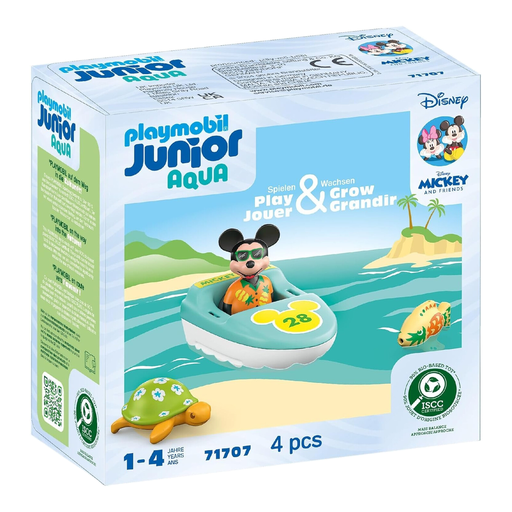
Why This Fits Their Persona: Ideal for toddlers taking their first steps into water and role-playing games. The parts are specially designed for small hands and promote hand-eye coordination.
Avoids the pitfall of an incorrect age rating. This set is explicitly designed for children aged 1 and up, with rounded edges and no small parts that can be swallowed.
Made from over 90% plant-based plastic (according to the manufacturer). Promotes early motor skills and is easy to clean.
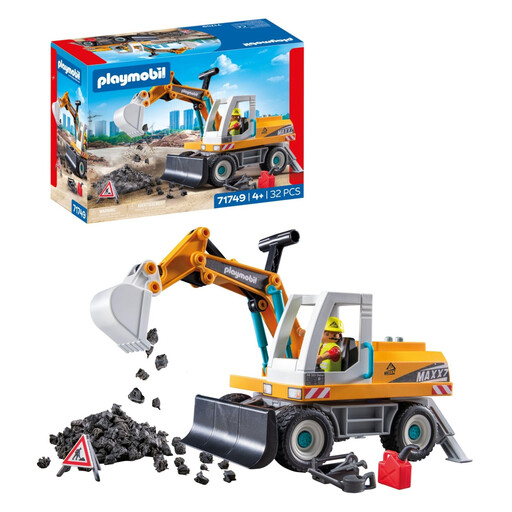
Why This Fits Their Persona: Perfect for children fascinated by construction sites and large vehicles. This excavator toy allows for realistic role-playing and promotes an understanding of mechanical functions.
Escapes the trap of a short-lived play concept, as it's part of the expandable PLAYMOBIL City Action world. It can be combined with other construction sets, ensuring long-lasting play value.
Robust construction and functional mechanics, with a handle to move the digger's shovel. Promotes fine motor skills and imaginative play.
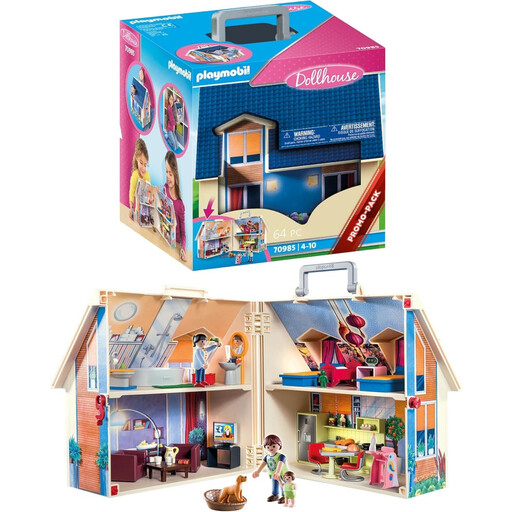
Why This Fits Their Persona: A classic for role-playing toys. Children who love to act out everyday situations and invent stories will find a complete world in miniature here. Ideal for on-the-go play or space-saving storage.
With its open structure and extensive accessories, this doll's house offers countless play possibilities and won't get boring. Since all parts can be stored inside the house, nothing gets lost.
Fully furnished and equipped with figures for immediate play. The practical carrying handle and folding mechanism make it the ideal companion for visits to friends or grandparents.
We have compiled a complete, up-to-date list of products that fully meet these strict selection criteria and rigorous safety regulations.
In addition to the CE marking, look for sturdy construction without sharp edges or burrs. High-quality plastics like ABS are resilient and don't break easily. Information about the absence of harmful plasticisers (phthalates) is also a positive sign that reputable manufacturers often provide.
According to the manufacturer, most plastic parts (without stickers) can be cleaned simply under running water without chemical cleaning agents. For parts with stickers or delicate prints, cleaning with a damp cloth is recommended. Electronic components must not come into contact with water.
Simple, robust wooden models with large furniture pieces can be suitable for children from around 3 years old. More detailed systems like the PLAYMOBIL doll's house are generally recommended for ages 4 and up. At this age, fine motor skills and the capacity for complex role-play are sufficiently developed to make use of the many small accessories and features.