
Lieferung heute & morgen

Qualitätsgarantie

Willkommens-Angebote freischalten: KOSTENLOSE Lieferung | Bis zu 80 % RABATT | Kostenlose 30-Tage-JoyPlus-Testphase
App herunterladen
The search for the right children's toy can be a challenge. The selection is vast, and manufacturers' promises are often grandiose. As a Joybuy Product Recommendation Officer, I sift through market information for you to provide objective and practical advice. The goal is to help you see through the marketing hype and make an informed decision that brings joy to children while meeting your quality standards.
Before deciding on a product, it's helpful to know the typical stumbling blocks that often lead to disappointment in the playroom.
To avoid these pitfalls, it is advisable to check a few fundamental parameters before buying. These will help you objectively assess the quality and potential play value of a product.
Age-Appropriate Design and Safety: The manufacturer's age rating is more than just a recommendation. It is a crucial indicator of safety and educational value. For toys for ages 3 and up, for example, care is taken to ensure there are no small parts that could be swallowed. At the same time, the rating ensures that the toy's complexity neither underwhelms nor overwhelms the child's motor and cognitive skills. A good motor skills toy for a toddler is uninteresting to a school-aged child, while a complex construction set would frustrate a younger child.
Material and Workmanship: Whether it's sturdy wooden toys or functional plastic, the quality of the material is crucial for durability and safety. Look for the CE mark, which confirms that the product complies with EU safety standards. Information such as "FSC-certified wood" or "BPA-free plastic" in the product description are also positive signals. Clean workmanship with no sharp edges, burrs, or strong chemical odours is a must.
Long-Term Play Value: A good toy stimulates the imagination and can be used in versatile ways. Role-playing toys like a play kitchen or a toolbox allow children to act out everyday situations and develop social skills. Educational toys that promote logical thinking or problem-solving skills often offer different difficulty levels and thus grow with the child. Even a remote-controlled car can be more than just a technical gadget when it becomes part of imaginative play worlds.
Here are some product recommendations tailored to the different interests and play styles of children, which also meet the criteria mentioned above.
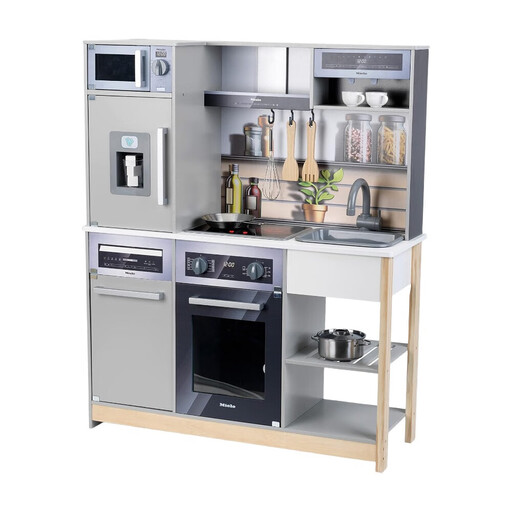
Why it's a great fit: Ideal for children who love to mimic adult activities. This play kitchen provides a comprehensive platform for role-playing, fostering creativity and social interaction.
The use of FSC-certified wood and its versatile, open-ended play options counteract "short-lived fascination." The kitchen remains relevant for years and can be expanded with additional accessories.
The combination of sturdy wood and high-quality metal accessories, along with integrated light and sound functions on the hob, creates a realistic and durable play experience.
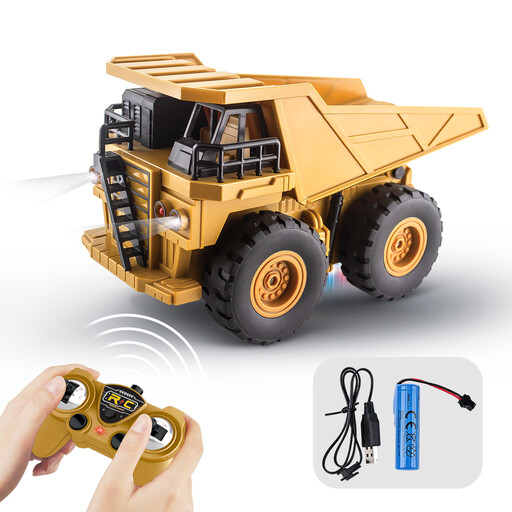
Why it's a great fit: For children fascinated by construction sites and technology. This remote-controlled vehicle combines fun with realistic functions and promotes hand-eye coordination.
The "hidden costs" pitfall is mitigated by the included rechargeable battery and USB charging cable. The interference-free 2.4GHz radio technology is a quality feature that allows multiple vehicles to operate simultaneously without signal issues.
The 6-channel control, especially the hydraulically liftable dumper bed, simulates the realistic actions of a construction vehicle, offering high functional play value that goes beyond simple forward and reverse movements.
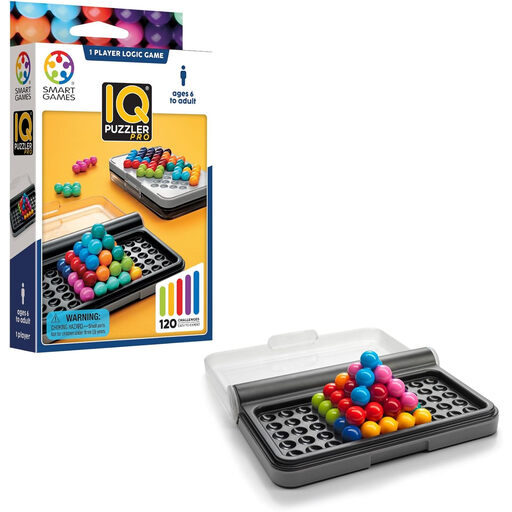
Why it's a great fit: A classic educational toy that specifically targets cognitive skills like concentration and logical reasoning. Ideal for children who enjoy puzzles and brain teasers.
With 120 challenges across three different play modes (2D and 3D), this game offers enormous replayability and actively counteracts "short-lived fascination." Its compact design also makes it a durable travel companion.
Specifically promotes concentration, logical thinking, and problem-solving skills. The increasing levels of difficulty ensure a continuous challenge and visible learning progress.
We have compiled a complete, up-to-date list of products that fully meet these strict selection criteria and EU safety regulations.
Look for the CE mark, which confirms compliance with the EU's essential safety requirements. Also, check the material specifications in the product description, such as FSC-certified wood or "BPA-free" for plastic products. High-quality workmanship without sharp edges, loose parts, or a strong chemical odour is another important quality indicator.
The age rating is a key indicator for two aspects: safety and developmental appropriateness. For toys for ages 3 and up, it typically signals that there are no small parts that could be swallowed, which could pose a choking hazard for younger children. Furthermore, the recommendation ensures that the toy's complexity matches the child's motor and cognitive abilities to avoid frustration or boredom.
Choose toys that match the child's interests while also targeting specific skills. Motor skills toys like building blocks or lacing games train fine motor skills. Role-playing toys, such as a play kitchen or a doctor's kit, promote social skills and creativity. Educational toys like puzzles, strategy games, or mathematical learning aids specifically support cognitive development and logical thinking.