
Lieferung heute & morgen

Qualitätsgarantie

Willkommens-Angebote freischalten: KOSTENLOSE Lieferung | Bis zu 80 % RABATT | Kostenlose 30-Tage-JoyPlus-Testphase
App herunterladen
The selection of children's toys is vast and can quickly become overwhelming. Whether for a birthday, a Christmas gift, or just a special treat, finding the right product is often fraught with uncertainty. Many parents and relatives invest with the hope of fostering creativity and development, but all too often, the expensive toy ends up unused in a corner after just a short time. This guide will help you identify common purchasing traps and make an informed decision.
Before we delve into the selection criteria, it's important to understand the most common mistakes that lead to disappointment and unnecessary expense.
To avoid a poor purchase, you should focus your attention on three objective core parameters. These will help you assess the quality and long-term value of a product, independent of marketing promises.
A child's safety is the highest priority. An indispensable feature for toys sold in the EU is the CE marking. This symbol confirms that the product meets the basic safety and health requirements of the European Union. Additionally, pay attention to information about the materials used. For plastic toys in particular, the BPA-free label is an important indicator that no harmful plasticisers have been used. Solid construction without sharp corners or loose parts is also an indicator of a safely designed product.
The manufacturer's age recommendation is more than just a rough guideline. For toys for ages 3 and up, for example, it ensures that there are no small parts that could be swallowed and pose a choking hazard. Furthermore, the complexity of the toy is tailored to the cognitive and motor skills of the respective age group. A toy that is too simple leads to under-stimulation, while an overly complex educational toy can cause frustration. An age-appropriate design ensures that the child experiences a sense of accomplishment and stays motivated.
A good toy is one that can be rediscovered again and again. Open-ended play concepts like construction toys or creative toys leave room for imagination and allow for countless play variations. In contrast, single-function toys often offer only a limited, predetermined sequence of actions. Role-playing toys such as a play kitchen or a doctor's kit promote social skills and imagination, as children can act out everyday situations and invent their own stories. Such versatile toys often accompany children for several years.
Based on the criteria mentioned, we have identified some products that are suitable for different interests and developmental stages.
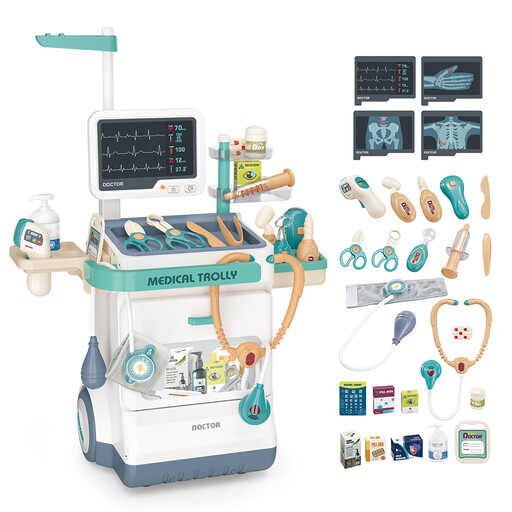
Why it's a great fit: Ideal for children who love to step into different roles. This set promotes empathy and social interaction by allowing children to care for their stuffed animals or friends as little doctors. It is a classic example of a role-playing toy that stimulates the imagination.
It escapes the short-lived trend trap because the variety of instruments and the mobile cart enable ever-new play scenarios and are not limited to a single function.
The set includes a stethoscope with realistic heartbeat sounds and light effects. The cart also encourages tidiness, as all parts have a designated place.

Why it's a great fit: This construction toy is designed for children who love to build and create. It playfully promotes spatial awareness, fine motor skills, and an understanding of geometric shapes.
As an open-ended play concept, it avoids the passivity trap. Instead of just consuming, children become active creators of their own structures, which maintains long-term play value.
According to the manufacturer, the magnets are securely welded inside the ABS plastic parts. The reinforced magnetic force ensures stable connections, which prevents frustration during building.
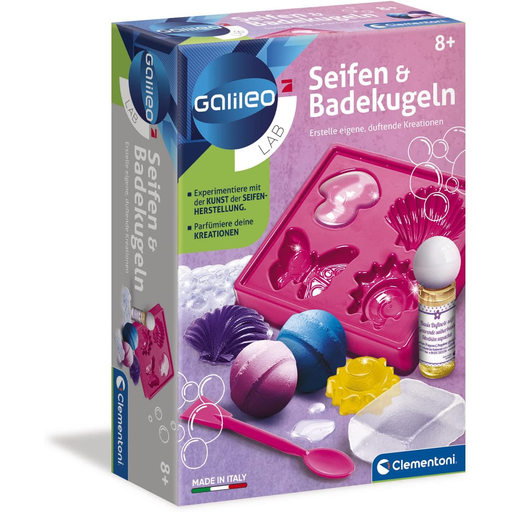
Why it's a great fit: This science kit is perfect for inquisitive children who love to get to the bottom of things. It combines scientific learning with a creative and practical result that you can touch and even use.
It is the opposite of a passive toy. The focus is on the process of mixing, shaping, and experimenting. The sense of accomplishment from creating one's own product ensures lasting enjoyment.
The set includes all the necessary utensils and raw materials. The illustrated manual guides children step-by-step through the scientific principles of cosmetic production.
We've compiled a comprehensive, up-to-date list of products that fully meet these strict selection criteria and European safety regulations.
Primarily, look for the CE marking on the packaging. Also, physically inspect the toy for sturdy construction, secure connections, and the absence of sharp edges. For toys intended for children under three, it is legally required that there are no small parts that can be swallowed. A neutral smell is also a good sign, as a strong chemical odour can indicate questionable materials.
At this age, children are increasingly developing their imagination and social skills. Good gifts for children in this age group are therefore often found in the role-playing toys category, such as a play kitchen, a toy shop, or a tool kit. Simple construction toys with larger pieces that don't overwhelm fine motor skills, or creative toys like finger paints or modelling clay, are also very popular and beneficial for development.
To find suitable Christmas gifts for children, you should consider the child's current interests but also look ahead to their next developmental step. A science kit can spark curiosity in science, while outdoor toys like a balance bike or a ball set encourage physical activity. A good gift offers new stimulation without overwhelming the child and creates shared moments of play for the whole family.