
Lieferung heute & morgen

Qualitätsgarantie

Willkommens-Angebote freischalten: KOSTENLOSE Lieferung | Bis zu 80 % RABATT | Kostenlose 30-Tage-JoyPlus-Testphase
App herunterladen
Children’s toys need to keep little ones entertained, support their development and work reliably in everyday life. Yet product descriptions often make big promises: “educational”, “suitable for all ages” or “multi-functional” may sound convincing, but they tell you very little about whether a toy is actually right for your child. What really matters are specific details about age, materials, dimensions, noise levels and supervision.
A toy labelled “6 months to 3 years” isn’t automatically equally suitable at every stage of development. A baby needs different stimuli and ways of interacting than a toddler who can stand confidently. So check whether accessories, stands or play modes can be adjusted. For toys from 1 year upwards, any small parts that could be swallowed should either be ruled out or clearly marked.
Lights, melodies, buttons and sounds can grab a child’s attention. But if they’re only triggered passively, the play session is often short-lived. For learning toys for toddlers, Montessori toys and sensory toys, clear cause-and-effect relationships make sense: the child presses, turns, builds or moves something and gets a recognisable response.
“BPA-free” refers to one specific substance and doesn’t replace a full safety check. The CE marking is the manufacturer’s declaration that the product meets relevant EU requirements; it’s not a quality seal for educational value. You should also look at warning labels, battery compartments, small parts, sharp edges and the recommended usage situation.
The age recommendation must match both your child and the specific way the toy is played with. For baby toys from around six months, look for easy-to-grip, stable elements with no accessible small parts. A baby activity table should be usable on the floor for younger children, or only have its legs attached once your child can sit or stand safely.
For older children, more detailed requirements become important:
According to product information, several of the baby toys listed here are made from ABS plastic and described as BPA-free. Nevertheless, look for smooth edges, a secure battery compartment and as few loose parts as possible. Toys for babies should be cleanable with a slightly damp cloth. For textiles, PVC or coated parts, follow the relevant care instructions.
For musical toys, volume control, a mute function and automatic shut-off are practical features. Also check whether batteries are included. Some products need batteries that you have to buy separately. With daily use, rechargeable batteries can help reduce ongoing costs. Electronic toys shouldn’t get wet, and you should regularly check them for damaged cables, casings or battery covers.
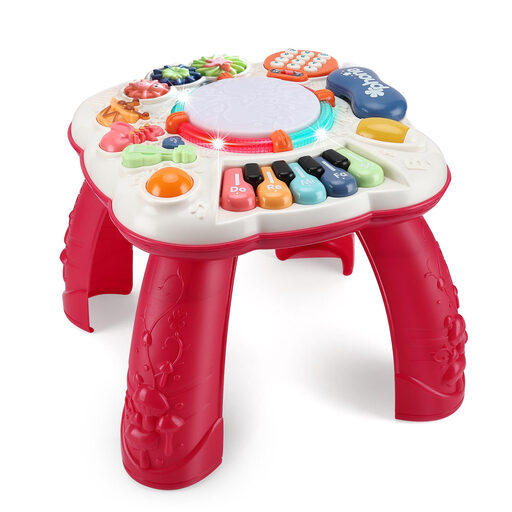
Why this product suits the profile: According to the product description, the 2-in-1 design can first be used as a floor play mat and later with legs as a table. This means beginners don’t need to buy several play stations straight away.
The age range of 6 to 36 months and the removable legs make the usage limits clearer than a vague age claim.
Six play areas, volume control and stated dimensions of approximately 30 × 30 × 31 cm.
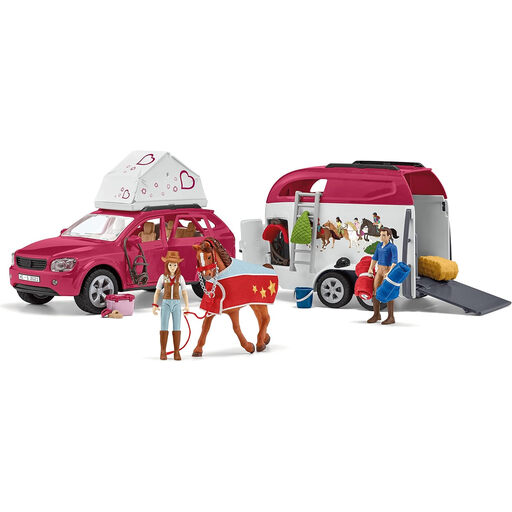
Why this product suits the profile: According to the information, this set is aimed at children aged 5 to 12 and includes a car, trailer, tent and figures for repeatable role-play.
The product details list 18 pieces, assembly requirements and a clear warning for children under 3. This makes it easier to check before buying.
Figures with movable parts, accessories for storytelling and stated dimensions of 39.6 × 10.4 × 34.3 cm.
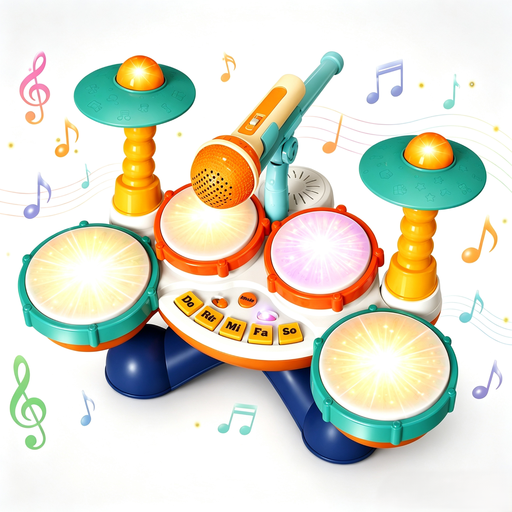
Why this product suits the profile: For families specifically looking for musical toys, this set combines drum surfaces, cymbals, a microphone and several play modes.
According to the product information, the volume can be adjusted. This means the play noise can be adapted to your home, the time of day and shared use.
Four illuminated drum pads, two cymbals, ten built-in melodies and a microphone; batteries are not included.

Why this product suits the profile: According to the product description, this construction toy is designed for children aged 2 and over and offers several vehicle variations using large building bricks.
The piece count of 22, the age recommendation and the note about small parts provide clear guidance. The bricks are designed for little hands.
Three described vehicle combinations, two figures and large bricks for repeated building and rebuilding.
We’ve put together a full, regularly updated list of products that fully meet these strict selection criteria and the safety regulations in force in the EU.
Age-appropriate grasping, sorting and movement toys with no accessible small parts are suitable. An activity table with removable legs or a simple sensory toy can be a good choice, as long as your child is supervised during use. What matters most are stable bases, rounded edges and an easy-to-clean surface.
The lifespan depends on the materials, construction, how they’re used and how they’re looked after. Regularly check screw connections, battery compartments, wheels, plug-in parts and surfaces. If you notice visible cracks, sharp edges or loose small parts, the toy should be taken out of use. With electronic products, batteries and switches may wear out before the casing does.
The price should be based on the actual play value, the number of pieces, the build quality and how long the toy is likely to be used. A smaller musical toy may be more suitable for a younger child than a large set with lots of pieces. For a children’s gift, the age recommendation, safety warnings and the space available in your home are also important factors to consider.