
Lieferung heute & morgen

Qualitätsgarantie

Willkommens-Angebote freischalten: KOSTENLOSE Lieferung | Bis zu 80 % RABATT | Kostenlose 30-Tage-JoyPlus-Testphase
App herunterladen
Children’s toys need to entertain, support development and work reliably in everyday family life. But when it comes to choosing, it’s not just about bright colours or a long list of features. What really matters are the age recommendation, materials, dimensions, how easy it is to clean, and how it will actually be used at home or on the go.
A toy with music, lights and lots of switches can look versatile at first glance. For a baby or toddler, however, too many stimuli can be overwhelming. So check whether the features match their developmental stage and whether the volume can be adjusted. An activity cube with spinning elements, buttons and simple role-play functions can be more practical for children aged 1 to 3 than a product that just plays sounds automatically.
“Ages 3+” is not a casual suggestion. Toys with small parts pose a choking risk for younger children. This applies, for example, to a cutting play set for children, toy car accessories or small pieces from a role-play set. Even when a recommended age is given, parents should check whether their child still tends to put things in their mouth.
Terms like BPA-free, CE or EN71 can provide useful information, but they are not a replacement for checking the toy before buying and before every use. Look out for:
For products with electronics, batteries should not be included or should be leak-proof, and the volume should be suitable for your home environment.
For babies, choose products that are easy to grasp, straightforward and have no loose small parts. A musical activity table can offer several play zones, but it needs to be stable and used according to the manufacturer’s instructions. For children aged 1 to 3, typical play actions include pushing, turning, sorting and imitating. Montessori toys are not a protected quality mark; what matters more are specific functions like stacking pieces, gears or simple cause-and-effect games.
For children aged 3 and over, more complex role-play comes into play. The 81-piece cutting play set, for example, contains small play food items and is recommended from age 3 according to the product information. The warning about small parts should be heeded.
EVA foam is often used for a play mat for babies or an EVA puzzle mat. Check whether the pieces are low-odour, easy to clean and fit together snugly. A mat should be placed on a flat, dry surface. Any soiled or damaged pieces should be removed from the play area.
For plastic toys, rounded edges, one-piece moulded casings and robust moving parts are practical selection criteria. Claims like “BPA-free” should come from the product description or the seller’s labelling. For electronic products, additional guidance on batteries and moisture applies.
A large vehicle might be impractical in a child’s bedroom but offers more play value in the sandpit. The Dreamora tipper truck described measures approximately 59.69 × 17.27 × 25.40 cm, has a manually tilting load bed and, according to the product information, requires no batteries. For smaller homes, compact solutions like an activity cube or an interlocking mat are easier to store.
For on-the-go use, consider weight, carrying handles and cleaning options. A buggy board is not a toy in the traditional sense, but it can help families with two young children in daily life. The Kikka Boo Ally XL, according to the manufacturer, includes a seat, a two-point harness and a maximum user weight of 20 kg. Compatibility with your own pushchair must be checked before use.

Why this product fits the profile: This compact cube combines eight play areas and is designed for children aged 1 to 3, according to the manufacturer. It’s ideal for families looking for several simple activities in one product.
The functions are arranged directly on the cube and don’t need to be stored separately. However, you should still check the edges, noise level and labelling before buying.
ABS plastic, rounded edges, carrying handle plus piano, guitar, telephone and gear elements, according to the product description.
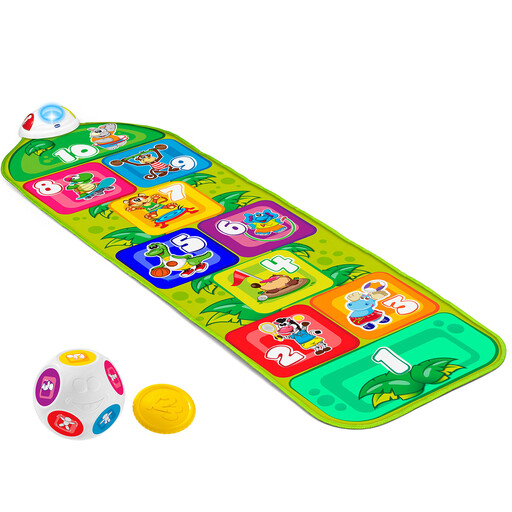
Why this product fits the profile: This mat is designed for active indoor play and is aimed at children aged 24 months and over, according to the product information.
The two play modes are clearly described. Use requires a flat, dry floor and adult supervision.
Ten illuminated panels, motion sensors, more than 30 sounds and two play modes; three AAA batteries are required, according to the description.
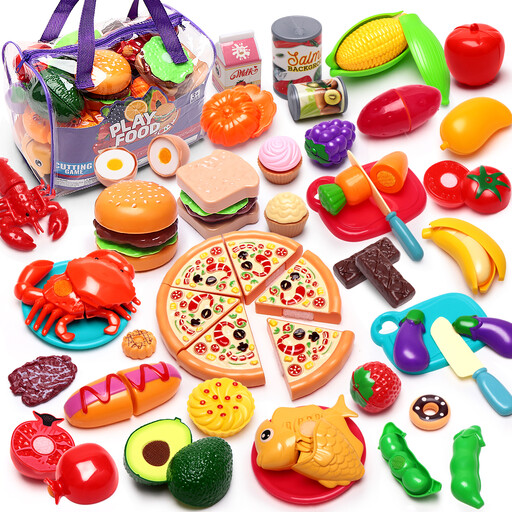
Why this product fits the profile: This set is aimed at children aged 3 and over and suits families who want to combine role-play, sorting and tidying up.
The age warning and note about small parts are clearly stated. The included bag reduces loose pieces but does not replace supervision.
Multiple play food items, Velcro connections, BPA-free plastic according to the product description and a storage bag.
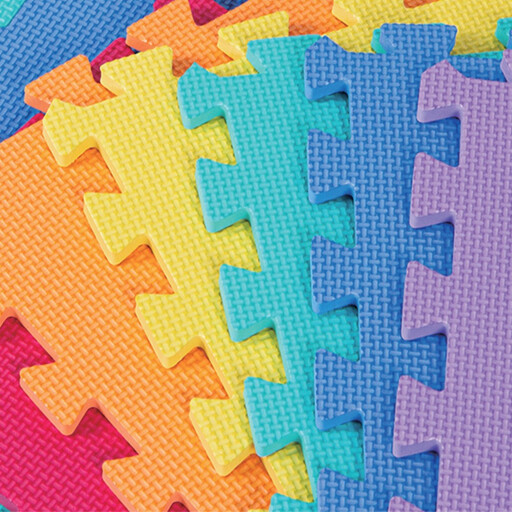
Why this product fits the profile: The 18 EVA pieces can be joined together to form a larger play surface and are ideal for households where the play area needs to be adjusted regularly.
The interlocking pieces can be separated and cleaned after play. Before use, check the connections, surface and slip resistance.
18 square EVA pieces with border sections, tool-free assembly and easy cleaning, according to the product description.
With toy cars, an electric toy gun or a suction dart throwing toy, additional rules apply: never aim at the face or eyes, create enough space and supervise children during play. For gifts containing small Play-Doh pots, the stated age limit of 24 months must be observed.
We’ve put together a complete, regularly updated list of products that fully meet these strict selection criteria and the safety regulations in force in the EU.
For babies, choose straightforward, easy-to-grasp products with no loose small parts. A play mat for babies, an activity cube for the right age group or a flat play element can all be suitable. What matters most are the manufacturer’s instructions, the quality of construction and supervision.
The lifespan depends on the material, how they’re used and how they’re cared for. EVA mats should be kept dry and cleaned regularly. For vehicles and play tables, check the wheels, joints, screws, battery compartments and edges. Damaged toys should not be used.
Products that use batteries incur ongoing costs for replacements. Before buying, check whether batteries are included, what type is needed and whether the toy has a volume control or an off switch. With purely mechanical products like a friction-powered vehicle, there are no battery costs.